The days of packed coaching centers and rote memorization are numbered. Across India, a silent revolution is unfolding on screens of all sizes, fundamentally changing how millions of students prepare for their futures. But as artificial intelligence enters the classroom, are traditional human tutors becoming obsolete, or are we witnessing the birth of a new educational paradigm?
For generations, the Indian education system has been synonymous with the “chalk-and-talk” method. Students have relied heavily on neighborhood tutors and massive coaching hubs in cities like Kota or Hyderabad to crack board exams and competitive tests. However, 2026 is proving to be a watershed moment. Driven by affordable internet and a post-pandemic shift in learning habits, Indian K-12 and test-prep students are increasingly adopting AI-powered tutoring systems.
The Shift from Chalk-and-Talk to Smart Screens
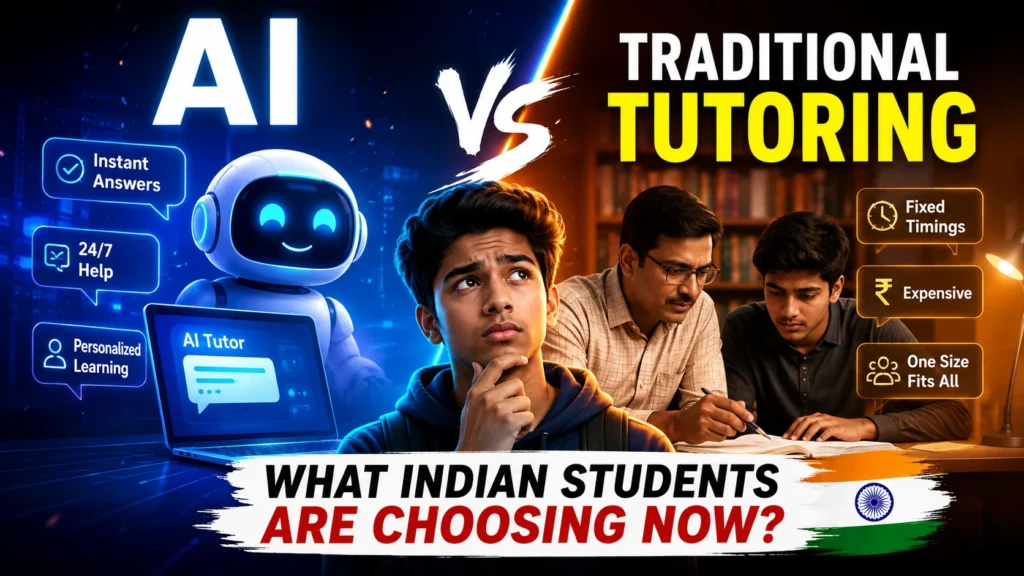
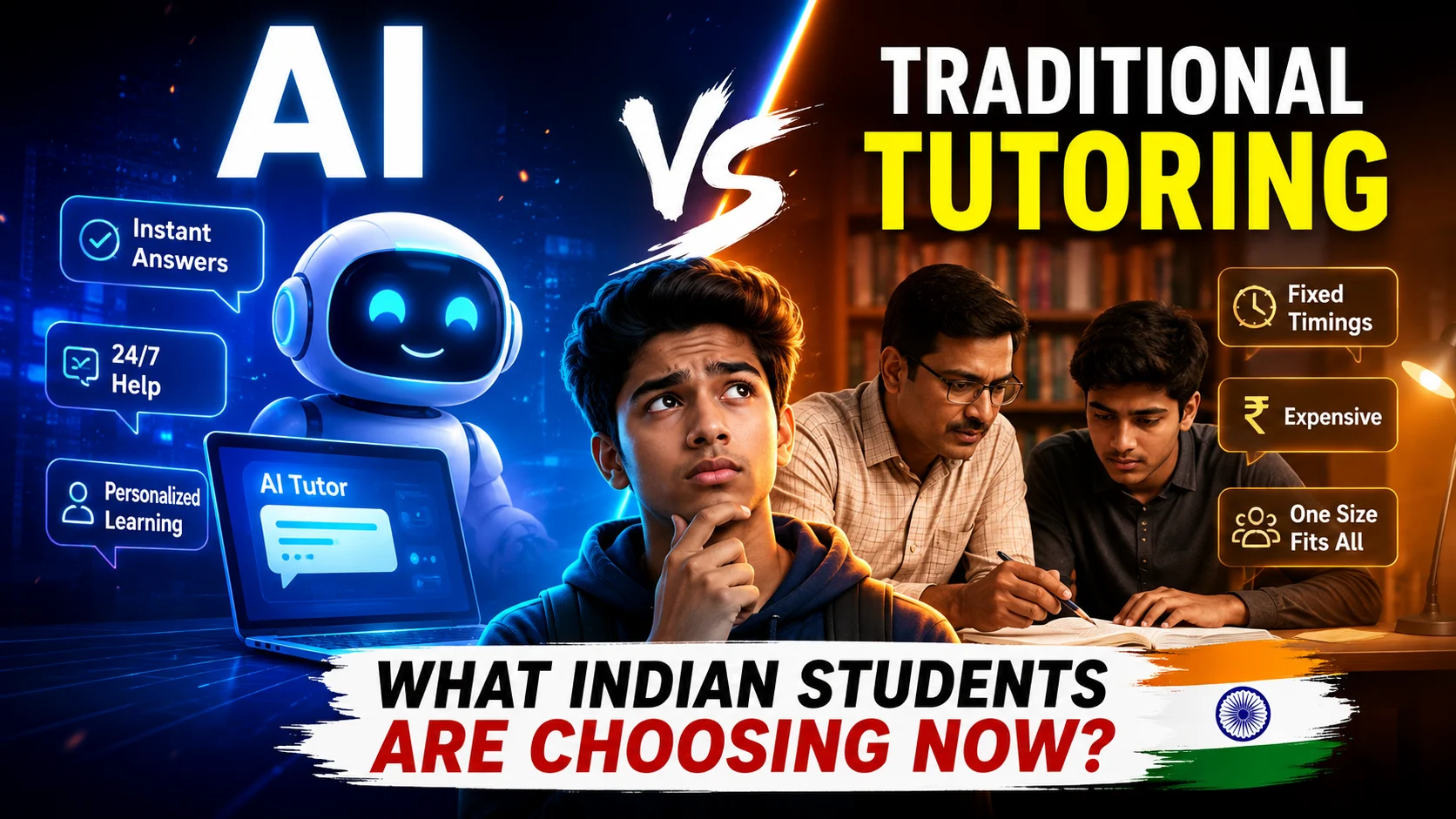
The allure of AI tutoring isn’t just a tech trend; it’s a direct response to the systemic flaws in traditional coaching. In a standard Indian classroom or coaching center, the student-to-teacher ratio often exceeds 40:1, making true personalized attention nearly impossible.
AI platforms—ranging from global giants like ChatGPT Education and Khanmigo to homegrown innovators like SwaVid and FutureX Lab—are filling this exact gap.They offer a tailored approach that adapts to a student’s cognitive profile in real-time, moving away from a one-size-fits-all curriculum.
Why are students making the switch?
- True Personalization:AI analyzes a student’s strengths and weaknesses instantly, automatically adjusting the difficulty of questions and the pace of the curriculum.
- 24/7 Availability: Unlike human tutors who operate on strict schedules, an AI mentor is available for a midnight doubt-clearing session the night before an exam.
- Socratic Problem Solving: Advanced AI tutors don’t just hand out answers. They use Socratic questioning to guide students toward the solution, fostering critical thinking rather than rote memorization.
- Data-Driven Insights:Parents and students get granular, real-time analytics on performance, highlighting exact chapters or concepts that need revision.
The Data Speaks: Efficiency and Effectiveness
Recent studies indicate that this digital shift is yielding tangible results. Research evaluating generative AI in tutoring environments found that supervised AI models resolved student misconceptions with a 95.4% success rate—slightly edging out the 94.9% rate of human tutors.
Furthermore, efficiency is a massive draw. A recent trial comparing AI tutoring to in-class active learning found that students using the AI platform not only scored significantly higher on post-tests, but they also spent less time studying.The median time spent on tasks by the AI group was just 49 minutes, compared to the standard 60-minute in-class session, proving that focused, personalized instruction manages cognitive load better.
To see how these shifting preferences play out across different demographics, explore the interactive dashboard below:
JSON
{
  "widgetSpec": {
    "id": "ai-vs-human-tutoring-dashboard",
    "height": "600px",
    "prompt": "Objective: Create an interactive comparison dashboard where users can toggle variables to see how adoption trends change between AI and human tutoring.\nData State: initialValues: none.\nStrategy: Standard Layout.\nLibraries: D3.js or Observable Plot.\nInputs:\n- Monthly Budget (Slider: Low to High)\n- Learning Style (Dropdown: Rote, Conceptual, Hybrid)\n- Location (Dropdown: Urban, Tier 2/3, Rural)\nBehavior: Display a dynamic bar chart comparing the projected suitability and adoption rate of 'Pure AI', 'Traditional Coaching', and 'Hybrid' based on the selected inputs. Ensure labels and axes update smoothly."
  }
}
Key takeaway: While urban students with higher budgets lean toward hybrid models, AI-only solutions are gaining massive traction in Tier 2 and Tier 3 cities where quality human coaching is either unavailable or unaffordable.
The Irreplaceable Human Element
Despite the undeniable efficiency of algorithms, writing off traditional human tutors would be premature. A recent study exploring AI adoption in Indian classrooms across government, private, and premium schools found that AI tutors are not standalone replacements for human teaching.
Human educators provide vital emotional intelligence that machines currently lack. They offer:
- Empathy and Motivation: A machine cannot sense when a student is having a bad day, experiencing burnout, or dealing with performance anxiety.
- Mentorship:Great teachers inspire, act as role models, and build confidence in ways that code simply cannot replicate.
- Accountability: For many younger students, the physical presence of a tutor is necessary to enforce discipline and maintain focus.
Furthermore, India’s digital divide remains a stark reality. While EdTech platforms are optimizing for low-bandwidth and mobile-first learning, access to stable internet and personal devices is still a hurdle for students in low-resource regions.
The Verdict: A Hybrid Future
As we navigate 2026, the false dichotomy of “AI versus Human” is fading. The most successful educational outcomes are emerging from a hybrid approach.In this model, AI handles the heavy lifting of repetitive practice, syllabus coverage, and instant doubt resolution, freeing up human educators to focus on higher-order thinking, emotional support, and personalized mentorship.
Indian students aren’t just choosing a new way to study; they are demanding a better one. Institutions and coaching centers that refuse to integrate AI risk obsolescence, while those that seamlessly blend technology with human empathy will define the next era of equitable learning.
What’s your take? Are you ready to let an algorithm guide your learning journey, or do you believe the human touch is non-negotiable? Share this article and let us know your thoughts.
Also Read Free vs. Paid Tools—Which Actually Saves You Money in 2026?