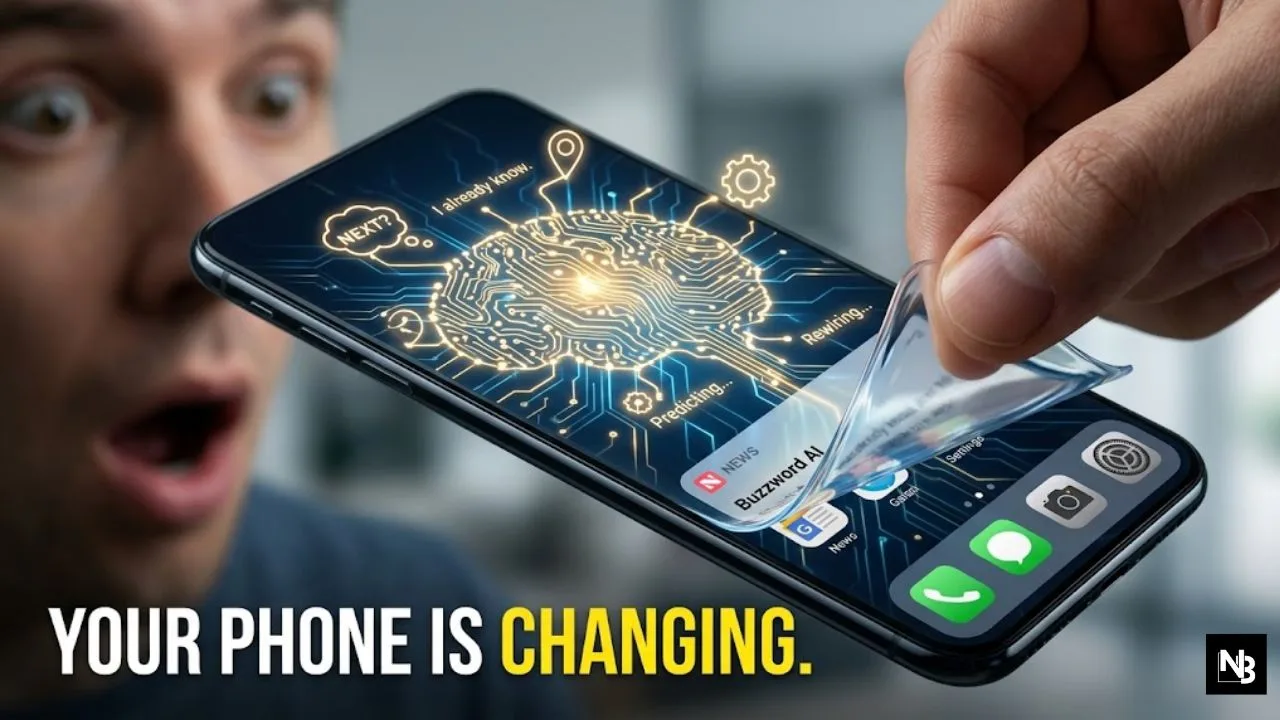
In 2026, the smartphone in your pocket is no longer just a glass slab of apps—it’s an anticipatory companion that thinks alongside you. We have officially moved past the era where Artificial Intelligence was just a flashy marketing buzzword on a spec sheet. Today, AI is quietly reshaping how we interact with, rely on, and trust our digital devices, shifting the mobile experience from an app-centric grid to an AI-first ecosystem.
Driven by the dual forces of powerful on-device neural processing and lightning-fast cloud connectivity, the smartphones of 2026 don’t just wait for your commands; they anticipate your needs. But as our devices get smarter, where do we draw the line between convenience and privacy?
Here is a deep dive into how AI is redefining mobile technology this year.
Under the Hood: The Rise of the NPU (AI in smartphones 2026)
The biggest change in 2026 isn’t the display or the design—it’s the silicon. Flagship and mid-tier devices are now powered by chips specifically tuned for generative AI.
Processors like the Apple A19-series, Qualcomm Snapdragon 8 Gen 5, and Google Tensor G6 are built with dedicated Neural Processing Units (NPUs). This hardware evolution allows smartphones to handle heavy AI workloads locally, resulting in:
- Zero-latency processing: Instant on-device summarization, image editing, and live translation without needing an internet connection.
- Smarter battery management: AI-driven adaptive power allocation decides exactly when to boost the CPU and which background tasks to kill, significantly extending battery life despite power-hungry GenAI features.
However, this innovation comes at a cost. Industry analysts note that average smartphone selling prices have risen by roughly 6% to 8% in 2026, as brands pack mid-premium and flagship phones with costly AI-ready hardware.
ALSO READ Top 10 AI Chrome Extensions That Actually Save Time in 2026 (No-Hype Picks)
The “Omni-Agent” Era: Apps Are Taking a Backseat
For the last fifteen years, using a phone meant navigating a sea of app icons. In 2026, we are witnessing the rise of “Omni-Agent OS” interfaces.
Smart assistants have evolved into autonomous agents capable of navigating apps on your behalf. With a single voice prompt or tap, your phone can parse the context of an email, summarize a 10-page PDF, auto-draft a reply matching your usual tone, and book a cab to your next calendar appointment.
Furthermore, these phones thrive on proactive nudges. They learn your daily rhythm:
- Pre-loading maps and traffic data just as you leave the office.
- Automatically silencing non-essential notifications during your usual “deep work” hours.
- Suggesting your favorite workout playlist the moment you step into the gym.
Computational Photography: Cameras That ‘See’ Context
The megapixel race is officially over; AI-driven image processing is the new battleground. Today’s smartphone cameras use multimodal AI to understand context—recognizing people, objects, text, and even audio cues within a frame.
- Cinematic Real-Time Edits: 2026-era phones can apply object-tracking blur, remove photobombers, and adjust complex lighting while the camera app is still open.
- Gimbal-Like Stability: AI predicts motion to stabilize handheld video, rendering bulky physical gimbals nearly obsolete.
- Semantic Search: You no longer need to scroll endlessly to find a photo. You can simply search, “Find the screenshot of my tax document from last March,” and the AI retrieves it based on image content.
ALSO READ Best AI Image Generators in 2026: Real-World Tests, Pricing, and Winners
Breaking Language Barriers in Real-Time
Communication has also received a massive AI overhaul. Premium smartphones now feature AI call assistants that do much more than filter spam. They validate caller identity, translate live conversations across different languages while preserving natural pauses and tone, and generate a neat text summary the moment you hang up.
In native messaging apps, AI seamlessly drafts replies in different tones—from formal to humorous—based on your relationship with the contact, processing simple texts entirely on-device to ensure maximum speed and privacy.
The Privacy Paradox: Smarter Phones, Deeper Data
While on-device AI is championed by tech giants as a massive win for user privacy—since data doesn’t have to leave the phone—there is a complex trade-off.
To anticipate your behavior, your phone must analyze highly personal metrics: your typing cadence, app usage patterns, voice tone, and location history. Critics and tech ethicists warn that this creates incredibly detailed behavioral models.
“While keeping data on-device prevents mass cloud breaches, users are largely in the dark about how long these AI models retain behavioral snapshots,” notes a recent report from independent privacy watchdogs. Transparency remains a weak spot, with experts urging brands to implement “explain-like-a-human” privacy dashboards.
Furthermore, psychologists are raising red flags about “cognitive outsourcing.” As our phones become smart enough to manage our schedules, draft our emails, and remind us to breathe, there is a growing concern about our over-reliance on digital assistants and its impact on human memory and digital autonomy.
ALSO READ How to Use ChatGPT for Study Notes and Assignments: A Smart Student’s Guide
A Wearable Therapist? AI in Health and Wellness
Beyond convenience, 2026 has seen AI transform the smartphone into a behavioral health monitor. By analyzing subtle shifts in typing speed, screen time, and voice patterns, your device can now flag potential stress or burnout days before you consciously register it. While strictly not a medical diagnosis, these risk-awareness nudges encourage mindfulness and rest, merging digital wellness with physical health.
The Verdict: A Meaningful Upgrade?
AI smartphones are rapidly going mainstream. Globally, analysts project cumulative shipments of AI-capable phones to cross the 1-billion-unit mark by mid-2026.
Hardware has largely commoditized; a good screen and a fast processor are no longer enough to convince users to upgrade. AI-driven software is now the primary differentiator. The brands that will dominate the next decade are those that move past parlor tricks and deliver meaningful productivity tools, rock-solid on-device privacy, and seamless user experiences.
Over to you: How much of your daily decision-making are you willing to hand over to your smartphone? As AI continues to blur the line between human intuition and machine efficiency, the next big upgrade might just require an upgrade in how we manage our digital boundaries.