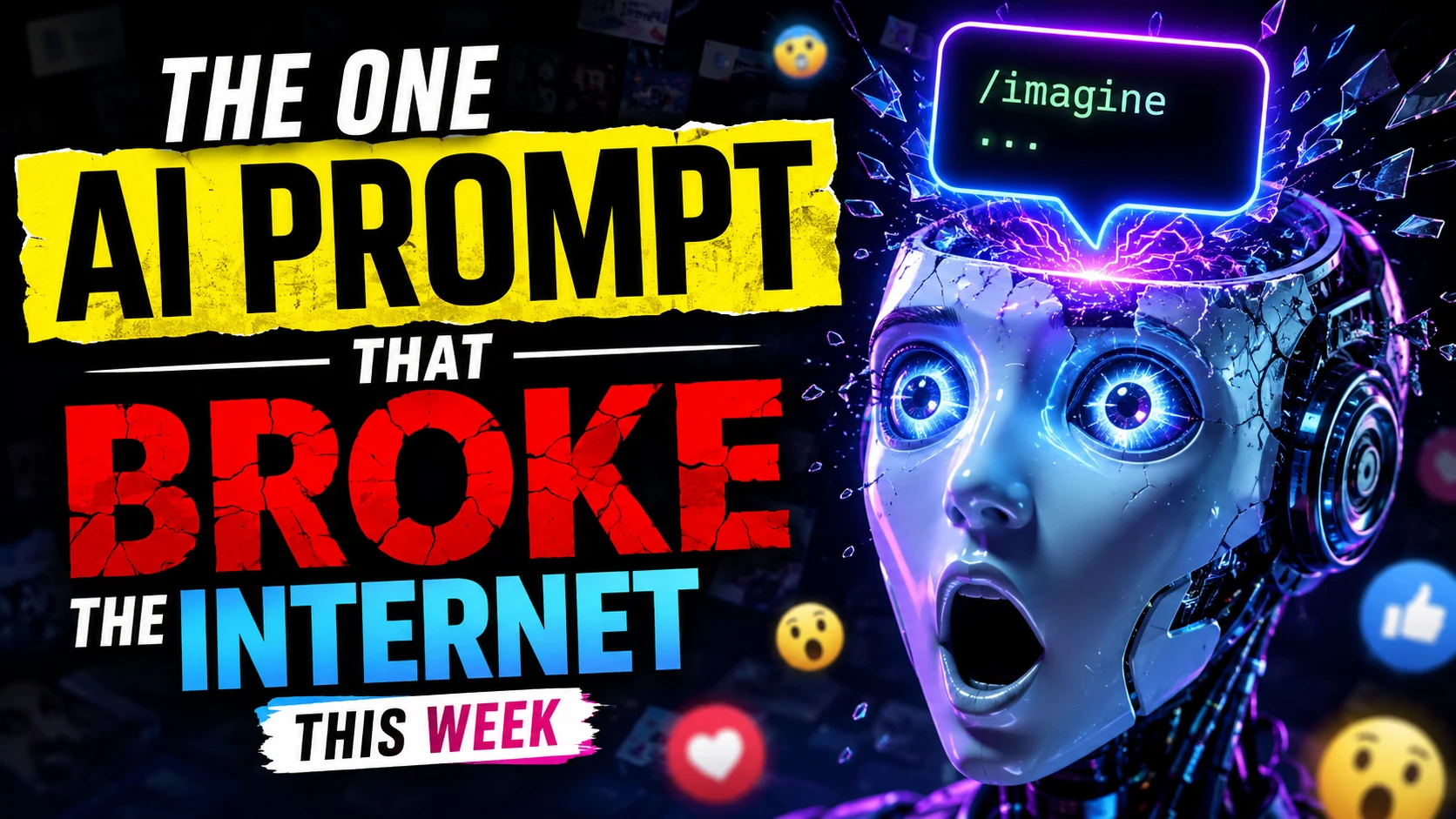
If you’ve opened X, TikTok, or Reddit in the past 48 hours, you’ve likely seen the screenshots. They usually feature a wall of text from an AI chatbot, accompanied by a caption like, “I asked ChatGPT to read my history, and now I need therapy.” Over the last few days, a hyper-specific AI prompt has completely fractured the internet—and it’s doing it by turning our favorite digital assistants into brutally honest, shockingly perceptive psychologists.
Welcome to the era of the “AI Mirror Roast.”
Instead of asking artificial intelligence to write code, draft emails, or generate images of dogs in spacesuits, users are weaponizing AI’s memory against themselves. By asking the bot to analyze months (or even years) of their chat history, people are receiving deep, personalized critiques of their own personalities, habits, and blind spots.
And the results are ruthlessly accurate.
The Prompt That Started It All
The viral phenomenon didn’t begin with a complex coding script; it started with simple human curiosity. Armed with expanded memory features on platforms like ChatGPT, users realized that the AI had quietly built a psychological profile of them based on every late-night question, panicked work query, and half-baked creative idea they had ever submitted.
While there are several variations circulating, the core prompt looks something like this:
“Based on everything you know about my work habits, goals, personality, and recurring frustrations, roast me. Be brutally honest. Focus on the blind spots and toxic traits that hold me back most often.”
For those wanting a more clinical takedown, a popular spin-off called the “CIA Dossier” has emerged. In this version, users tell the AI: “Act as an intelligence investigator compiling a psychological dossier on me. Treat all my behaviors as potential vulnerabilities and highlight my biggest blind spots without sugarcoating.”
Why the Internet is Begging for Digital Masochism
Why are millions of people willingly subjecting themselves to algorithmic judgment? The appeal lies in the unique, objective nature of the AI.
When a friend gives you advice, it’s heavily filtered through social pleasantries. When an AI analyzes your data, it pulls receipts. It doesn’t care about sparing your feelings. Social media feeds are currently flooded with users sharing the devastatingly accurate insights their AI provided.
Here is what the trend is revealing about modern human behavior:
- The Echo Chamber of Self-Doubt: Tech journalists and everyday users alike are reporting that the AI often uncovers deep-seated anxieties—for example, pointing out that a user constantly researches productivity hacks but rarely finishes actual personal projects.
- Toxic Relationship Patterns:Some users have shared screenshots of ChatGPT bluntly stating, “You only ask for relationship advice when you are looking for validation to stay in a situation you already know is toxic”.
- The Illusion of Busyness: A recurring theme in the AI roasts is calling out users who use endless “researching” as a high-tech form of procrastination.
One viral Reddit post perfectly captured the mood of the trend: “I asked ChatGPT what my biggest flaw was, and it told me I have a habit of rationalizing my own helplessness. I had to close my laptop and go for a walk”.
How to Try the “AI Mirror” Prompt Yourself
If you’re feeling brave and want to see what your digital footprint says about you, trying the trend is incredibly straightforward. Note: This works best if you have a long history of interacting with an AI that uses a continuous “Memory” function.
- Open Your Preferred AI: Log into ChatGPT, Claude, or Gemini (ensure you are using an account where you frequently ask questions).
- Paste the Viral Prompt: Copy and paste the following: “Review all of our past conversations. Based on my queries, tone, and recurring themes, tell me a hard truth about myself that I probably haven’t noticed. Do not sugarcoat it.”
- Ask for the Receipts: If the AI gives you a critique that stings, follow up with: “Provide specific examples from our past chats that made you come to this conclusion.”
- The Visual Roast (Optional):If you use an image-generating model, prompt it with: “Based on everything you know about me, generate an image of what you truly think the inside of my brain looks like right now”.
The Uncomfortable Truth About Our Digital Exhaust
This trend highlights a fascinating shift in how we interact with technology. We no longer see AI purely as a utility tool; we are beginning to treat it as a mirror.
Because we often ask AI the questions we are too embarrassed to ask humans—health anxieties, weird career doubts, foolish trivia—it possesses a startlingly intimate view of our inner lives. The “roast prompt” forces us to confront our digital exhaust. However, psychologists warn that we shouldn’t take these algorithmic evaluations as absolute gospel. The AI is only responding to the data you fed it. If you primarily use ChatGPT to complain about your boss, the AI will naturally assume you are deeply cynical.
Final Takeaway: Should You Try It?
The viral AI roast prompt is a masterclass in modern self-reflection, wrapped in the guise of an internet meme. It proves that the most compelling content artificial intelligence can generate isn’t a deepfake video or a synthetic essay—it’s a mirror held up to our own very human flaws.
The Verdict: Do it. It’s a fascinating, humbling, and surprisingly hilarious exercise in self-awareness. Just remember that the machine doesn’t have a soul; it merely recognizes patterns.
Have you tried the viral AI roast prompt yet? Drop your most brutal (and hilarious) AI call-outs in the comments below, or share this article with a friend who needs a reality check from a robot!
Also Read Free vs. Paid Tools—Which Actually Saves You Money in 2026?