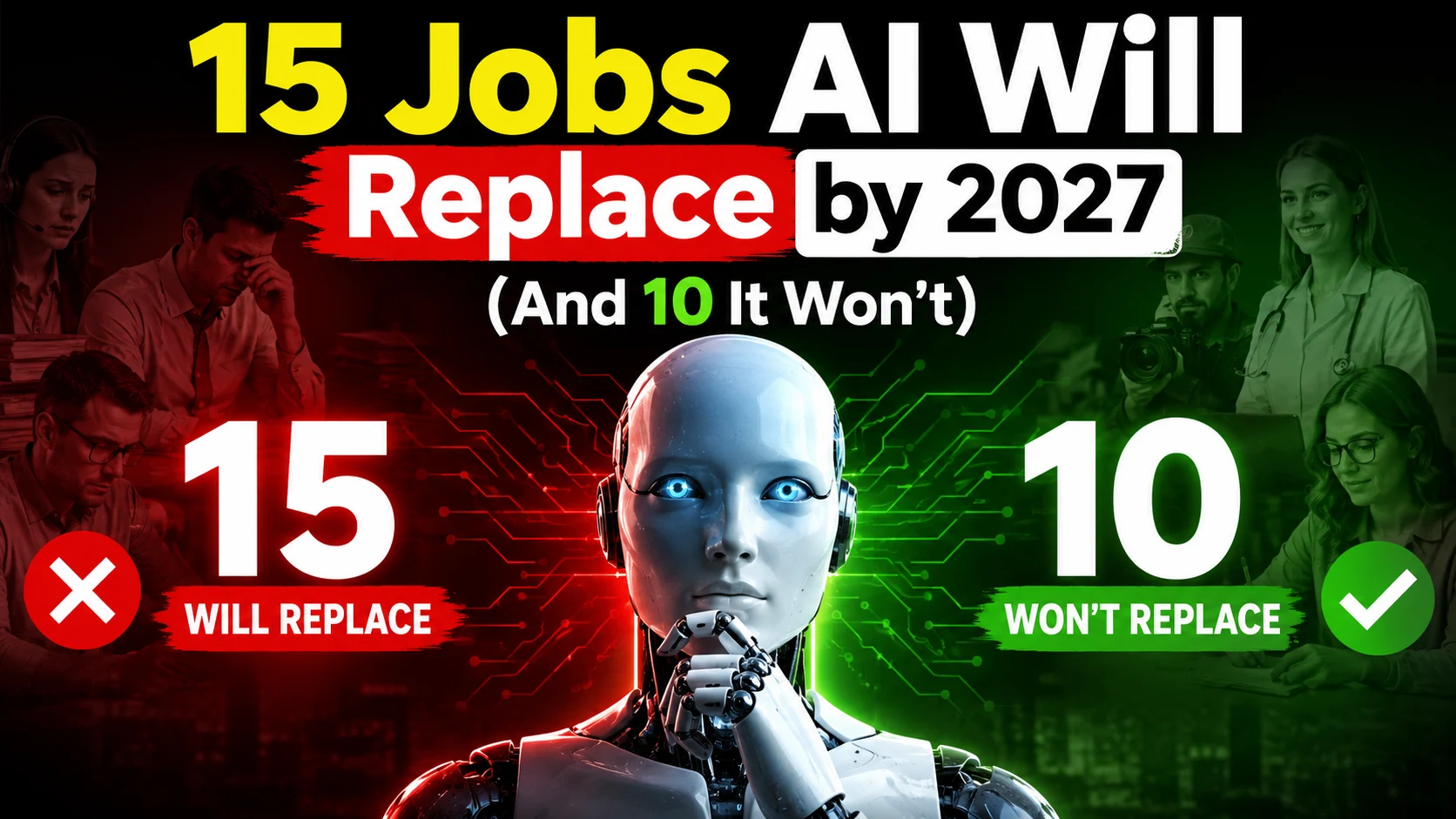
While automation is certainly accelerating, the real question isn’t just if AI will replace jobs, but which ones, and what new opportunities will emerge in their wake.
The Automation Equation: What’s at Risk?
According to Goldman Sachs, up to 300 million jobs globally could be exposed to AI automation over the next decade. Their analysis suggests that generative AI could automate between 9% and 17% of the tasks currently performed by India’s non-agricultural workforce alone. This “exposure,” however, does not necessarily equate to outright elimination.
For many roles, AI will act as a productivity enhancer rather than a replacement. Goldman Sachs estimates that 42-48% of India’s non-agricultural employment is likely to be complemented by AI, allowing workers to focus on higher-value activities while AI handles routine documentation and data processing.
5 Jobs Highly Vulnerable to AI Substitution
The roles most susceptible to full automation are those characterized by repetitive, rule-based tasks and routine data handling.
- Data Entry Clerks: As AI gets better at optical character recognition (OCR) and natural language processing, the need for manual data input is plummeting.
- Administrative Assistants: AI-driven virtual assistants can now manage schedules, draft emails, and organize files with increasing efficiency.
- Telemarketers: AI chatbots and voice agents are rapidly taking over routine customer outreach and sales calls.
- Basic Accounting and Auditing: Software can now automate a significant portion of standard bookkeeping and compliance checks.
- Routine Content Moderation: Algorithms are increasingly capable of flagging and filtering inappropriate content on digital platforms.
The Growth Engine: Where AI Creates Opportunity
The World Economic Forum’s Future of Jobs Report offers a broader perspective on the net impact of these technological shifts. They estimate that by 2030, while 92 million existing jobs could be displaced globally, a staggering 170 million new roles will be created. This results in a projected net gain of 78 million jobs.
Key Insight: The jobs of the future will heavily index on skills that AI currently struggles to replicate—complex problem-solving, emotional intelligence, and strategic thinking.
10 Jobs Secure (or Growing) in the AI Era
While some jobs will vanish, others will become increasingly vital, and entirely new categories will emerge.
Tech-Centric Roles:
- AI and Machine Learning Specialists: The architects building and refining the systems.
- Data Scientists and Analysts: Professionals who can interpret complex datasets and derive actionable insights.
- Cybersecurity Experts: As digital infrastructure grows, so does the need to protect it.
- Digital Transformation Specialists: Guides helping organizations navigate technological integration.
Human-Centric and Physical Roles:
5. Healthcare Professionals (Nurses, Therapists): Roles requiring deep empathy, complex physical interaction, and nuanced judgment.
6. Education Professionals (Teachers, Counselors): While AI can assist, the mentorship and interpersonal dynamics of teaching remain fundamentally human.
7. Skilled Trades (Electricians, Plumbers): Physical, non-routine tasks in unpredictable environments are incredibly difficult to automate.
8. Creative Directors and Strategists: While AI can generate content, high-level conceptualization and strategic direction require human ingenuity.
9. Social Workers: Navigating complex human emotions and social systems requires a level of empathy AI cannot possess.
10. Human Resources Professionals: Managing talent, conflict resolution, and organizational culture remain distinctly human domains.
The Real Challenge: The Reskilling Imperative
The data suggests we are moving toward a period of significant job reallocation rather than a jobless future. The challenge lies in managing the transition. The WEF emphasizes that workers who upskill in AI tools will be significantly better positioned to adapt, with PwC noting a 56% wage premium for workers with AI skills compared to their peers.
The future doesn’t belong to AI; it belongs to the humans who learn to collaborate with it. The most critical skill in the next decade won’t be coding or prompt engineering—it will be adaptability. Organizations and individuals must prioritize continuous learning to navigate the evolving landscape of work.
Also Read How to Automate Your Job Search Using AI (Step-by-Step)