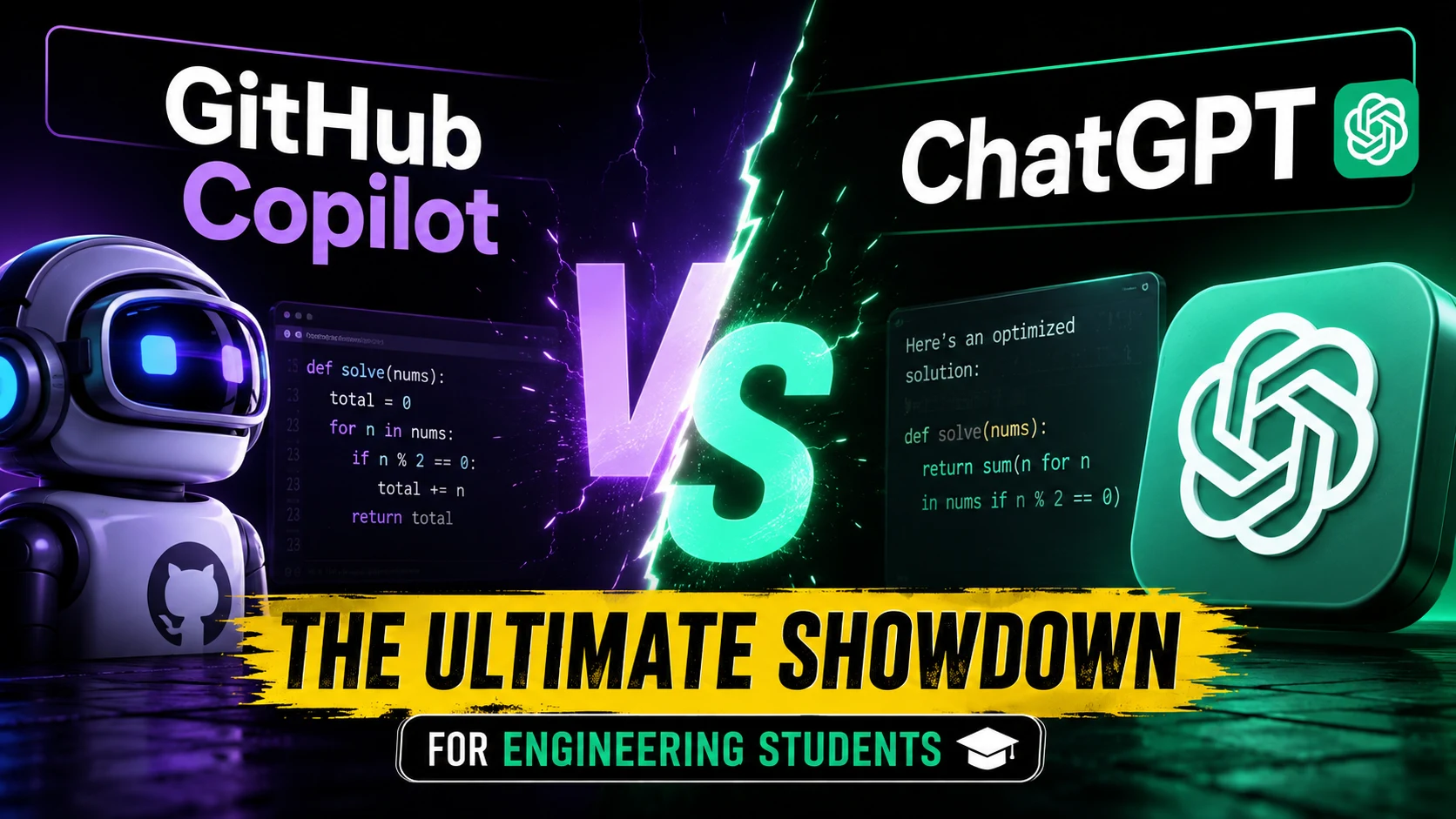
The AI price war has officially shifted from tokens to tasks. In 2026, comparing API costs purely by “price per million tokens” is a trap that could quietly drain your engineering budget. Here is the honest, no-fluff breakdown of what Claude Sonnet 5, GPT-5, and Gemini actually cost to run your daily operations.
If you are a CTO, developer, or product manager building generative AI into your platform, the marketing brochures all sound the same. Every provider promises “frontier intelligence” at a fraction of last year’s cost. But when you deploy these models into production—whether for high-volume customer support chatbots, massive coding repositories, or complex Agentic workflows—the real-world billing tells a different story.
Welcome to the era of cost-per-task.
Because a “cheap” model that requires three times as many prompts to get the right answer will ultimately cost you more than an “expensive” model that gets it right the first time. Let’s break down the big three.
The “Cost-Per-Token” Illusion
Traditionally, LLM costs were calculated linearly: Input Tokens + Output Tokens = Total Cost.
Today, this math is fundamentally broken. Prompt caching, batch APIs, and massive context windows have completely altered the landscape. For example, a model that charges $3.00 per million input tokens might actually cost you only $0.30 if you achieve a 90% cache-hit rate on repeated system prompts.
To understand the real AI API pricing, we have to look at how these models handle specific workloads.
GPT-5: The General-Purpose Heavyweight
OpenAI’s GPT-5 remains the industry’s default standard for a reason: versatility and a mature ecosystem.
Priced around $1.25 per 1M input tokens and $10.00 per 1M output tokens, GPT-5 is highly competitive for balanced, multi-turn workloads. OpenAI also offers a Batch API that slashes costs by 50% for non-real-time jobs, making it incredibly cost-efficient if you are running overnight data processing or bulk content generation.
- Best for: General-purpose AI apps, balanced RAG (Retrieval-Augmented Generation) pipelines, and multimodal tasks (vision + text).
- The Catch: Heavy reliance on tool calls (like web search or code execution) can add hidden fees that quietly inflate your monthly bill.
Claude Sonnet 5: The Coding & Reasoning Sweet Spot
Anthropic has aggressively positioned the Claude Sonnet series as the “intelligence per dollar” champion.
While exact pricing models fluctuate, Claude’s ecosystem generally sits slightly higher on base token costs (often around $3.00 Input / $15.00 Output per 1M tokens for its flagship Sonnet tier). However, Claude Sonnet 5’s superpower is its prompt caching architecture. If your application relies on massive, static system prompts (like a dense customer service manual or a complex coding framework), caching can drop your input costs by up to 90%.
- Best for: Complex coding, precise refactoring, software engineering workflows, and tasks requiring a highly natural, relatable human tone.
- The Catch: Without prompt caching, the base token cost can make high-volume, simple tasks unnecessarily expensive.
Gemini (2.5 & 3.1 Pro): The High-Volume Context King
Google’s Gemini ecosystem is built for scale. Gemini 2.5 Pro (and the newer 3.1 architecture) matches GPT-5’s base pricing at roughly $1.25 Input / $10.00 Output per 1M tokens, but it fundamentally changes the game with its massive context windows (up to 2 million tokens).
If you need to process entire codebases, hour-long videos, or thousands of legal documents in a single prompt, Gemini is virtually uncontested. Furthermore, Google offers “Flash” and “Flash-Lite” variants. Gemini Flash-Lite drives the cost floor down to mere pennies (around $0.10 Input / $0.40 Output), making it the absolute cheapest option for basic, high-volume tasks.
- Best for: Massive document repositories, video analysis, long-context RAG, and extreme high-volume routing.
- The Catch: Context caching includes hourly storage pricing, which requires careful management to avoid ballooning costs for idle agents.
Real-World Cost Comparison: The Monthly Bill
Let’s look at a realistic scenario: A mid-sized customer support chatbot processing 100,000 messages per month (assuming a 75% input / 25% output ratio and standard caching).
| AI Model | Estimated Monthly Cost | Primary Strength |
| Gemini Flash-Lite | ~$17.50 | Lowest absolute cost floor for basic tasks. |
| GPT-5 Mini | ~$69.00 | Excellent balance for simple conversational AI. |
| Gemini Pro | ~$344.00 | Massive context retention for deep troubleshooting. |
| GPT-5 | ~$344.00 | Top-tier general reasoning and multimodal support. |
| Claude Sonnet | ~$600.00 | Unmatched coding and complex workflow orchestration. |
(Note: Costs can vary wildly based on cache-hit rates, batch processing, and exact token limits.)
The Verdict: Which AI Should You Pay For?
The days of pledging loyalty to a single AI provider are over. In 2026, the smartest engineering teams are using multi-model routing to optimize their LLM cost comparison.
- Use Gemini Flash-Lite as your frontline router for simple, high-volume queries.
- Rely on GPT-5 for your core, general-purpose heavy lifting.
- Deploy Claude Sonnet 5 specifically for complex coding, reasoning, and tasks where a single hallucination could cost you dearly.
The Bottom Line: Stop looking at the cost per token. Build a small evaluation set of your company’s actual daily tasks, run them through all three APIs, and measure the final bill. The cheapest AI isn’t the one with the lowest token price; it’s the one that solves your problem on the first try.
Also Read Why Gemini Keeps Getting Delayed (3rd Time This Year): Inside Google’s AI Stumble