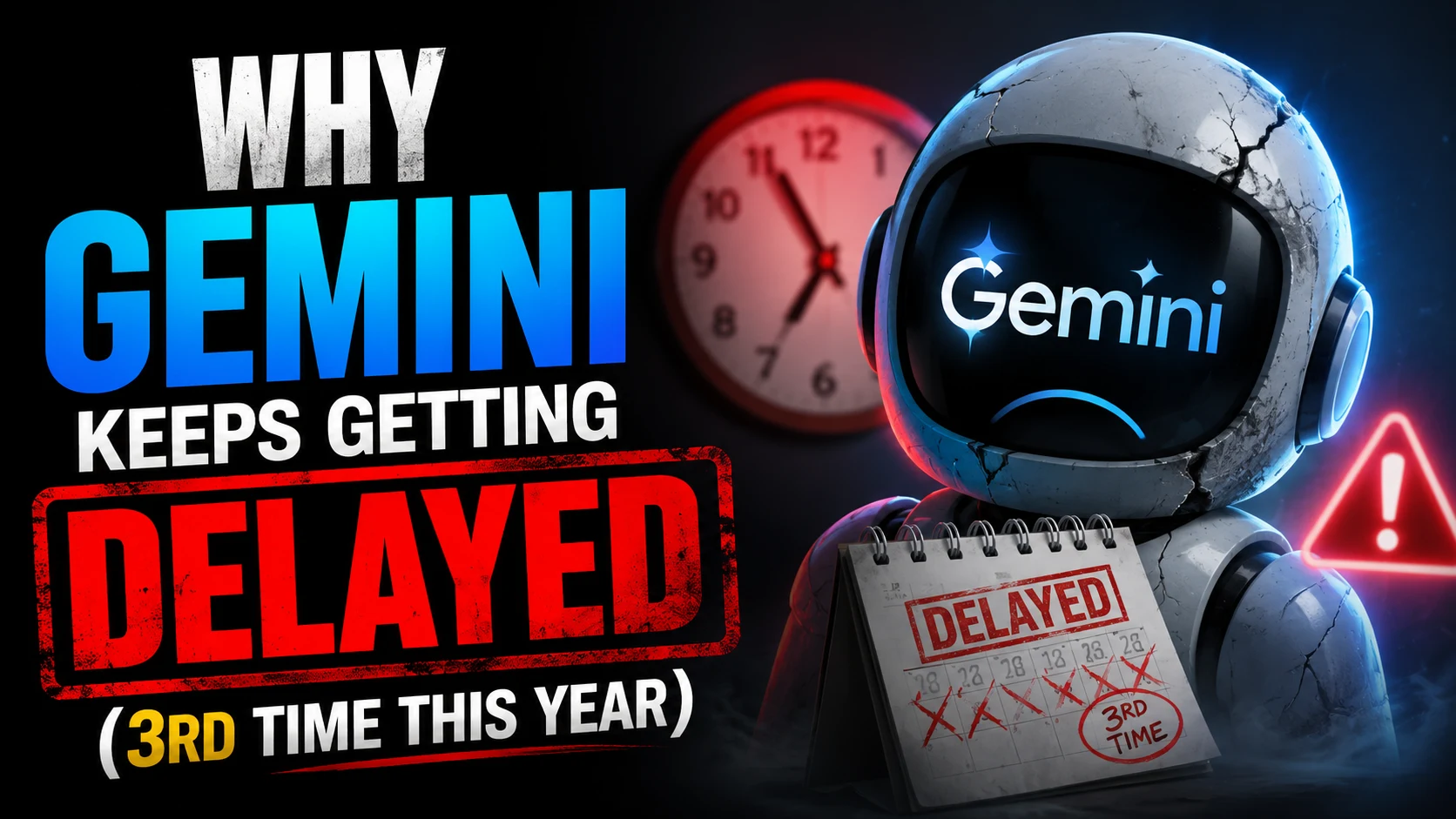
For the third time this year, Google has quietly pushed back the launch of its flagship AI model, Gemini 3.5 Pro. What was supposed to be a triumphant summer rollout has instead wiped billions off Alphabet’s market valuation and sparked internal frustration. As rivals capitalize on the vacuum, the delays expose a deeper crisis inside the tech giant: a battle against compute scarcity, stubborn coding benchmarks, and bureaucratic red tape.
When Google announced Gemini 3.5 Pro at its annual I/O developer conference in May 2026, the industry paid attention. Dubbed the company’s most powerful flagship model, it was initially slated for a broader public launch in June.
That deadline came and went. Now, having missed its third expected release window, the tech giant finds itself doing damage control while attempting to reassure nervous enterprise clients and investors.
According to internal reports, the primary technical hurdle lies in the model’s coding capabilities. In late June, Google updated the data used to train Gemini to improve its coding skills, but the results were largely “disappointing”. In an industry where businesses rely heavily on flawless AI code generation, releasing an undercooked product simply isn’t an option.
In an emailed statement, a Google spokesperson pushed back against the narrative of panic, stating that the company is “shipping quickly across a wide range of models while keeping them highly cost-effective for customers,” and confirming that the 3.5 Pro model is currently undergoing partner testing.
The Hidden Culprits: Compute Scarcity and Red Tape
While technical snags are common in AI development, Gemini’s delays point to much larger structural bottlenecks holding Google back.
- The Hardware Crunch: AI compute scarcity is hitting the industry hard. In July, Google was reportedly forced to cap Meta’s access to its Gemini compute nodes because it couldn’t meet the sheer volume of API requests. This constraint forced Meta to scale back its internal automation workflows to avoid service outages. When raw compute becomes a harder constraint than talent or budget, even tech titans struggle to maintain deployment schedules.
- The Bureaucracy of Scale: Unlike lean startups, Google must carefully weave its new AI models across a massive, established product portfolio, including Search, Maps, and YouTube. This requires multiple layers of stakeholder approval. Current and former employees note that this internal friction drastically slows down the release cycle, making agility nearly impossible.
The Fallout: Frustrated Talent and a $425 Billion Hit
The financial markets have not been kind to Google’s hesitancy. Following a mid-July report detailing the internal delays, shares of Google-parent Alphabet sank by 4%. Overall, the missed dates and shifting timelines have contributed to a staggering $425 billion drop in the company’s market valuation.
Internally, the mood is reportedly tense. The repeated delays have frustrated Google engineers, AI researchers, and managers. The pressure is mounting as talent retention becomes a critical issue. Several senior researchers have reportedly migrated to rival Anthropic, driven by growing internal concerns that Google risks losing its competitive edge.
Competitors Pounce While Google Pivots
Nature abhors a vacuum, and the AI market is notoriously unforgiving. While Google takes its time tweaking Gemini 3.5 Pro, competitors have surged ahead.
Rival models like GPT 5.6 Sol and Claude Fable 5 are actively gaining ground, capitalizing on Google’s delays by offering superior performance in reasoning and language generation. Anthropic is even taking structural steps to avoid Google’s compute fate by entering advanced negotiations with Samsung to co-develop a custom AI chip optimized specifically for its Claude architecture.
To stop the bleeding and offer fresh alternatives to developers, Google shifted its immediate focus to smaller, highly efficient models. On July 21, the company launched three lightweight AI alternatives:
- Gemini 3.6 Flash: A fast, cost-efficient model aimed at broad enterprise applications.
- Gemini 3.5 Flash-Lite: Billed as the fastest in the 3.5 series, this model is designed for low-latency, high-volume workloads and agentic document processing.
- Gemini 3.5 Flash Cyber: A specialized code-mending model tailored for cybersecurity, currently available to governments and trusted partners via a limited-access pilot program.
Looking Ahead: Can Gemini 4 Save the Day?
Google is already actively attempting to change the narrative. While 3.5 Pro remains stubbornly in the testing phase, the company has openly teased the impressive pre-training performance of its next-generation Gemini 4 model.
Furthermore, a massive ecosystem play is on the horizon: the highly anticipated Gemini-powered Apple Siri beta is scheduled to launch in September 2026. This deep ecosystem integration could cement Google’s ubiquitous consumer presence, potentially overshadowing the delays of its flagship enterprise model.
The Takeaway: The repeated delays of Gemini 3.5 Pro prove a hard truth about the next phase of the AI wars: having the smartest researchers isn’t enough. Long-term success now depends on securing massive compute infrastructure and cutting through corporate bureaucracy to ship products on time. Google still commands an unparalleled ecosystem, but its agility is being severely tested by leaner, hungry rivals.
What’s your move? Are you holding out for the delayed power of Google’s Gemini 3.5 Pro, or have you already migrated your enterprise workflows to Claude Fable 5 and GPT 5.6 Sol? Let us know in the comments below.
Also Read Kimi K3 Just Beat Claude and GPT-5 — Here’s What That Actually Means