Imagine applying for a job, seeking a loan, or simply walking down the street, while an invisible algorithm quietly decides your fate. For years, artificial intelligence has operated in a regulatory “Wild West,” leaving consumers vulnerable to hidden biases, mass surveillance, and manipulated content. Now, the European Union has stepped in with the world’s first comprehensive AI law—and its ripple effects will fundamentally change how you interact with technology.
The End of the AI Wild West
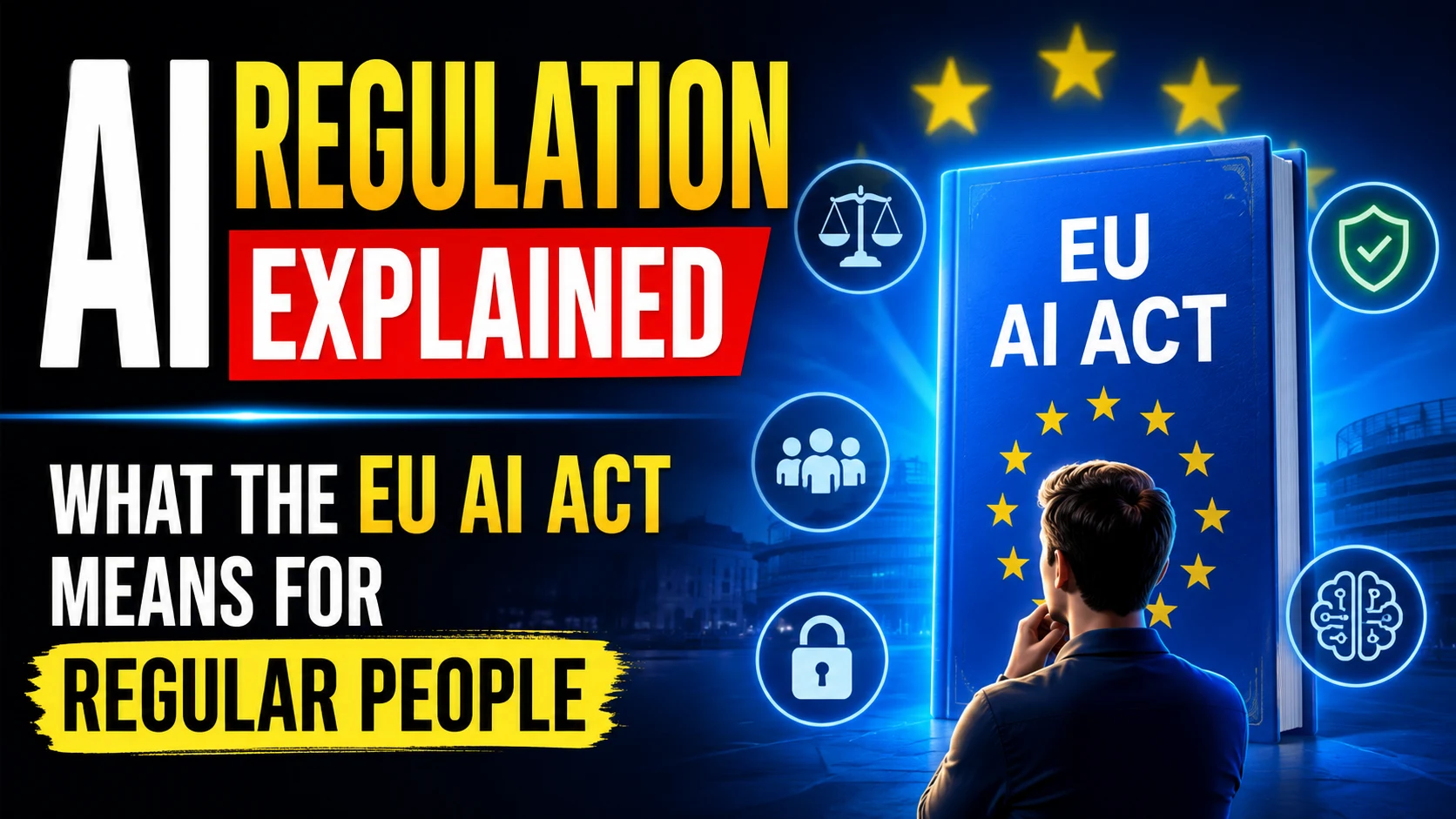
The EU Artificial Intelligence Act is not just another bureaucratic policy; it is a sweeping piece of legislation designed to protect human rights without stifling innovation. While it officially entered into force in mid-2024, its rules are being rolled out in phases. The most severe restrictions—outright bans on dangerous AI—took effect in February 2025. Over the coming years, through August 2026 and December 2027, increasingly strict transparency and safety rules will become mandatory for tech companies.
But what does this legal jargon actually mean for you? At its core, the Act categorizes AI systems based on the danger they pose to regular people.
Explore how different AI tools are classified under the new law:
Key insight: The vast majority of AI systems you use daily (like spam filters or smart home routines) fall into the “Minimal Risk” category and remain largely unregulated. The law specifically targets high-stakes algorithms.
What AI Practices Are Now Banned?
The EU AI Act takes a hardline stance against “Unacceptable Risk” applications. As of early 2025, several dystopian uses of AI are strictly prohibited across Europe.
- No Social Scoring: Governments and private companies cannot use AI to evaluate your social behavior and restrict your access to services, preventing a Chinese-style social credit system.
- No Emotion Recognition at Work or School: Your boss or teacher can no longer use AI to analyze your facial expressions to guess if you are paying attention, stressed, or angry.
- No Mass Facial Scraping: Tech companies are banned from indiscriminately scraping facial images from the internet or CCTV footage to build massive facial recognition databases.
- No Manipulative AI: Algorithms designed to exploit the vulnerabilities of specific groups (like children) using subliminal messaging are completely outlawed.
Protecting Your Rights in High-Stakes Situations
If an AI system has the power to significantly alter your life, it is classified as “High Risk.” This includes algorithms used in hiring, banking, education, healthcare, and law enforcement.
Historically, if a computer rejected your mortgage application or tossed your resume into the trash, you had little recourse. Under the new AI regulation timeline, companies deploying these high-risk systems face strict obligations. They must ensure their training data is free of bias, maintain detailed logs of how the AI makes decisions, and guarantee human oversight.
For you, this means accountability. If a high-risk AI system assists in a decision that negatively impacts you, you have the right to know an algorithm was involved, and you now have clear avenues to lodge complaints.
The War on Deepfakes and Hidden Chatbots
We’ve all seen hyper-realistic, AI-generated images of politicians or celebrities doing things that never actually happened. To combat misinformation, the AI Act imposes strict transparency rules on “Limited Risk” systems.
- Chatbot Disclosures: If you are interacting with an AI customer service agent, the company must explicitly tell you that you are speaking to a machine.
- Deepfake Labeling: AI-generated audio, video, and text must be clearly labeled or watermarked so that regular consumers know the content is synthetic.
These transparency obligations—which become fully enforceable by August 2026—ensure you can trust your own eyes and ears online.
The Global Ripple Effect
You might be thinking, “I don’t live in Europe, so why should I care?”
The answer lies in the “Brussels Effect.” Just as the EU’s privacy law (GDPR) forced global companies to overhaul their data practices worldwide, the EU AI Act is expected to set the global standard for AI regulation. Multinational tech giants like Google, Microsoft, and OpenAI are unlikely to build entirely separate, less-safe versions of their models for the rest of the world. By forcing companies to build safer AI for Europe, the Act effectively exports stronger consumer protections across the globe.
The Bottom Line
The EU AI Act is a monumental step toward making technology serve humanity, rather than exploit it. It shifts the burden of safety from the consumer to the creator, ensuring that as AI grows more powerful, your fundamental rights and privacy remain intact.
Also Read What Is Context Window and Why Does It Matter to You?