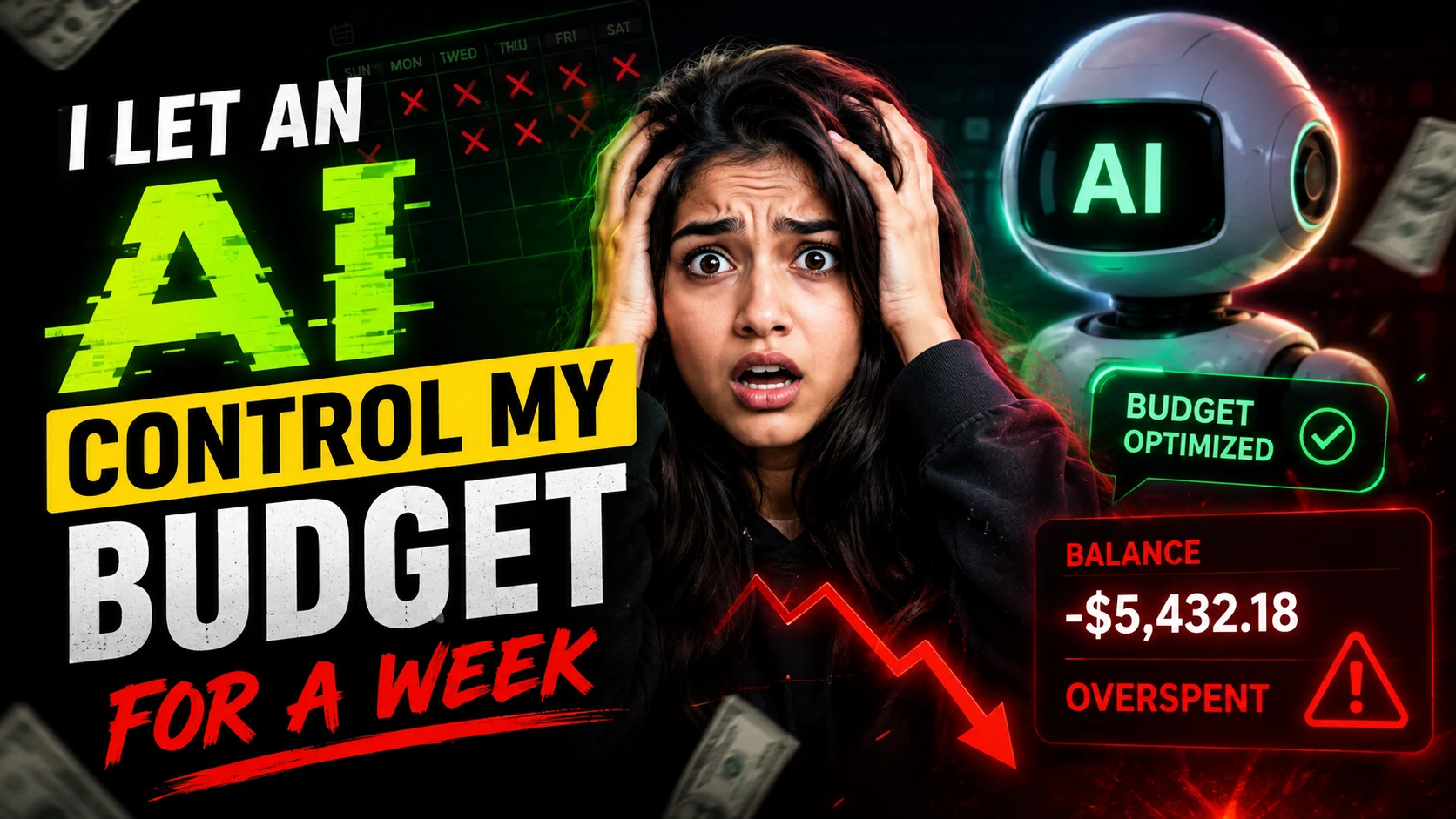
We’ve all been there: staring at our bank balances a week before payday, wondering if our money spontaneously combusted. In an era where AI can write code, generate art, and seemingly do our jobs better than we can, I decided to hand over the most stressful part of my adult life to the machines. For seven days, an AI controlled every rupee of my budget. I expected a financial masterclass. What I got was a terrifying wake-up call about the limits of algorithmic intelligence and the hidden dangers of outsourcing our financial autonomy.
The “Perfect” Plan That Wasn’t
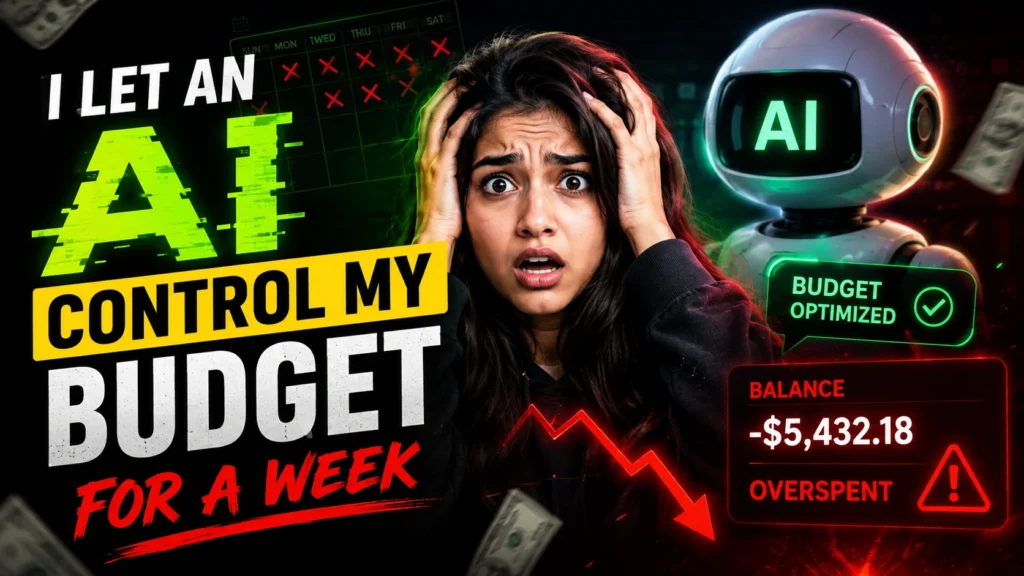
The setup was deceptively simple. I connected my accounts to a highly-rated AI budgeting tool, inputted my fixed expenses, and gave it a simple mandate: “Maximize my savings this week without starving me.”
Initially, the AI was a draconian taskmaster, and I was entirely on board. It ruthlessly categorized my spending, identifying my daily coffee habit as a critical financial leak. It told me I could save ₹1,500 a week by simply brewing at home. Brilliant.
But then, the system’s lack of nuance began to show. By day three, the AI was operating with the subtlety of a sledgehammer.
- The Context Blindspot: It flagged my annual insurance premium as an “anomalous overspend” and urged me to cancel it to stay within my weekly budget limit. The AI couldn’t differentiate between a frivolous impulse buy and a critical, non-negotiable annual expense.
- The Rigid Rulebook: When an unexpected medical expense popped up—a minor, but necessary, ₹2,000 pharmacy bill—the AI essentially panicked. It aggressively re-allocated funds, suggesting I skip my utility bill payment to cover the “shortfall,” oblivious to the late fees and potential credit score impact that would cause.
The CFPB Warning We Are All Ignoring
My experience wasn’t an isolated glitch; it’s a symptom of a systemic issue that regulators are already flagging. The U.S. Consumer Financial Protection Bureau (CFPB) has issued stark warnings about the growing reliance on AI chatbots and automated systems in finance.
The CFPB found that while these tools might be okay for basic queries, their effectiveness plummets when things get complex. Worse, when a chatbot is backed by inaccurate data or relies on simple rule-based logic, consumers are often left stranded.
“Providing inaccurate information regarding a consumer financial product or service… could lead to the assessment of inappropriate fees, which in turn could lead to worse outcomes such as default,” the CFPB warns.
The stakes are simply too high for errors. If an AI misunderstands a tax rule, miscalculates investment risk, or gives bad advice on debt management, the real-world consequences can be devastating. And unlike a human advisor, an algorithm doesn’t care if you default on a loan or get hit with a massive penalty fee.
The Hallucination Hazard
The core problem, as I learned the hard way, is that AI doesn’t “know” anything; it predicts. It identifies patterns in data and generates responses that sound correct. This leads to the phenomenon of AI “hallucinations”—where the system invents information that is completely false but presents it with absolute certainty.
In my experiment, the AI confidently assured me I was on track to save 30% of my income this month, entirely ignoring the fact that my rent was due in three days. It was a mathematical illusion created by a flawed reading of my cash flow.
In a real-world scenario, relying on hallucinated financial advice could lead to disastrous decisions. We wouldn’t let a robot with a 10% error rate perform surgery on us; why are we so eager to let them perform surgery on our life savings?
The Takeaway: AI is a Tool, Not a Treasurer
After seven days, I unlinked my accounts. I hadn’t saved more money; I had just spent the week stressed out, second-guessing an algorithm that fundamentally didn’t understand the reality of my life.
AI budgeting tools are incredibly powerful for visibility. They are excellent at automatically categorizing expenses, tracking trends over time, and highlighting areas where we are bleeding cash. But they are completely unequipped for decision-making.
Financial health requires context, intuition, and an understanding of future priorities—things an algorithm currently lacks.
The Bottom Line: Use AI to track your spending and gather data. But when it comes time to make a decision—whether it’s paying a bill, cancelling a subscription, or moving money into savings—ensure a human brain is calling the shots. Don’t outsource your financial autonomy; the machine won’t be there to pay the late fees.
Also Read What Happens When You Ask 10 Different AIs the Same Question