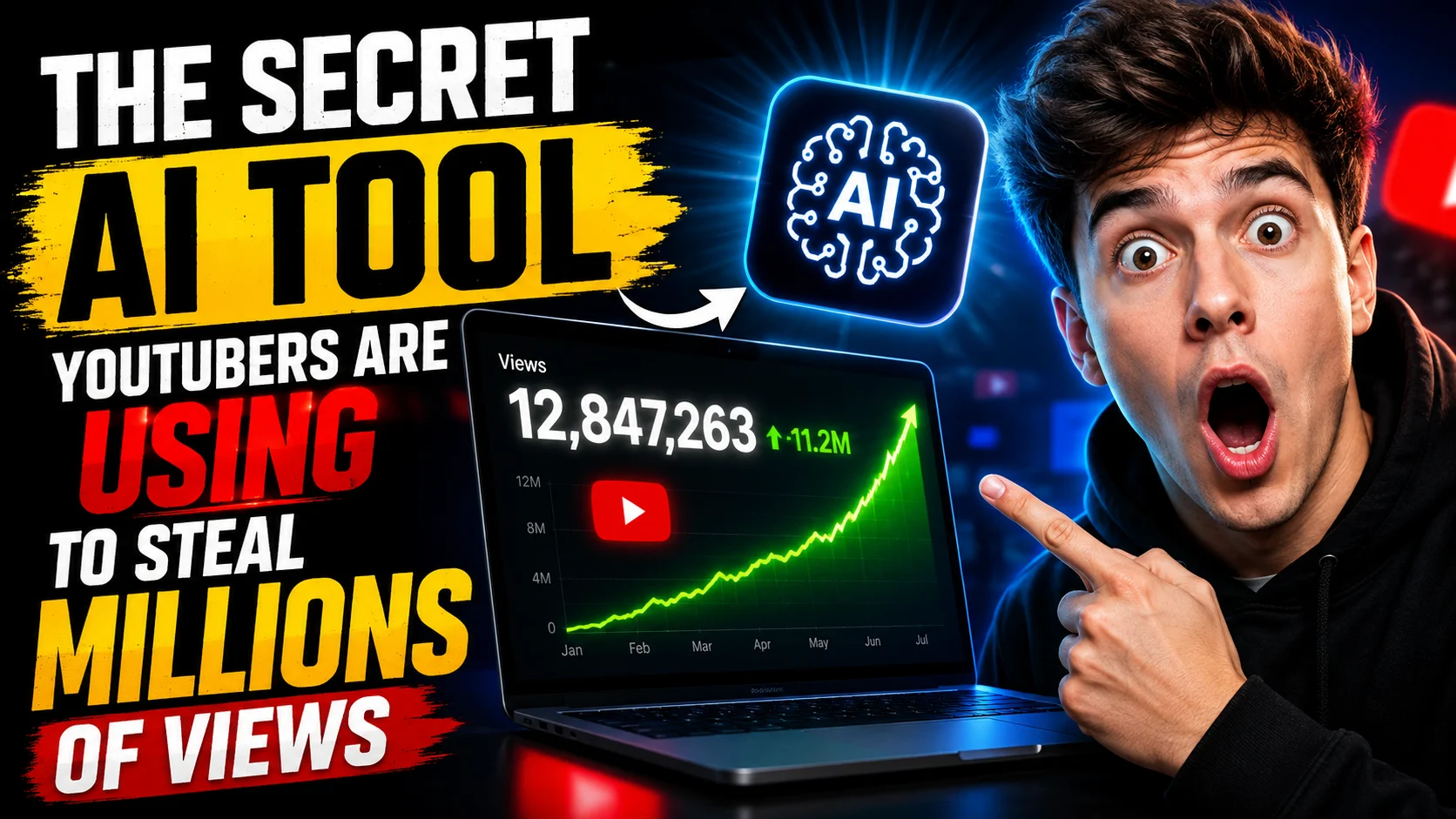
In January 2026, YouTube quietly pulled the plug on 16 massive channels, instantly wiping out 35 million subscribers and 4.7 billion lifetime views. The offense was not copyright infringement, but a sweeping algorithmic purge of what the platform now classifies as “inauthentic content.” At the heart of this digital takedown is a new breed of highly sophisticated AI tools that allow creators to reverse-engineer viral videos, clone successful channel blueprints, and siphon millions of views from original creators without ever stepping in front of a camera.
The Rise of the ‘Blueprint Cloners’
Historically, building a successful YouTube channel required charisma, original research, and hours of painstaking video editing. Today, the landscape has fundamentally shifted. A shadow industry of AI-driven software has emerged, specifically designed to automate the viral content formula and churn out videos at an industrial scale.
Creators are no longer just using AI to brainstorm ideas; they are using it to replicate entire business models. Tools dominating this space include:
- OverseerOS: Functioning as a pre-production command center, this tool allows users to input a successful competitor’s URL and extract a complete “channel blueprint.” It analyzes the original creator’s tone, pacing, hook structures, and thumbnail psychology, allowing users to generate heavily replicated scripts.
- HeyGen & TubeGen: These prompt-to-video generators take the scraped research and automatically generate polished, fully narrated videos—complete with hyper-realistic AI avatars, stock footage, and pacing designed to maximize audience retention.
To the creators who spend weeks researching and filming original content, this practice feels indistinguishable from digital theft. By flooding the algorithm with high-retention, mass-produced content, these AI-automated channels actively crowd out human creators, “stealing” real estate on YouTube’s highly coveted recommendation page.
The Collateral Damage of the “AI Slop” Purge
In response to the growing deluge of automated content—often dubbed “AI slop” by frustrated users—YouTube aggressively updated its algorithm in 2026. The platform’s new inauthentic content policy aims to demonetize heavily templated, low-effort videos that lack human editorial value.
To filter out the noise, YouTube’s algorithm began heavily favoring videos featuring real human faces on camera. However, this blunt-force algorithmic shift caught thousands of legitimate creators in the crossfire.
“Faceless” YouTube channels—which rely on high-quality voiceovers, animations, and documentary-style editing—have been a platform staple for years. Now, many of these 100% human-made channels are being flagged by the algorithm simply because they lack an on-screen host.
Craig Billings, who runs the popular science channel Doctor NOS with over 1.7 million subscribers, recently highlighted this exact crisis. “The people who do the same content as me without their face in it, most of them are getting demonetised,” Billings noted, illustrating how the algorithm is increasingly treating the absence of a human face as a proxy for AI generation.
‘Rent-a-Face’: The Bizarre Gig Economy Workaround
As original faceless creators watch their views and revenues plummet, a bizarre new gig economy has materialized to game the new YouTube algorithm.
Instead of changing their content format, anonymous channel owners are turning to freelance marketplaces like Fiverr and Upwork to hire cheap, on-camera hosts. For as little as $70 a video, gig workers are being paid simply to sit in front of a camera and read AI-generated or ghostwritten scripts.
This creates a paradoxical ecosystem: AI-generated channels can successfully bypass YouTube’s strict new monetization filters simply by slapping a hired human face onto their mass-produced content, while genuinely original human creators who prefer to remain off-camera are punished and pushed off the platform.
The Battle for Authenticity
We are witnessing an arms race between YouTube’s trust infrastructure and creator optimization tactics. YouTube is currently testing crowdsourced viewer surveys to rate “AI slop” and enforcing internal detection signals like Google’s SynthID watermarks. Yet, the technology driving these faceless YouTube channels continues to evolve faster than the guardrails meant to contain them.
The definition of a “creator” is fracturing. On one side are traditional digital artisans who view video making as a craft; on the other are digital operators who view YouTube as a data-driven system to be solved and scaled using artificial intelligence.
The Takeaway: As AI tools become indistinguishable from human talent, the burden of quality control is quietly shifting from the platform to the viewer. The next time you click on a polished, perfectly paced video in your recommended feed, ask yourself: Are you watching the unique perspective of a human expert, or just an algorithm’s highly optimized echo?
What are your thoughts on AI’s growing influence over the content you consume? Share this article and join the conversation on how we define digital authenticity in 2026.
Also Read What Happens When You Ask 10 Different AIs the Same Question