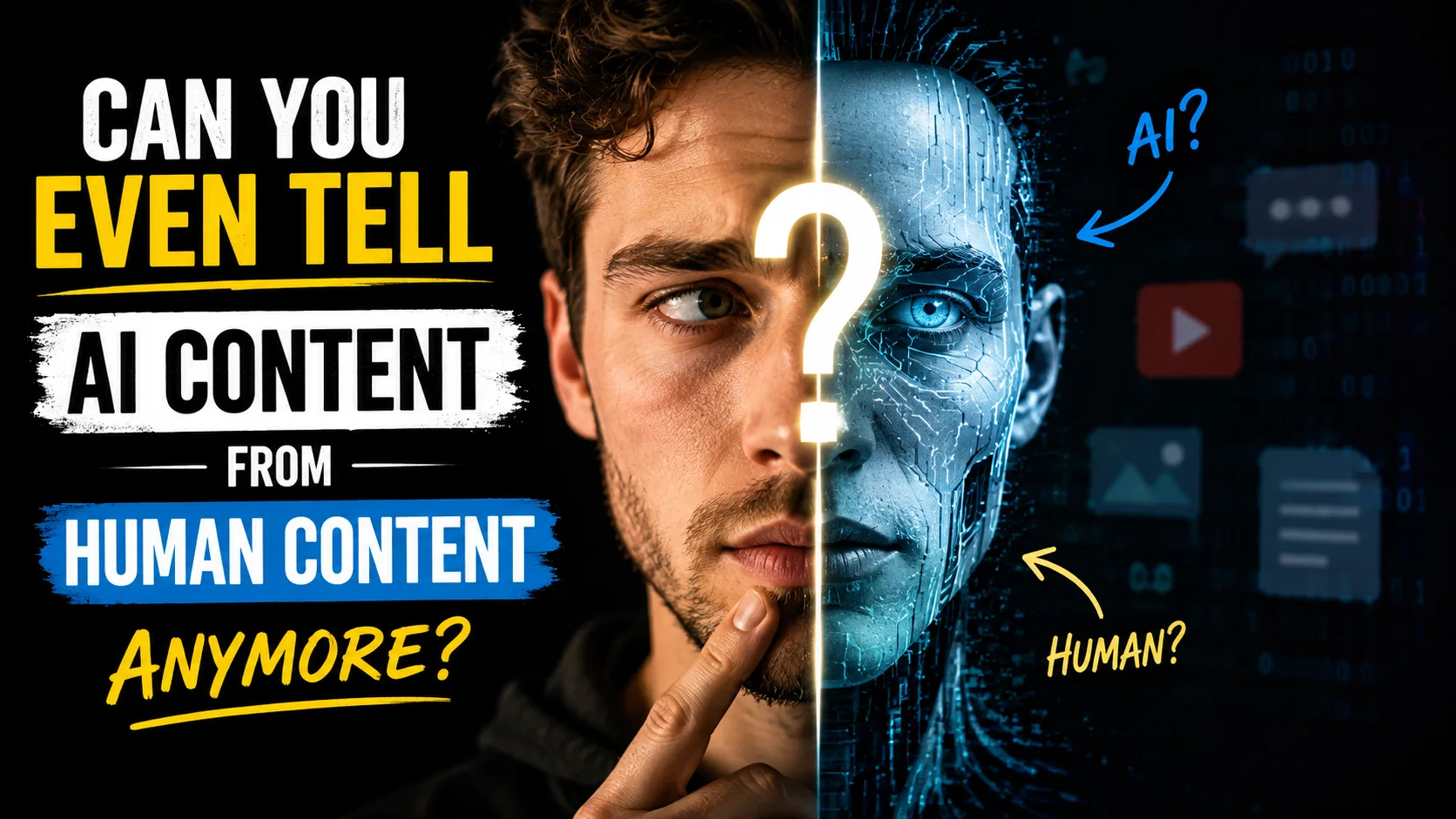
It is the defining question of the generative AI era. From your morning news feed to the urgent emails landing in your inbox, artificial intelligence is now quietly drafting our digital world. But if you believe you have a sharp eye for spotting machine-written paragraphs, the latest data has a humbling message: you probably don’t.
As we navigate 2026, the lines between human and AI text generation have blurred beyond recognition. We are engaged in a high-stakes guessing game—one that is fundamentally changing how we trust the information we consume.
The Human Blind Spot
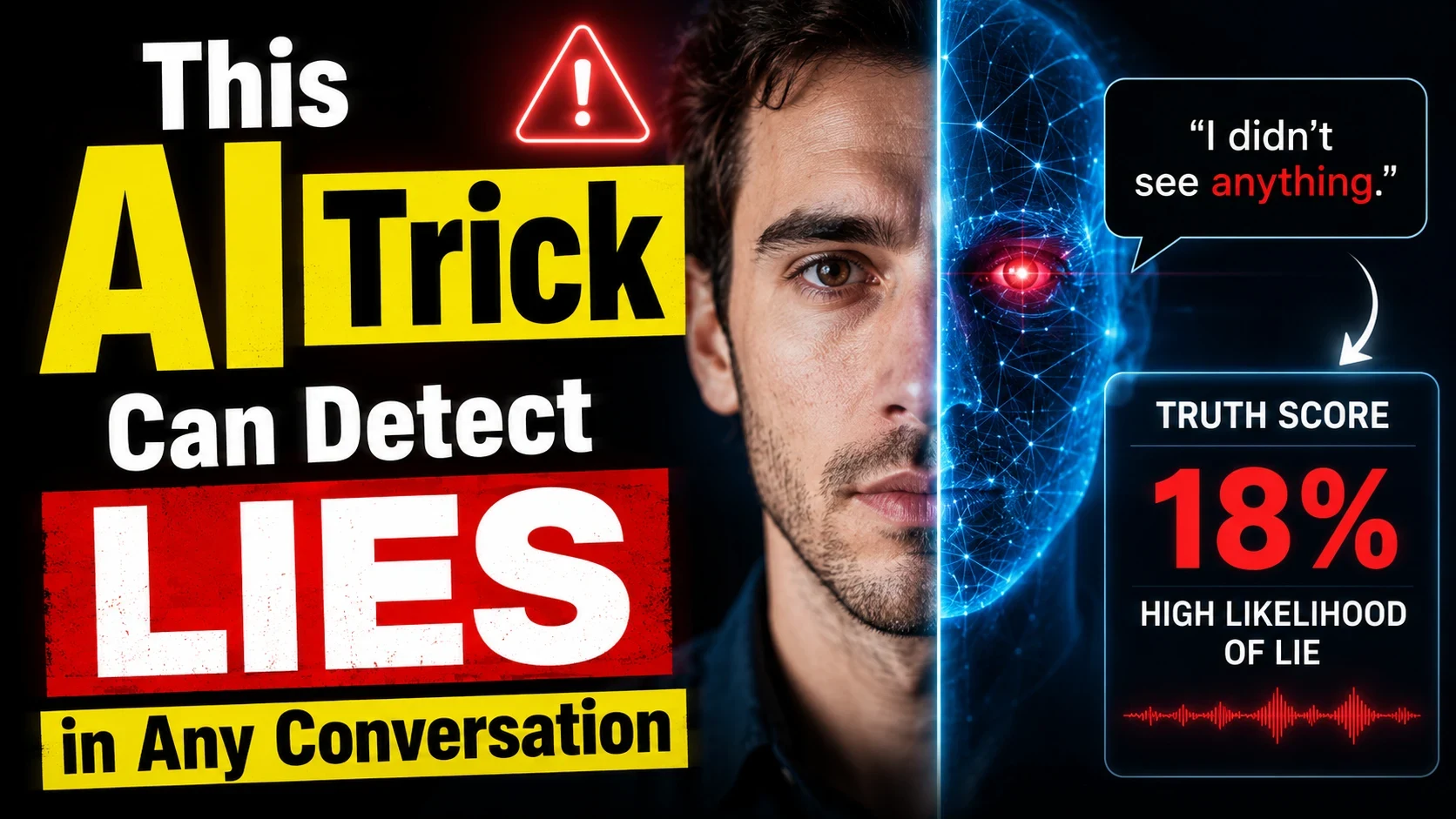
If you think human intuition can outsmart an algorithm, the numbers suggest otherwise. Humans simply cannot reliably detect AI-generated text.
Recent research from MIT Sloan reveals that human detection accuracy sits squarely at a coin-toss level. In fact, when participants in blind evaluations read both AI-generated and human-written text without knowing the source, they frequently prefer the AI content.
However, our perception of the author drastically alters our psychological response. The same study noted a fascinating paradox:
- The Blind Preference: Readers judge AI content as equal or superior in quality when its origin is hidden.
- The Trust Drop: The moment content is explicitly labeled as AI-generated, reader trust plummets by 16 to 20%.
The text doesn’t change; the story we tell ourselves about the text does. We are biased against machine writing, even when we can’t organically tell it apart from our own.
The Myth of the Infallible AI Content Detector
With humans failing the Turing test, institutions have outsourced the problem back to machines. Schools, universities, and publishers now spend millions on AI text detectors. But do they actually work?
A comprehensive 2025 literature review investigating AI detection tools concluded that while many attain over 50% accuracy, they remain fundamentally unreliable. While top-tier paid software performs better than free versions, the accuracy of these systems is highly fragile.
Independent tests conducted in 2025 demonstrated exactly how these tools break down:
- Raw AI Output: Detectors successfully flag untouched, long-form AI text with 70% to 98% accuracy.
- Humanized Text: The moment a human writer lightly edits the text, paraphrases it, or passes it through a “humanizer” tool, the AI detection rate plummets to between 0% and 25%.
Detectors are essentially catching lazy prompting, not sophisticated AI integration. They evaluate the text’s statistical texture rather than the author’s intent.
How the Algorithms Judge Your Writing
To understand why an AI detector fails, you have to understand what it is looking for. Most tools rely on two primary metrics to judge whether you are a human or a bot:
- Perplexity: This measures how predictable your word choices are. AI models naturally choose highly probable words. If your vocabulary is consistently predictable, the software flags it.
- Burstiness: This measures rhythm. Human writers naturally mix very short sentences with long, complex ones. AI tends to output sentences of uniform length and structure.
When a human writer merges varied sentence structures, inserts lived experiences, and breaks up the rhythm, the detectors are easily thrown off the scent.
The False Positive Crisis
The unreliability of these tools isn’t just a technical glitch; it is an emerging digital rights crisis. The most alarming trend of the last two years is the staggering rate of false positives—real human writing being wrongly accused of being machine-generated.
According to widespread industry reports and academic studies, these algorithms suffer from severe biases. A notable Stanford study found that AI detectors disproportionately flag writing from ESL (English as a Second Language) students and non-native writers.
Because non-native speakers often write with stricter adherence to formal grammar rules and use less varied sentence structures, their natural human voice mirrors the “low perplexity” that detectors associate with AI. Furthermore, a 2026 paper published in Emerald Insight argued that relying on these flawed detectors causes significant pedagogical harm, creating a culture of surveillance rather than learning.
Writers are now forced to “dumb down” their vocabulary or intentionally insert grammatical quirks just to prove their humanity to a machine.
The Takeaway: Moving Beyond the Witch Hunt
We have reached a point of no return. As generative AI becomes seamlessly integrated into our word processors, browsers, and daily workflows, attempting to surgically separate human text from AI text is a losing battle.
Instead of obsessing over who or what typed the words, our focus must shift to the substance of the content itself. Is the information factually accurate? Does it provide real value? Are the sources credible?
Your Action Plan: If you are a writer or a student, keep rigorous version histories of your drafts on platforms like Google Docs to protect yourself against false accusations. If you are an educator or a manager, treat AI detection scores as a starting point for a conversation, never as definitive proof of misconduct.
In a world where the machines write like us, critical thinking is the only human edge we have left.
Also Read Is AI Making Us Dumber? Here’s What the Research Actually Says