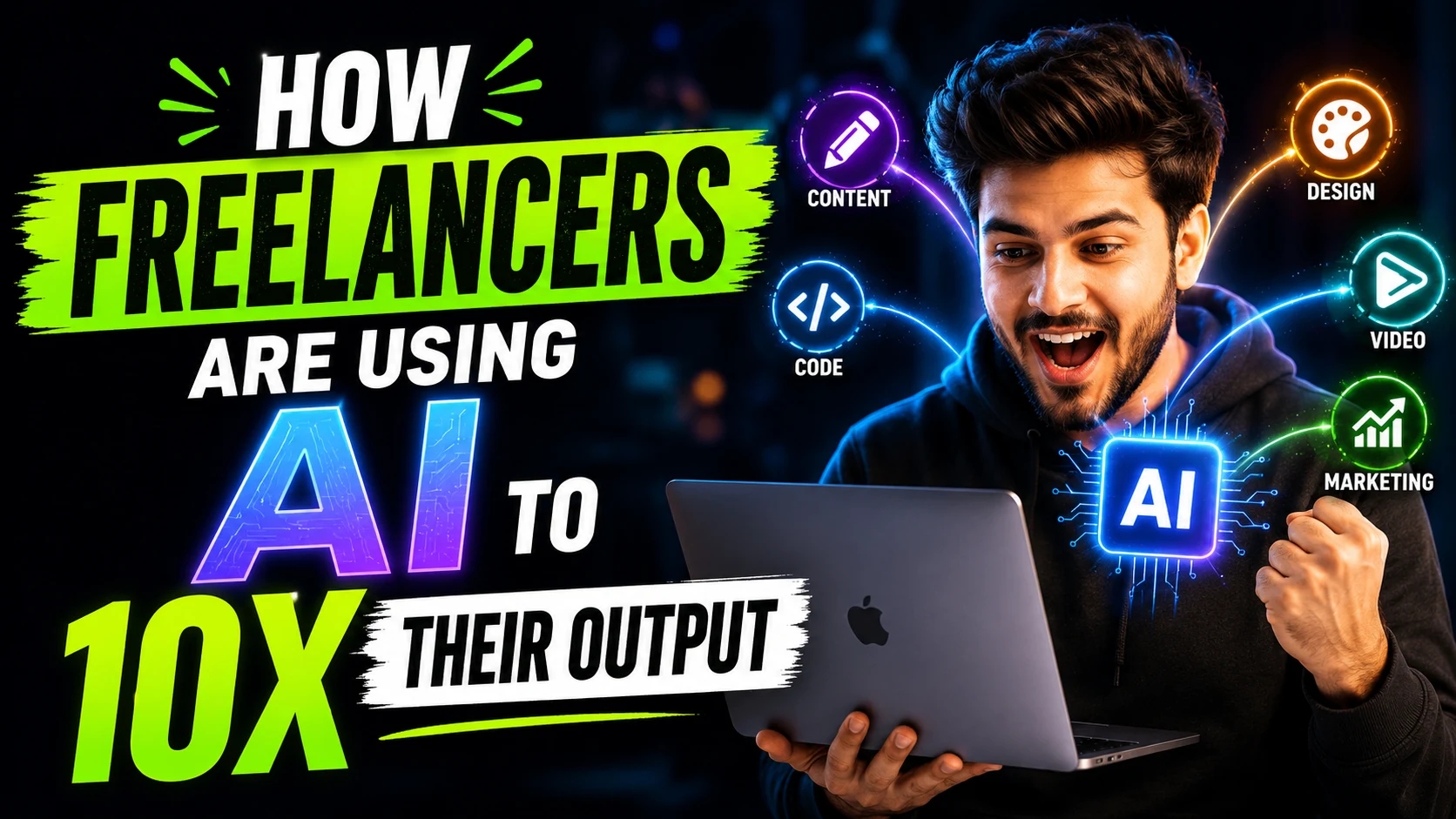
While 77% of full-time corporate employees say artificial intelligence has actually increased their workload, the gig economy is telling a drastically different story. Independent workers aren’t just adapting to the AI revolution—they are leveraging it to scale their businesses at an unprecedented rate. Welcome to the era of the “super-freelancer,” where AI is not a threat, but the ultimate productivity multiplier.
According to a sweeping study by the Upwork Research Institute, 54% of skilled freelancers report advanced or expert-level AI skills, compared to just 38% of traditional full-time employees. Without the burden of corporate red tape or outdated legacy systems, independent professionals are integrating generative AI into their daily workflows seamlessly. For many, consistent use of AI tools is saving them anywhere from 8 to 15 hours a week.
But how exactly are these solo entrepreneurs achieving a 10x output? Here are five practical ways freelancers are using AI to dominate the modern workforce.
1. Obliterating the “Blank Page” Syndrome
For freeilance writers, marketers, and strategists, the hardest part of any project is often just getting started. Today’s top freelancers aren’t wasting hours staring at a blinking cursor.
Instead, they use large language models like ChatGPT or Claude as collaborative brainstorming partners.
- Rapid Ideation: Freelancers input a client’s core constraints and ask the AI to generate ten different angles for a blog post or campaign.
- First Draft Generation: AI quickly drafts outlines, messaging frameworks, or preliminary project scopes.
The key differentiator? Professionals don’t copy-paste. They use AI to generate the raw clay, then apply their unique human expertise and industry knowledge to sculpt the final, polished deliverable.
2. Automating the Administrative Grind
Freelancers wear every hat in their business: CEO, marketer, accountant, and project manager. Administrative bloat is the enemy of billable hours.
AI-powered project management tools are now handling the heavy lifting of back-office operations.
- Smart Scheduling: Tools eliminate the endless back-and-forth emails required to book client meetings.
- Meeting Recaps: Transcription tools instantly summarize client calls into actionable transcripts, highlighting key decisions, risks, and next steps.
- Task Management: Platforms like Notion AI and ClickUp automatically break down large, complex client briefs into manageable, daily to-do lists.
3. Scaling Client Outreach and Lead Generation
Finding new clients is a perpetual challenge, but AI is turning freelancers into one-person sales powerhouses. Rather than spending hours drafting individual pitch emails, freelancers are automating their outreach without sacrificing personalization.
Using specialized tools like Lyne AI, freelancers can analyze a prospect’s recent company news or LinkedIn activity to draft highly tailored cold emails at scale. By automating the initial touchpoints, freelancers keep their sales pipelines full while spending their actual working hours fulfilling existing client contracts.
4. Elevating Visuals and Creative Prototyping
You no longer need a dedicated design team to produce visually stunning client presentations. Independent consultants and marketers are utilizing AI to dramatically enhance their visual outputs.
- Rapid Mockups: AI image generators allow freelancers to create instant mood boards, concept art, and visual prototypes for client pitches before a single dollar is spent on official design work.
- Design Democratization: Tools like Canva’s Magic Studio enable non-designers to quickly generate branded social media assets, remove backgrounds, and build professional slide decks in a fraction of the usual time.
5. Smarter Data Analysis and Strategy
Data analysis is no longer reserved for enterprise-level agencies. Freelance tech consultants, SEO specialists, and digital marketers are feeding raw data into AI to extract actionable insights instantly.
Whether it’s running a technical SEO audit, spotting patterns in e-commerce customer feedback, or summarizing long-form industry reports, AI handles the data processing. This allows the freelancer to step into the role of a strategic advisor—interpreting the data and telling the client exactly what moves to make next.
The Human Element Remains Untouchable
If there is one crucial takeaway from the current AI boom, it is this: Clients don’t hire freelancers for what an AI can generate; they hire them for their perspective, strategic judgment, and industry expertise.
AI cannot manage a delicate client relationship, verify nuanced factual claims, or inject genuine brand voice into a sterile draft. The freelancers who are currently winning are those who treat artificial intelligence exactly as it should be treated—as a high-powered assistant, not a replacement.
The Takeaway: If you are an independent professional, your competition isn’t AI. Your competition is a freelancer who knows how to use AI better than you do. Pick one repetitive bottleneck in your workflow this week, automate it, and reclaim your time.
Also Read Should You Learn Prompt Engineering in 2026? The Honest Answer