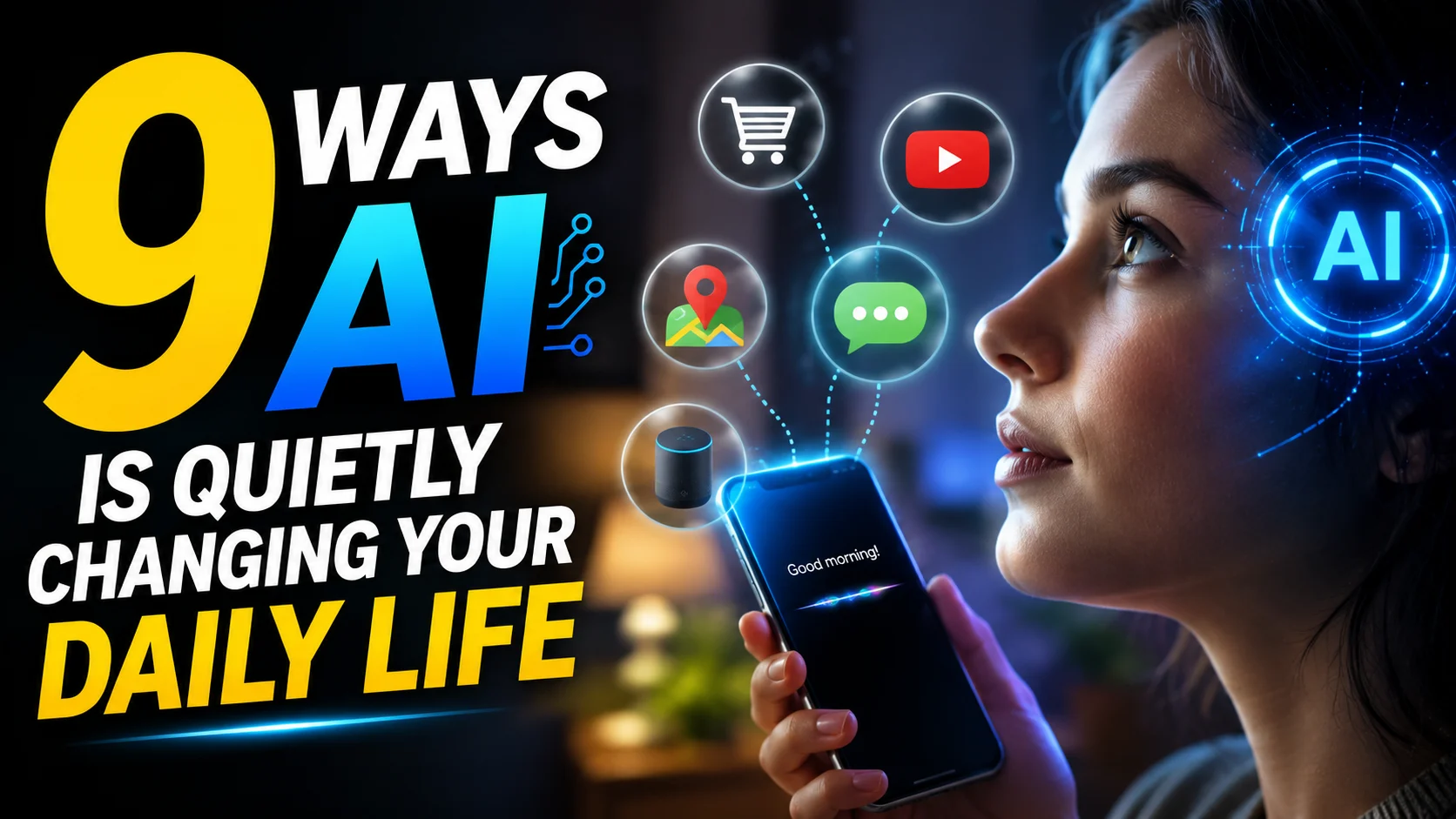
You might think artificial intelligence is just a trendy corporate buzzword or a chatbot you occasionally ask to draft an email. The truth is far more intimate: AI has already moved out of the tech labs and seamlessly integrated into your living room, your commute, and your wallet. From the route you drive to the sleep you get, invisible algorithms are now silently steering the mundane moments of your everyday life.
While generative AI models dominate the headlines, the real revolution is happening behind the scenes. Recent industry data reveals that a staggering 77% of the devices we use today already feature some form of artificial intelligence.
Here are nine surprising ways artificial intelligence is already quietly shaping your world.
1. Engineering Your Digital Reality
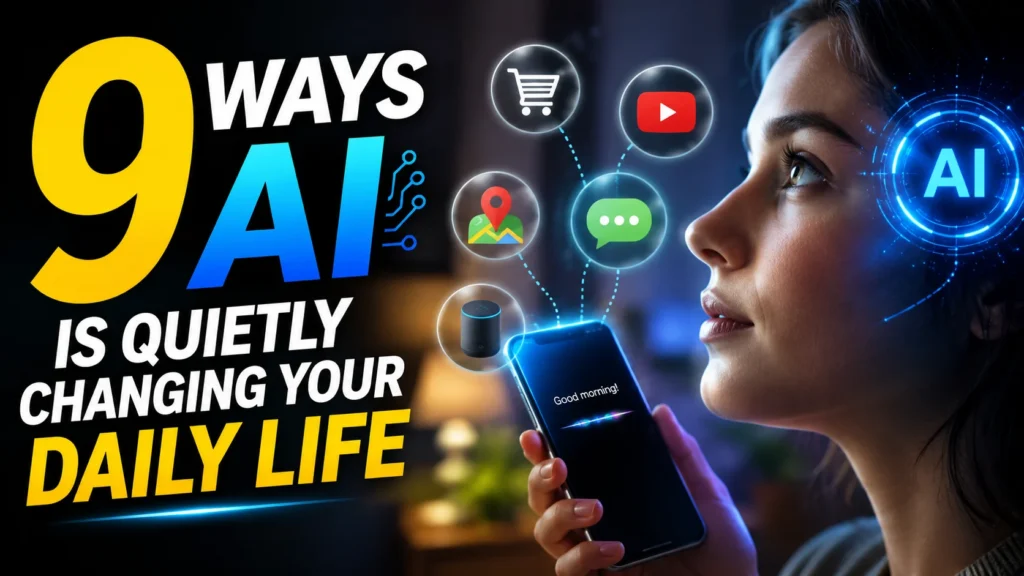
Your social media feed is not a random chronological list of posts—it is a highly engineered ecosystem. Platforms like Instagram, YouTube, and Spotify use complex machine learning algorithms to track your behavior. By analyzing what you pause on, skip, or rewatch, AI curates a personalized feed designed specifically to keep your attention. When an app suggests the perfect song or a product you were just thinking about, it isn’t reading your mind; it is just incredibly good at recognizing your digital patterns.
2. Predicting Your Morning Commute
When Google Maps or Waze suddenly suggests an alternate route that saves you ten minutes, that isn’t luck. Navigation apps leverage AI to analyze live traffic data from millions of smartphones, cross-referencing it with historical trends, construction updates, and weather conditions. The system predicts traffic jams before they even form, essentially acting as an invisible co-pilot anticipating the road ahead.
3. Guarding Your Wallet from Fraud
Long before a human bank teller could notice suspicious activity, an AI algorithm has already analyzed your purchase. Every time you swipe your credit card, artificial intelligence instantly cross-references the location, amount, and time of the transaction against your historical spending habits. If something looks anomalous—like a sudden electronics purchase in a foreign country—the AI flags or blocks it in milliseconds.
4. Acting as a Silent Health Monitor
Smartwatches and fitness trackers have evolved from basic pedometers into sophisticated health diagnostics tools. Today, over 50% of consumers rely on AI-powered wearable fitness devices. These gadgets monitor heart rate variability, blood oxygen levels, and sleep cycles to predict stress and detect irregularities. In many cases, these algorithms can warn users of potential health risks, such as atrial fibrillation, long before any physical symptoms manifest.
5. Curating Your Inbox and Online Safety
Have you noticed how rarely you see malicious spam in your primary email inbox these days? That is AI at work. Gmail and other major providers use advanced natural language processing to filter out phishing scams, malware, and junk mail. Beyond email, AI serves as an unseen digital bodyguard, moderating content, blocking fake news, and filtering hate speech across the web.
6. Automating the Smart Home
The modern home is increasingly running on autopilot. AI-enabled devices like smart thermostats (such as Nest) learn your temperature preferences and daily schedule.
They know when you leave for work and when you return, automatically adjusting the climate to optimize comfort and slash energy bills. Similarly, smart security cameras use facial recognition to distinguish between a stray dog, a delivery driver, and a familiar family member, reducing false alarms.
7. Screening Your Job Applications
The days of a hiring manager reading every single resume are largely over. Today, your first interview is often with an algorithm. Human resources departments utilize AI-powered Applicant Tracking Systems (ATS) to scan resumes for keywords, experience, and qualifications. This means job seekers are no longer just competing with other candidates; they are actively competing to pass AI filters before human eyes ever see their application.
8. Turning Everyone into a Pro Photographer
You don’t need a DSLR camera to take breathtaking photos anymore because your smartphone’s AI is doing the heavy lifting. Modern smartphone cameras use artificial intelligence to instantly adjust exposure, stabilize shaky hands, balance lighting, and blur backgrounds in Portrait Mode. It analyzes the scene—whether it’s a dark restaurant or a bright snowy landscape—and optimizes the pixels before you even press the shutter.
9. Personalizing Your Education
Education is moving away from a one-size-fits-all model. Language apps like Duolingo and learning platforms like Khan Academy use AI to track a student’s progress in real-time. If you struggle with a specific math concept or vocabulary word, the algorithm adapts, dynamically generating tailored exercises to help you master the hurdle at your own pace.
The Bottom Line
Artificial intelligence is no longer a distant futuristic concept; it is the silent infrastructure of our daily routines. It doesn’t always look like a talking robot—most of the time, it looks like convenience, security, and efficiency.
Your Takeaway: As AI continues to embed itself into our lives, passive consumption is no longer an option. Take a moment to audit your digital footprint. Review your privacy settings, understand what data your smart devices are collecting, and learn how to use these algorithmic tools to your advantage rather than simply letting them steer you. The future belongs to those who understand the technology running their world.