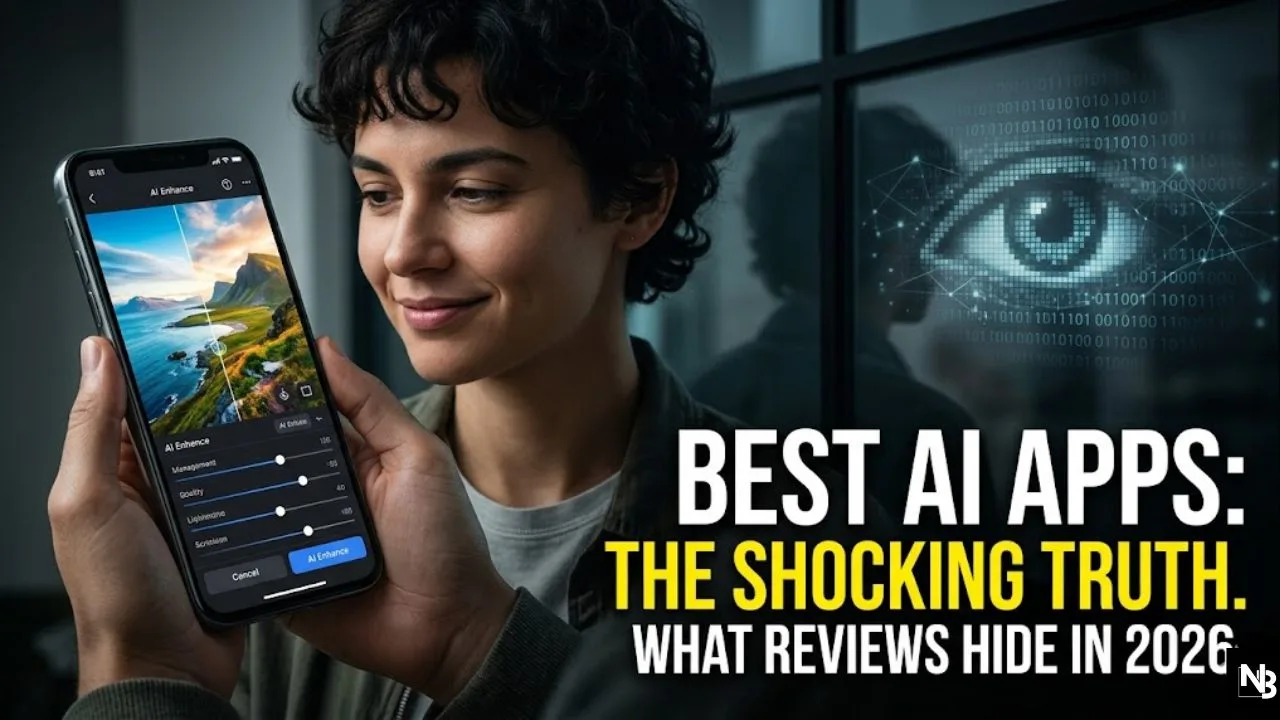
Photo editing has officially crossed a point of no return. In 2026, mobile and desktop app stores are flooded with platforms promising to turn amateur snapshots into gallery-worthy art with a single tap, blurring the thin line between pixel enhancement and total structural manipulation. But behind the glitzy marketing of “one-click masterpieces” lies a chaotic ecosystem of aggressive subscription models, hidden biometric data risks, and sweeping new legal mandates.
For creators, photographers, and casual users alike, navigating this landscape requires cutting through corporate jargon to find tools that respect both your creative freedom and your personal data.
What AI Photo Editors Actually Do in 2026
It is critical to separate real editing from generic AI generation. Unlike conversational engines or text-to-image generators (such as Midjourney or ChatGPT) that synthesize completely fabricated graphics from a text prompt, authentic AI photo editors use trained machine learning models to manipulate, re-render, and upscale the physical pixels you already captured.
Most “revolutionary” features rolled out today are actually iterative upgrades of older tech—such as Adobe’s Content-Aware Fill which debuted all the way back in 2010—rather than entirely new inventions.
In 2026, a truly competent AI-driven workspace executes several foundational tasks locally or via cloud pipelines:
- Shadow-Matched Background Removal: Stripping backdrops while instantly calculating realistic bounce light and shadow values onto the remaining subject.
- Contextual Sky Replacement: Overhauling blown-out horizons while dynamically adjusting the color temperature and exposure profiles of the foreground to match.
- Generative Fill & Object Erasing: Removing complex distractions or crowds and painting in matching textures that preserve depth of field.
- AI Fashion Modeling: Wrapping flat clothing designs onto highly realistic, digitally generated models for commercial use.
ALSO READ Ditch the Midnight Alarms: How to Schedule Instagram Posts for Free in 2026
The Critical Blindspots and Privacy Realities Most Reviews Ignore
The mainstream tech press frequently ignores the operational and ethical trade-offs of modern editing software. First, using text-based image generators to “fix” an image ruins resolution. If you upload a crisp smartphone photo into a generic generator, it entirely recreates the image from scratch, causing massive quality drops, altered facial structures, and a total loss of original camera metadata.
Second, the market is rife with predatory apps charging upwards of $40 a month for mediocre skin-smoothing filters. As a rule of thumb, if a mobile app costs more than Adobe Photoshop’s foundational photography bundle ($19.99/month), you are likely looking at a cash grab.
The most troubling concern, however, centers on data autonomy. An independent privacy study analyzing 20 of the most popular AI photo modification applications exposed a deeply invasive data collection paradigm:
| Privacy Metric Explored | Statistical Share of Analyzed Apps |
| Use customer photos to train proprietary AI models | 33%+ |
| Require users to sign over broad promotional rights | 75% |
| Retain facial biometric data indefinitely post-creation | 25% |
| Prohibit or block complete account/data deletion | 20% |
| Fail to encrypt user images while in transit to the cloud | 20% |
Software options like Photoleap emerged as highly invasive, collecting data points across 57% of 14 key tracking categories, with mainstream powerhouses Facetune, Picsart, and Videoleap closely following at 50% each. These systems track everything from purchase history and contact details to precise structural face maps.
The Technical Catch: Traditional privacy protections like differential privacy do not safely protect biometric pixels when uploaded to public clouds. However, a breakthrough study from Purdue University in March 2026 introduced an obfuscation methodology that limits an AI’s ability to cross-reference eye color, age, and facial hair by over 80% while keeping user edits fully functional.
India’s Amended IT Rules: A Strict New Legal Reality
For creators working within or publishing to India, the stakes are no longer just ethical—they are strictly legal. The Ministry of Electronics and Information Technology enforced the IT Rules Amendment (effective February 20, 2026), which fundamentally alters how modified media is handled:
- Compulsory AI Labeling: Any digital content containing elements modified or enhanced by artificial intelligence must carry explicit, indelible disclosures.
- Accelerated Deepfake Takedowns: Platforms are legally bound to pull down non-consensual explicit deepfakes within 2 hours, and generalized misleading deepfakes within 3 hours.
- Loss of Safe Harbor: Photo apps and platforms failing to monitor or label synthetic content lose their regulatory immunity, rendering both the platform and the individual creator vulnerable to severe criminal prosecution under existing penal codes.
ALSO READ Beyond the Hype: The Best Note-Taking Apps for Android and iPhone in 2026
The Best AI Photo Editors of 2026: Head-to-Head Comparison
To find tools that balance robust capabilities with transparent operations, we evaluated the top platforms currently defining the digital imaging industry.
| App | Best For | Standout Feature | Pricing Structure | Core Pro / Con |
| Adobe Photoshop | Professional Production | Industry-Leading Generative Fill | $19.99/mo (Photography Plan) | Pro: Matchless control and texture blending. Con: Steep learning curve; finite cloud credit system. |
| Luminar Neo | Photographers | Deep Ecosystem Slider Integration | $119 Perpetual License | Pro: Complete offline local execution available. Con: High upfront cost; interface built strictly for raw photography. |
| Canva Pro | Quick Social Media | Automated Template Generation | $18.00/mo | Pro: Rapid workflow for small businesses. Con: Extremely weak manual brush and pixel manipulation. |
| Pixlr Plus | Browser Editing | No-Signup Cloud Modules | $2.49/mo | Pro: Most affordable paid tier available. Con: Cluttered browser interface; limited free tiers. |
| Lensa AI | Mobile Portraits | Automatic Glamour Retouching | $4.99/mo | Pro: Exceptional quick selfie touchups. Con: Expensive over time; locks down key tools behind a paywall. |
| Claid AI | E-commerce Stores | Instant Studio Model Generation | $15.00/mo (500 Credits) | Pro: Adapts highly compressed phone images for web retail. Con: Strict web-only application framework. |
Free vs. Paid: The Real Divide
When choosing your tool, understand that free tiers across the board function purely as marketing gateways. Free variants excel at drawing eye-catching first impressions but fail instantly when you attempt second or third-round granular revisions. They are plagued by text rendering errors, low-resolution processing caps, watermarks, and highly ambiguous terms regarding what happens to your uploaded images.
Paid tiers, conversely, provide clear commercial usage rights, accurate text engines, and repeatable layout consistency across multi-image sets.
Niche tools like Topaz Photo AI (built purely for high-end sharpening and denoising) or Retouch4me remain excellent but too narrow for general workflows, while standard native applications like Google Photos and Apple Photos lack the depth needed to serve as comprehensive production hubs.
The Verdict: Securing Your Creative Workflow
Before subscribing to any platform or uploading your catalog to a cloud engine, match the application to your precise professional risk threshold:
- For Unmatched Creative Detail: Rely on the classic combination of Adobe Photoshop and Luminar Neo.
- For Instant Digital Retail Asset Generation: Use Claid AI to dramatically cut down on studio staging overhead.
- For the Privacy-Conscious User: Avoid subscription models entirely. Invest in a Luminar Neo desktop perpetual license, allowing you to execute local machine learning models natively on your computer’s silicon without beaming sensitive personal photos or facial biometric data to data-harvesting cloud farms.
Your Next Step: Take control of your digital identity. Review the privacy permissions inside your current favorite editing app today, switch off cloud-sharing toggles for model training, and ensure your workflow stays strictly compliant with India’s mandatory AI labeling laws.