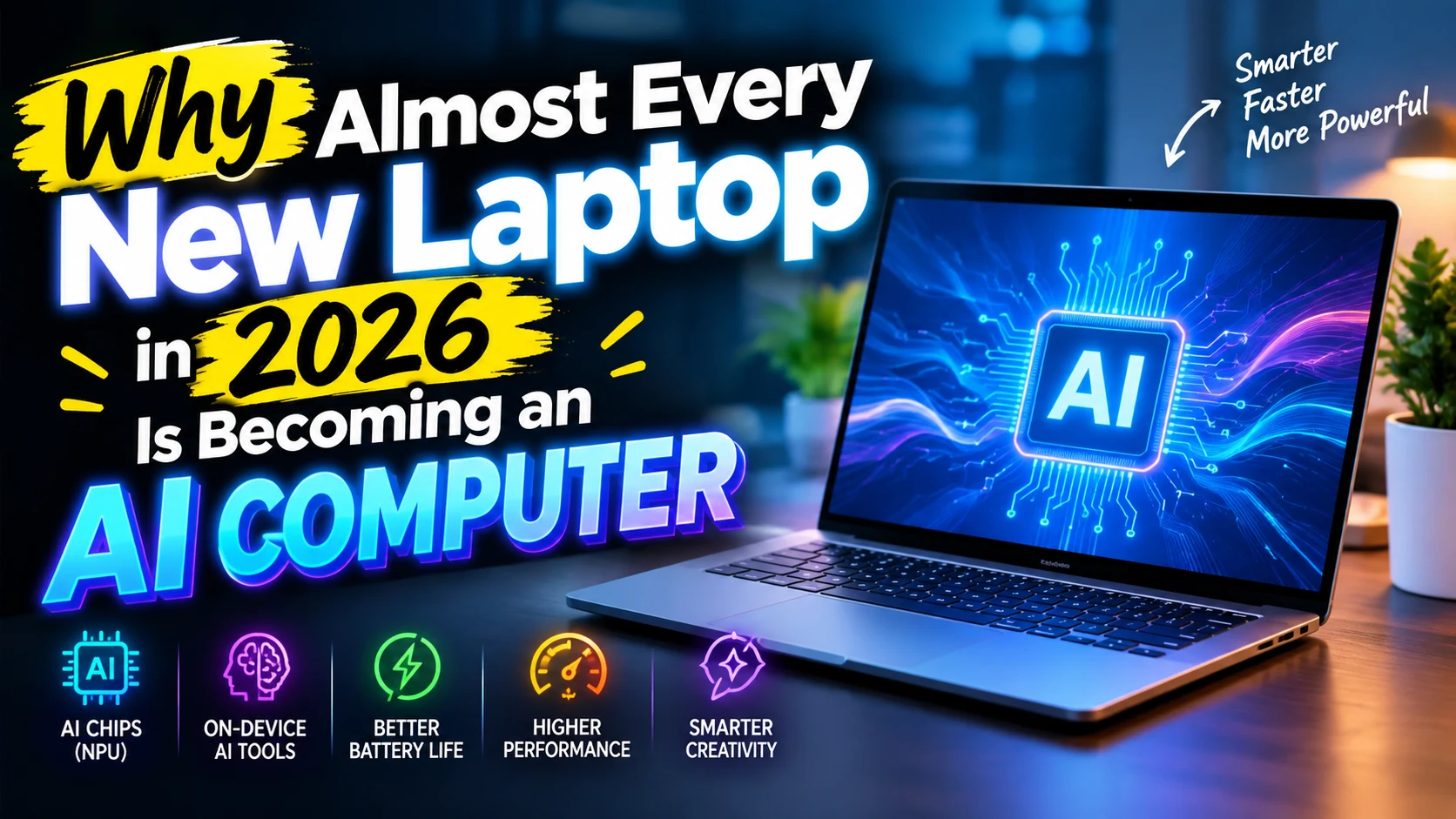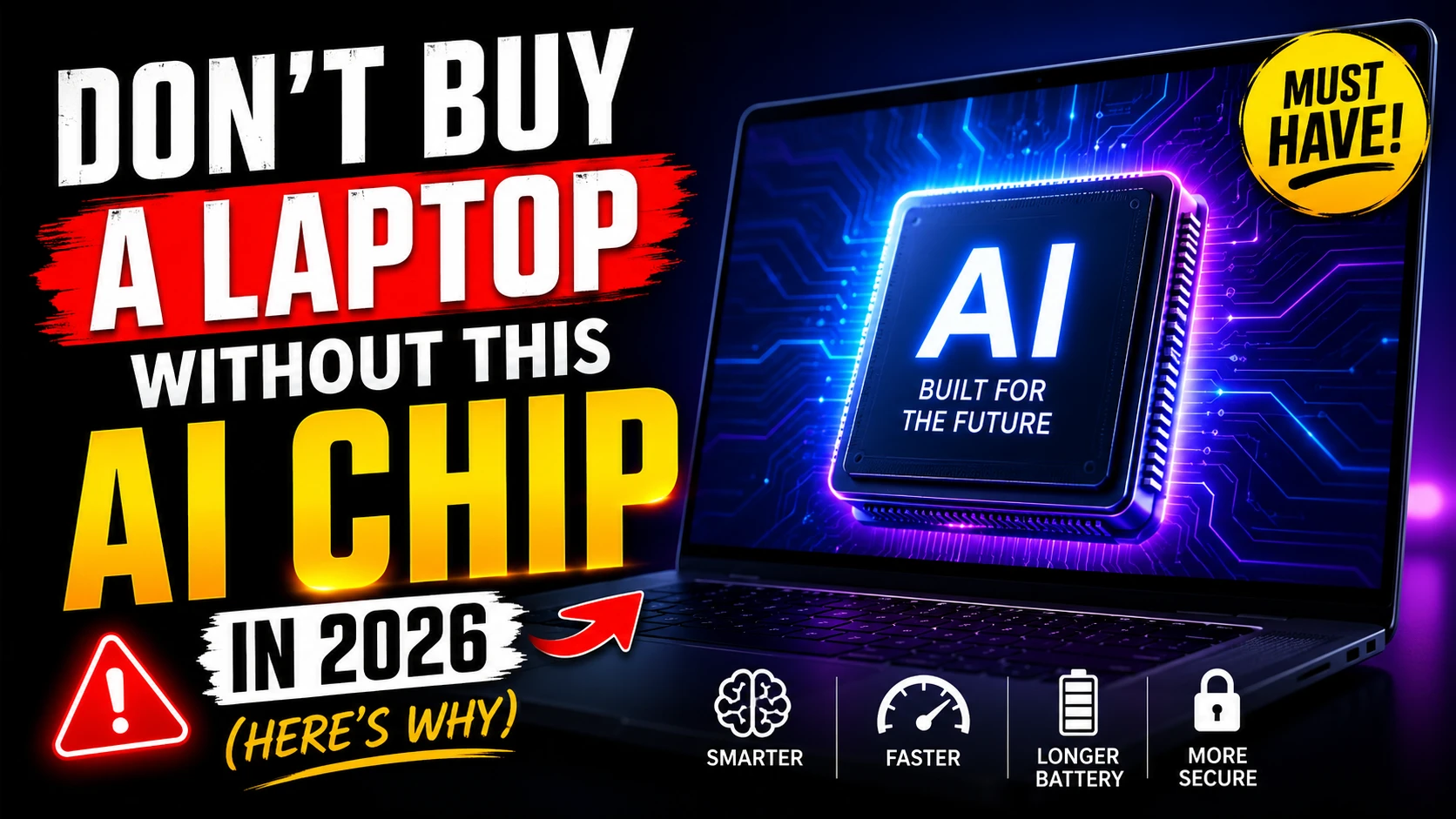
If you are planning to buy a new laptop this year, stop looking at just the processor cores and RAM. Buying a machine in 2026 without a dedicated, high-performance Neural Processing Unit (NPU) means you are essentially purchasing a depreciating asset. The computing landscape has fundamentally shifted, and an NPU is no longer just a premium luxury—it is an absolute necessity for anyone who wants their device to last.
The Magic Number: Why 40 TOPS is the New Baseline
For decades, laptop performance was judged by the CPU (for general tasks) and the GPU (for gaming and graphics). Today, the NPU has cemented itself as the third pillar of personal computing. Designed exclusively to handle complex artificial intelligence math with incredible efficiency, an NPU’s power is measured in TOPS—Trillion Operations Per Second.
Microsoft has officially drawn a line in the sand with its “Copilot+ PC” standard. To qualify for this next-generation tier, a laptop must feature an NPU capable of at least 40 TOPS, alongside a minimum of 16GB of RAM and a 256GB SSD. Why 40? This is the exact computational threshold required to run advanced AI models locally on your machine without bottlenecking your CPU or draining your battery. Anything less, and your laptop will be locked out of the next wave of essential Windows features.
While upcoming operating systems will still run on older hardware, advanced features like real-time translation, AI-powered file search, and automated content generation are increasingly becoming NPU-exclusive.
Local AI vs. Cloud AI: The Privacy and Battery Revolution
Until recently, whenever you used an AI tool, your prompt was sent to a distant server, processed, and beamed back. This required a constant internet connection and raised massive enterprise privacy concerns. The 2026 generation of NPUs flips this script by enabling Local AI, where the heavy lifting happens directly on your device.
- Unmatched Privacy: Features like Windows Recall—which creates a secure, locally searchable visual timeline of your screen activity—process entirely on your device. Your personal data, passwords, and banking screens never touch a cloud server.
- Massive Battery Savings: NPUs are uniquely designed for matrix multiplication. They use significantly less power than a GPU for equivalent AI tasks. This means you can run real-time translation or advanced video effects during a long commute without watching your battery percentage plummet.
- Zero Latency: Local processing eliminates “internet lag,” allowing tasks like live captioning across 40+ languages to happen instantly, even in Wi-Fi dead zones.
Intel, AMD, or Qualcomm: Which Chip Rules 2026?
The race to dominate the NPU market has resulted in incredible hardware leaps this year. If you are shopping right now, here is what you need to look for under the hood to ensure you meet the 40+ TOPS baseline:
- Qualcomm Snapdragon X2 Elite: The reigning champion for mobile endurance. The new X2 series pushes a staggering 80 to 85 TOPS, delivering true all-day battery life and lightning-fast AI generation on an ARM-based architecture.
- AMD Ryzen AI 400 Series: Hitting around 60 TOPS, AMD provides incredible multi-threaded performance and seamless x86 software compatibility. This makes it a formidable powerhouse for developers and heavy multitaskers.
- Intel Panther Lake: The newly released 2026 architecture clears the Copilot+ bar with a 50 TOPS NPU. Intel offers excellent native app compatibility and heavily optimized power efficiency, specifically designed for ultra-thin laptops.
- Apple M5: Apple has shifted its architecture, opting to weave Neural Accelerators directly into every GPU core rather than just relying on a standalone Neural Engine. While they no longer market a single TOPS number, the M5 remains a top-tier choice for MacOS loyalists deeply invested in the Apple ecosystem.
Beyond Chatbots: Real-World AI You Will Actually Use
The biggest misconception among consumers is that NPUs only power text-based chatbots. In reality, the benefits are baked silently into your daily workflow, saving you time and frustration.
Creative professionals are already seeing massive workflow gains. Recent Adobe Creative Cloud updates offload complex tasks like automatic masking, content-aware fill, and generative expand directly to the NPU. Real-world tests show that NPU-equipped machines can complete AI-enhanced color grading up to 3.4 times faster than older systems, all while leaving the GPU entirely free for smooth, un-dropped frame video playback.
Even in basic corporate environments, Windows Studio Effects utilizes the NPU to maintain perfect eye contact, suppress background noise, and dynamically adjust lighting. The key difference? It does this without spiking your CPU usage to 100% or making your laptop fans sound like a jet engine.
The Verdict: Future-Proofing Your Next Purchase
We are at a technological transition point identical to the shift from spinning hard drives (HDD) to solid-state drives (SSD) a decade ago. Buying a laptop without a 40+ TOPS NPU today means intentionally missing out on the most significant software innovations of the next five years.
The Takeaway: Whether you are a student, a creative professional, or an enterprise executive, do not ignore the spec sheet. Ensure your next laptop carries a Qualcomm Snapdragon X Elite/X2, an AMD Ryzen AI 300/400 series, or an Intel Core Ultra (Lunar Lake/Panther Lake) processor. The slight premium you pay today will give you a faster, smarter, and significantly longer-lasting machine tomorrow.
Also Read Meet the New “Agentic AI”: Why Your Next Colleague Might Be Software