Creating professional-looking videos no longer requires a camera crew, expensive editing software, or weeks of production. Thanks to rapid advances in generative AI, creators can now turn a simple text prompt into cinematic videos within minutes.
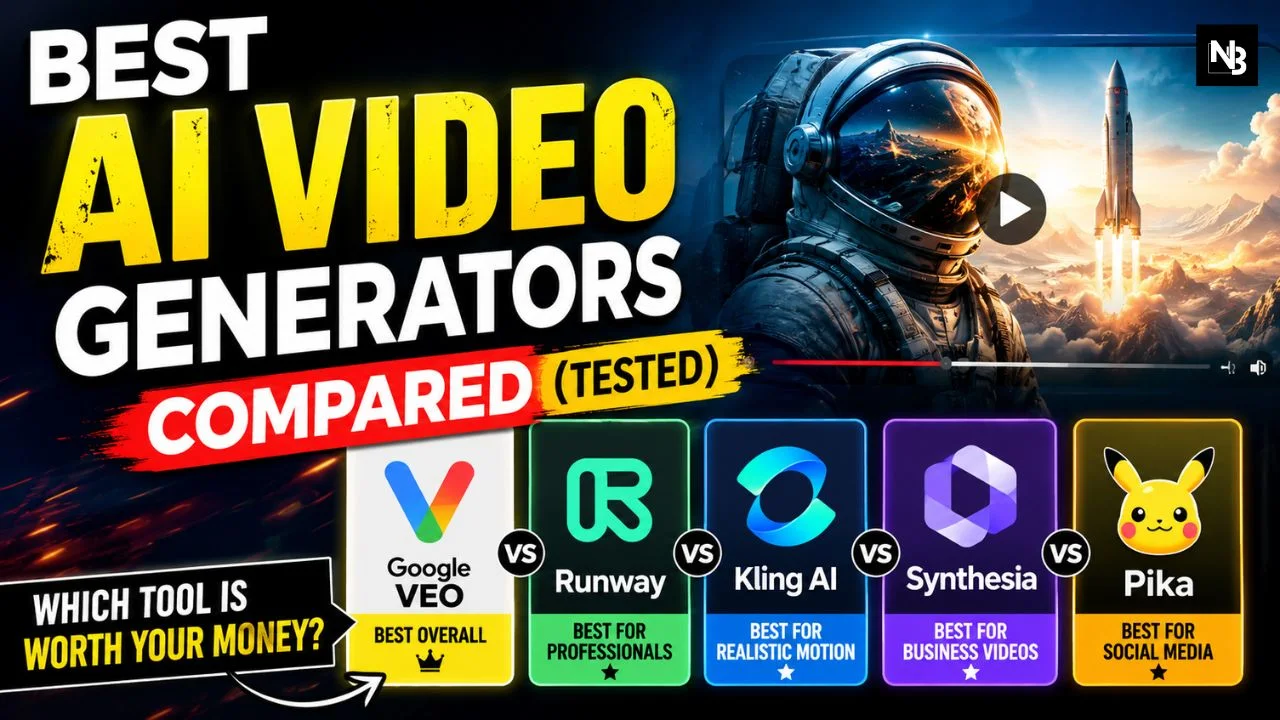
But with dozens of AI video generators claiming to be the best, choosing the right one can be confusing. We compared today’s leading AI video tools based on video quality, realism, speed, ease of use, pricing, and real-world applications to help you find the right platform for your needs. Industry testing across multiple platforms consistently places tools like Google Veo, Runway, Kling, and Synthesia among the current leaders, although each excels in different areas.
What Makes a Great AI Video Generator?
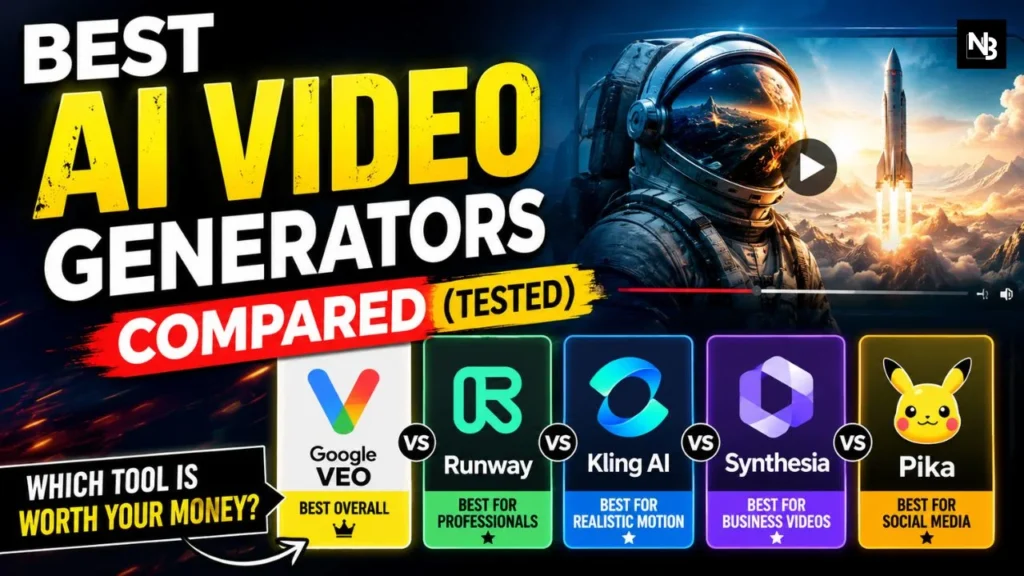
Not every AI video platform serves the same purpose. Some specialize in realistic cinematic scenes, while others focus on business presentations or social media content.
The key factors we considered include:
- Video quality and realism
- Prompt accuracy
- Character consistency
- Editing features
- Generation speed
- Pricing
- Best use cases
1. Google Veo – Best Overall AI Video Generator
Google’s Veo has quickly established itself as one of the strongest AI video models available today.
Its biggest advantage is prompt understanding. Complex instructions involving camera movements, lighting, emotions, and cinematic styles are followed more accurately than most competitors. Veo also supports synchronized audio generation, reducing the need for separate sound design. Independent testing frequently ranks it among the top-performing AI video models for overall quality.
Best for:
- Filmmakers
- Advertisements
- High-end visual storytelling
Pros
- Exceptional realism
- Excellent prompt adherence
- Native audio support
Cons
- Premium features require a paid subscription
- Short clip generation limits remain
2. Runway – Best for Professional Creators
Runway has become one of the most widely used AI video platforms among marketers, agencies, and production teams.
Its advanced editing tools allow creators to generate, extend, edit, remove objects, and refine AI-generated videos within one workflow. The platform is particularly strong at maintaining visual consistency across multiple shots. (pickaxe.co)
Ideal for:
- Commercial videos
- Marketing campaigns
- Creative agencies
3. Kling AI – Best for Realistic Motion
Developed by Chinese tech company Kuaishou, Kling AI has gained attention for producing highly realistic human movement and cinematic camera motion.
In many independent comparisons, Kling delivers smoother physics, more natural facial expressions, and better motion than several competing tools, making it popular among content creators.
Best for:
- Short films
- Product videos
- Cinematic content
4. Synthesia – Best for Business Videos
If your goal is creating training videos, online courses, HR onboarding, or corporate presentations, Synthesia remains a leading option.
Instead of generating cinematic scenes, it focuses on AI avatars capable of speaking in multiple languages with realistic lip synchronization. Businesses can produce professional explainer videos without hiring presenters or recording studios.
Perfect for:
- Employee training
- Educational content
- Internal communications
5. Pika – Best for Social Media Creators
Pika focuses on creativity rather than long-form production.
It offers templates, visual effects, and fast generation that work particularly well for YouTube Shorts, Instagram Reels, and TikTok videos. Features such as object insertion and character consistency have made it a favorite among creators producing frequent short-form content.
ALSO READ Best AI Coding Assistants for Developers in 2026: 8 Tools That Are Transforming Software Development
Quick Comparison
| Tool | Best For | Strength |
|---|---|---|
| Google Veo | Overall quality | Cinematic realism and prompt accuracy |
| Runway | Professional editing | Advanced creative workflow |
| Kling AI | Realistic motion | Human movement and physics |
| Synthesia | Business videos | AI presenters and multilingual avatars |
| Pika | Social media | Fast creative short-form videos |
Pricing: Which Tool Offers Better Value?
Pricing varies considerably.
- Runway offers affordable entry-level plans for creators.
- Synthesia starts with business-focused subscription plans.
- Google Veo is included in select Google AI plans.
- Kling AI uses flexible credit-based pricing.
- Pika provides free access with premium upgrades for advanced features.
For beginners, free plans are often sufficient to learn prompting before upgrading.
Who Should Use Which AI Video Generator?
Choose your tool based on your goal rather than popularity.
- YouTubers: Runway or Pika
- Marketing teams: Google Veo or Runway
- Corporate training: Synthesia
- Filmmakers: Google Veo or Kling AI
- Small businesses: Runway for flexibility and value
AI Video Is Becoming a Mainstream Creative Tool
The AI video market is growing rapidly as businesses, educators, marketers, and creators increasingly automate video production. Modern AI models now generate more realistic lighting, camera movement, facial expressions, and scene consistency than was possible just a year ago, making AI-generated content practical for commercial use rather than simple experimentation.
ALSO READ ChatGPT vs Claude vs Gemini vs Grok: Which AI Is Actually Best in 2026?
Final Verdict
There is no single “best” AI video generator for everyone.
If you want the highest-quality cinematic output, Google Veo currently leads the field. For professional editing workflows, Runway remains one of the strongest choices. Kling AI excels in realism, Synthesia dominates business video creation, while Pika is ideal for creators focused on social media.
Before committing to a paid subscription, test two or three platforms with the same prompt. Comparing results firsthand is often the fastest way to identify the tool that best matches your workflow, budget, and creative goals.