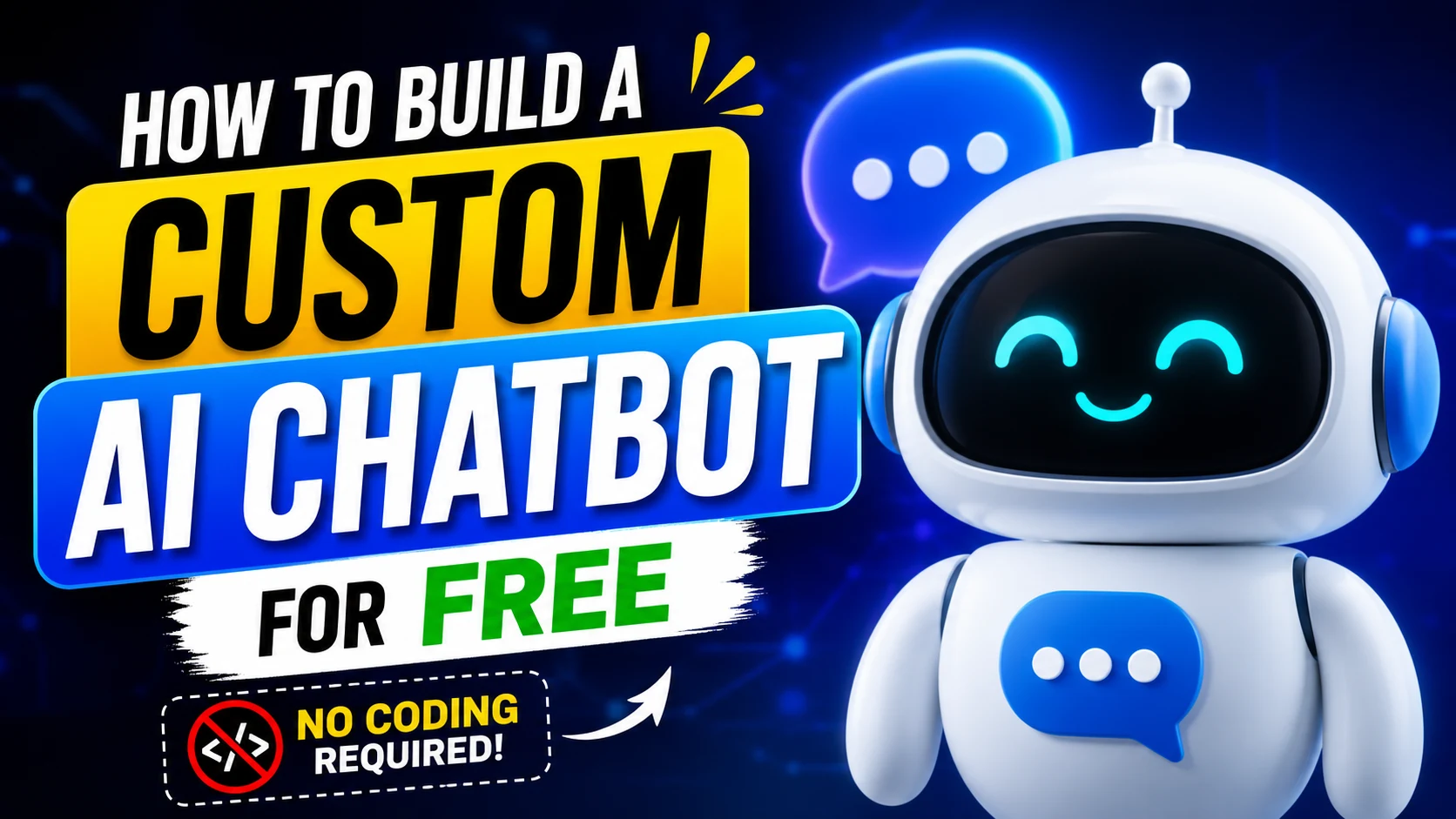
Imagine deploying a 24/7 customer support agent, a lead generation specialist, and a workflow automation assistant—all before you finish your morning coffee. Until recently, building an intelligent AI chatbot meant hiring an expensive team of developers and wrestling with complex programming languages. Today, the technological landscape has radically shifted, empowering anyone from small business owners to solo creators to build, train, and deploy a bespoke AI chatbot for free, without writing a single line of code.
The No-Code AI Revolution
The democratization of artificial intelligence is no longer a futuristic promise; it is the current reality. Fueled by advanced Large Language Models (LLMs) like OpenAI’s GPT-4, Anthropic’s Claude, and Google’s Gemini, modern chatbots have evolved from clunky, script-based responders into dynamic, context-aware agents.
These intelligent agents don’t just regurgitate pre-programmed answers. Thanks to Retrieval-Augmented Generation (RAG), they can now read your company’s documents, understand your website’s content, and provide hyper-specific, accurate answers in real time. The best part? You no longer need a degree in computer science to harness this power. Visual, drag-and-drop platforms have bridged the gap between complex AI infrastructure and everyday users, turning chatbot development into a visual design process.
Top Free Platforms to Build Your AI Chatbot in 2026
Choosing the right platform is the most critical decision in your chatbot journey. While the market is flooded with options, a few standout platforms offer robust free tiers and intuitive interfaces:
- Botpress: Standing at the intersection of accessibility and developer depth, Botpress offers a powerful visual canvas alongside advanced AI routing. It is highly customizable, supports automatic translation for over 100 languages, and easily integrates with tools like WhatsApp, Slack, and Zendesk. Its free pay-as-you-go tier makes it an excellent choice for ambitious, scalable projects.
- Voiceflow: Originally known for voice apps, Voiceflow has become a powerhouse for enterprise-grade omnichannel agents. It boasts a highly collaborative interface, native voice support, and built-in testing environments. It is ideal if you want to deploy a unified bot across web, mobile, and phone systems.
- Chatbase: If you need a custom chatbot running in five minutes, Chatbase is the answer. It specializes in document-trained bots. Simply upload your PDFs, Word documents, or a website URL, and the platform instantly builds a RAG-powered assistant that syncs automatically when your underlying content changes.
- Tidio: Purpose-built for e-commerce and fast-paced customer support, Tidio seamlessly blends AI automation with human live chat. Its AI agent automatically resolves common queries using your product catalog and seamlessly hands off complex, nuanced issues to your human support team.
Step-by-Step Guide: Building Your Chatbot
Ready to start? Regardless of the platform you choose, the fundamental architecture of building a no-code AI chatbot follows a universal, straightforward framework,.
- Define Your Objective: Don’t build a chatbot just to have one. Identify its core purpose. Is it qualifying real estate leads, answering IT helpdesk questions, or processing e-commerce returns? A narrow, well-defined scope ensures higher accuracy and a better user experience.
- Curate Your Knowledge Base (Training Data): An AI is only as smart as the data it consumes. Gather your best resources—FAQs, policy manuals, product URLs, and past support tickets. Uploading these into your chosen platform creates the operational brain of your chatbot,.
- Design the Conversation Flow: Use the platform’s visual builder to map out the user journey. Start with a welcoming intro message (“Hi! How can I help you today?”). Add multiple-choice buttons for quick navigation and create logic branches for specific scenarios.
- Set Up Escalation Rules: AI will inevitably encounter questions it cannot answer. Always design a “fallback” route that gracefully transfers the user to a human agent or captures their email for a follow-up response.
- Test and Deploy: Never launch blindly. Use the platform’s built-in testing console to chat with your bot. Try to intentionally break it with confusing questions to see how it reacts. Once refined, hit publish and embed the generated code snippet onto your website.
The Fine Print: What “Free” Actually Means
In the interest of full journalistic transparency, it is vital to understand the economics of these free tools. While the platforms allow you to build and test without a credit card, “free” usually comes with strict volume limitations.
For instance, Chatbase’s free tier caps at 100 message credits per month. Botpress offers a generous free tier for 500 messages, but scaling up requires paying for the underlying AI computing costs. These free plans are perfect for prototyping, small portfolios, or low-traffic local businesses. However, once your chatbot starts handling hundreds of daily customer interactions, you will need to upgrade to a paid subscription, which typically starts between $19 and $89 per month.
The Bottom Line
The barrier to entry for artificial intelligence has officially been dismantled. You no longer need deep pockets or coding expertise to automate your customer interactions, generate leads, and scale your business operations. By leveraging platforms like Botpress, Voiceflow, or Chatbase, you can turn a static website into an interactive, intelligent engine in a single afternoon.
Take Action: Don’t just read about the AI revolution—participate in it. Pick one of the free platforms mentioned above, gather your top three frequently asked questions, and start building your first custom AI chatbot today. The future of digital engagement is conversational, and it is entirely in your hands.
Also Read The AI Tools Indian Tech Startups Are Using to Beat Silicon Valley