For decades, talking to a computer meant typing words onto a screen and waiting for a block of text in return. Those days are officially over. A new generation of artificial intelligence, known as multimodal AI, is stepping out of the chatbox and into the real world—processing sights, sounds, and text simultaneously to interact just like we do.
What Exactly is Multimodal AI?
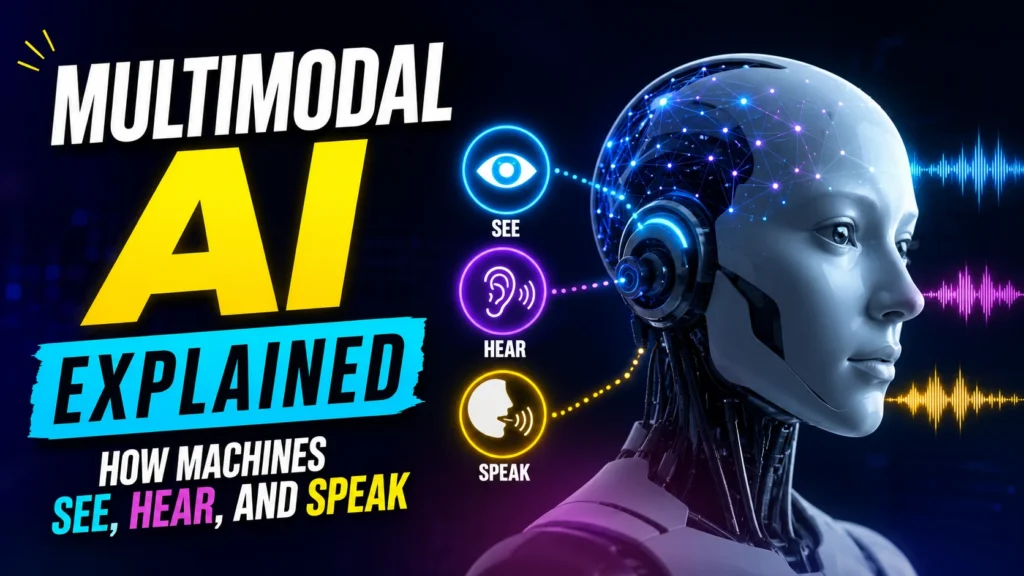
Until recently, AI models were strictly “unimodal.” If you wanted a machine to transcribe a voice memo, you used an audio model. If you wanted it to analyze a photograph, you used a vision model. If you wanted it to write an essay, you relied on a Large Language Model (LLM). These systems operated in silos, blind and deaf to the broader context of human communication.
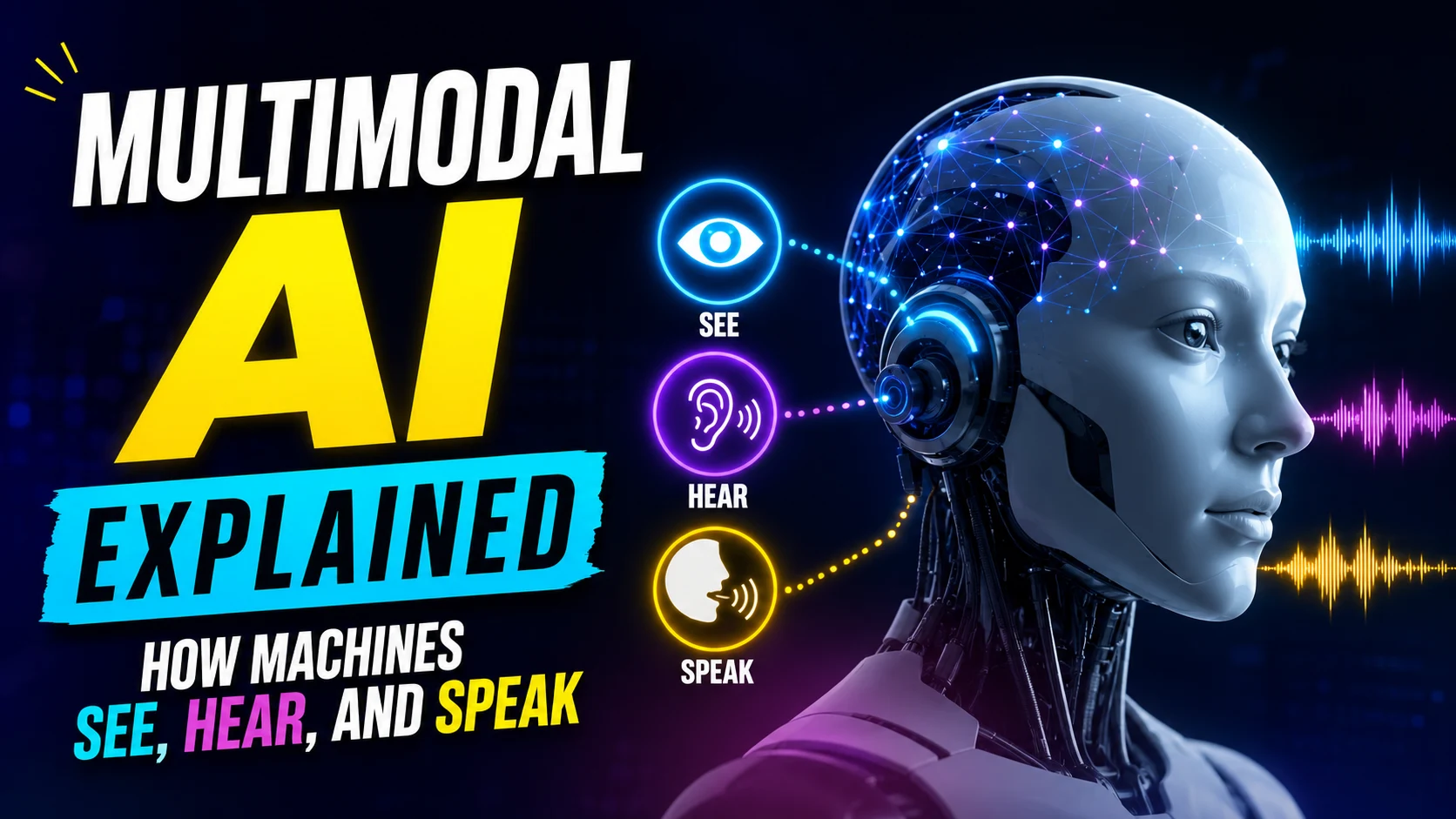
Multimodal AI changes the architecture fundamentally. By fusing text, audio, image, and video processing into a single neural network architecture, these systems can synthesize multiple streams of data at once.
Imagine pointing your smartphone camera at a foreign restaurant menu and asking out loud, “What are the vegetarian options here, and how spicy are they?” A multimodal AI doesn’t just translate the text; it “sees” the menu, “hears” your spoken question, understands your intent, and speaks the answer back to you.
The Titans of the New Era: GPT-4o, Gemini, and Claude
The race to dominate this space is being led by tech giants deploying incredibly sophisticated vision-language models. The capabilities of these platforms are shifting AI from a simple utility into an interactive collaborator.
- OpenAI’s GPT-4o: The “o” stands for omni, representing the model’s ability to handle text, image, and audio natively. What makes GPT-4o groundbreaking is its real-time AI processing speed. It can respond to voice inputs in an average of 320 milliseconds—virtually indistinguishable from a human conversational response time. It doesn’t just read transcripts; it detects tone of voice, emotion, and background noise.
- Google Gemini 1.5 Pro: Built for heavy lifting, Gemini 1.5 is designed to digest massive amounts of data simultaneously. With a context window of up to 1 million tokens, it can ingest hours of raw video and audio in one go, extracting specific insights—such as finding a specific play in a recorded basketball game—without relying on text descriptions.
- Anthropic’s Claude 3.5: Known for its precise analytical capabilities, Claude is proving invaluable in enterprise environments. It excels at parsing unstructured visual data, such as messy handwritten receipts or complex architectural diagrams, and merging that visual comprehension with deep textual logic.
Real-World Impact: Why This Matters to You
The shift toward multimodal systems is not just a parlor trick for tech enthusiasts. It is actively redefining major global industries:
- Healthcare Diagnostics: Instead of relying solely on a doctor’s typed notes, multimodal AI can simultaneously cross-reference a patient’s spoken symptoms, their medical history (text), and a live MRI scan (visuals) to assist doctors in catching subtle anomalies.
- Next-Generation Customer Service: Forget frustrating chatbots. Soon, if your Wi-Fi router breaks, you will simply point your phone’s camera at the flashing lights while an AI agent verbally guides you on exactly which cable to unplug, adjusting its instructions based on what it sees in real time.
- Digital Accessibility: For visually or hearing-impaired users, multimodal AI is a game-changer. These models can provide hyper-accurate, real-time audio descriptions of a user’s physical surroundings, or instantly turn spoken group conversations into structured, summarized text.
A Booming Billion-Dollar Market
The business world is paying close attention. According to recent market intelligence reports, the global multimodal AI market is projected to surge from roughly $2.41 billion in 2025 to nearly $42 billion by 2034.
This exponential 37% annual growth rate is largely driven by enterprise demand. Companies aren’t just buying AI to write emails anymore; they are investing in automated systems, smart robotics, and autonomous vehicles that require real-time fusion of sensor data, visual input, and contextual reasoning.
The Takeaway: Are We Ready for AI That Senses?
We are crossing a critical threshold in technology. By teaching machines to see, hear, and speak, we are removing the friction between humans and computers. You no longer have to learn how to “prompt” a machine with perfectly typed code or text; the machine is learning how to understand you in your natural environment.
What you can do next: The next time you use a platform like ChatGPT or Google Gemini, don’t just type. Tap the microphone icon, upload a photo of a broken appliance, or share a screenshot of a complicated graph, and ask it a question out loud. The era of the keyboard is fading—the era of the AI conversation has officially arrived.
Also Read 3 Banned AI Tools You Weren’t Supposed to Know About