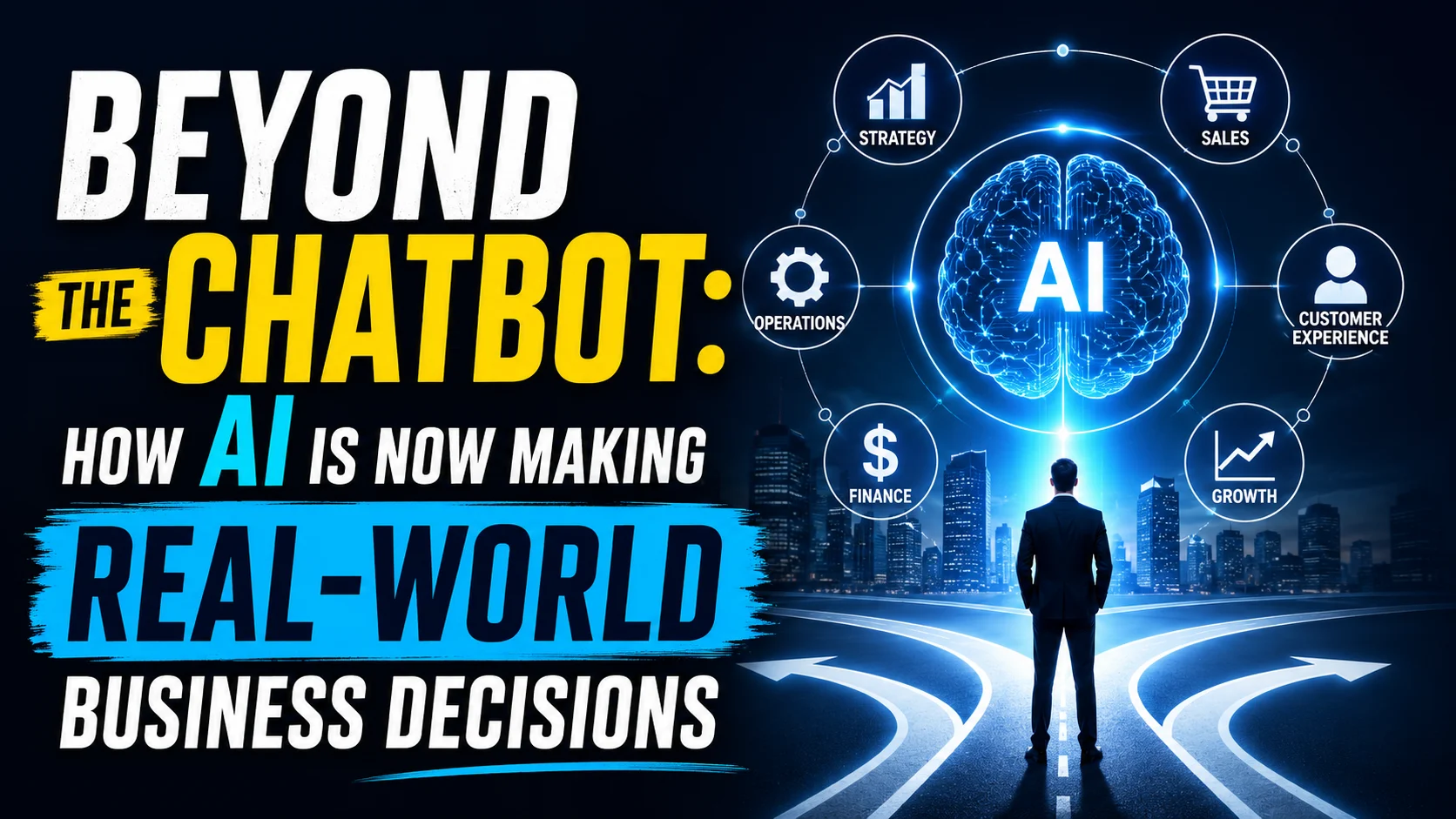
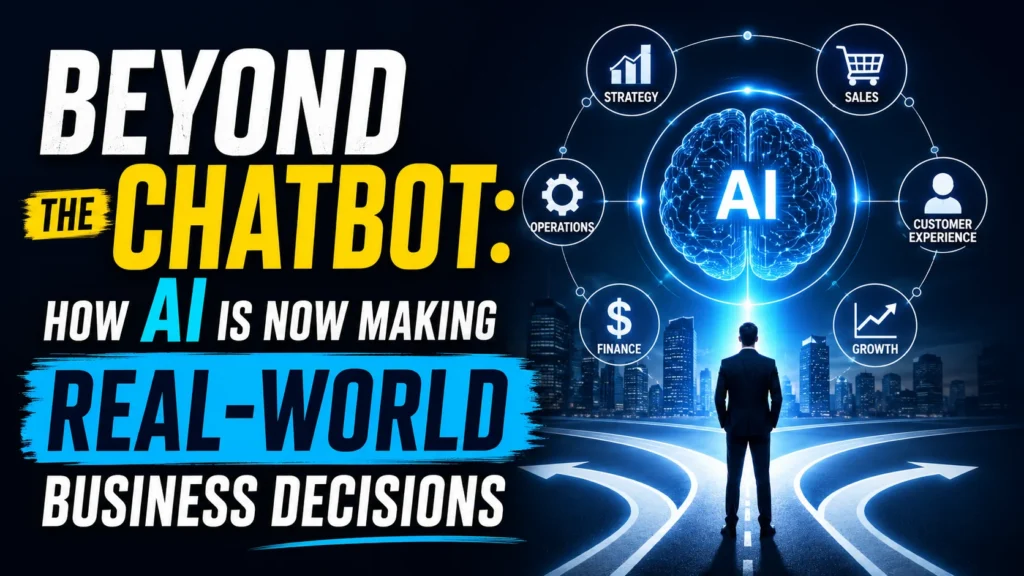
The era of artificial intelligence acting merely as a glorified chatbot is officially over. Today, AI isn’t just drafting emails or summarising meeting notes; it is autonomously rerouting global shipping fleets, negotiating vendor contracts, and setting real-time retail prices. Welcome to the age of “Agentic AI,” where algorithms have evolved from answering questions to making high-stakes, real-world corporate decisions.
From Predictive to Proactive: The Shift to Agentic AI
For years, businesses viewed AI as a digital oracle. Traditional machine learning models predicted what might happen—flagging a potential supply chain bottleneck or a drop in consumer demand—but ultimately left it up to human managers to make the final call. Then came generative AI, which dazzled the world by creating text, code, and images on command.
Now, the enterprise world is rapidly adopting Agentic AI, a technological leap that shifts the focus from generating content to taking autonomous action. Unlike traditional automation tools like Robotic Process Automation (RPA)—which follow strict, predefined rules and break when they encounter unexpected exceptions—an AI agent thrives on ambiguity. It observes its environment, formulates a multi-step plan, and executes actions to achieve a specific business goal without waiting for human intervention.
According to the Stanford HAI 2026 AI Index, drawing on McKinsey data, 88% of organisations now use AI in at least one business function. Yet, the true competitive edge lies with the companies allowing these systems to autonomously pull the trigger on crucial operations.
The Machines in the Boardroom: Real-World ROI
So, who is actually letting the algorithms take the wheel? The answer spans across global retail, manufacturing, and finance sectors.
- Supply Chain & Logistics: Retail giant Walmart deploys AI agents across its supply chain to predict demand, optimise inventory, and dynamically reroute shipments based on real-time weather and disruption data. Similarly, logistics provider DHL uses AI-powered agents to monitor global shipments, autonomously identifying potential delays and suggesting alternative routes to mitigate cascading failures.
- Manufacturing Operations: Siemens uses agentic systems to reduce production downtime and improve maintenance accuracy. Instead of waiting for a machine to break, the AI detects micro-anomalies and preemptively triggers a maintenance protocol, significantly cutting operational costs.
- Financial & B2B Decisions: Professional services firm Lexitas processes a staggering 46% of its payments using AI agents, automating financial operations with unprecedented speed. Furthermore, McKinsey reports that Agentic AI is fundamentally shifting how B2B pricing is set and managed, replacing static rate cards with dynamic, market-responsive pricing engines.
The shift toward autonomous enterprise automation is undeniable. Research firm Gartner predicts that by the end of 2026, 40% of enterprise applications will be integrated with task-specific AI agents, a massive leap from less than 5% in 2025.
Why Companies Are Surrendering Control
The primary driver behind this automation is speed. In modern commerce, human decision-making is often the ultimate bottleneck.
A recent report highlighted that global supply chains are facing unprecedented strain from geopolitical tensions and climate events. Human operators simply cannot process the sheer volume of global news, weather data, and shifting trade policies in real time. AI agents serve as a buffer against this volatility.
When a critical shipping lane becomes blocked or a supplier misses a delivery, human procurement teams traditionally take days to assess the fallout, identify alternative vendors, and negotiate new terms. An AI agent can do this in milliseconds. It detects the delay, evaluates alternative suppliers, initiates a new purchase order within predefined budgets, and updates delivery timelines for the customer—all without a human ever touching a keyboard.
The financial upside is massive. According to data from IBM, organisations with higher AI investment in their supply chain operations report revenue growth 61% greater than their industry peers.
The New Trust Deficit: Are We Moving Too Fast?
Handing over the keys to the corporate kingdom does not come without peril. As AI systems take on greater autonomy, the consequences of a system failure grow exponentially.
A 2026 McKinsey survey on AI trust highlighted that while technical maturity is improving, corporate governance is struggling to keep pace. The two most frequently cited risks by executives are inaccuracy and cybersecurity. If an AI hallucinates in an internal chatbot window, it is an embarrassment. If an autonomous pricing agent hallucinates and slashes prices by 90% across an entire e-commerce catalogue, it is a financial catastrophe.
To manage this risk, high-performing organisations are establishing strict guardrails. They define precise key performance indicators (KPIs) and operational boundaries for their models. For instance, an AI might be authorised to automatically reorder stock up to $50,000, but any purchase above that threshold acts as an automatic circuit breaker, requiring a human manager’s signature.
The Bottom Line
Agentic AI represents a fundamental rewiring of how business operates. We are moving from human-led workflows supported by technology, to AI-led workflows supervised by humans. The businesses that thrive in the coming decade will not be those that simply use artificial intelligence to write better marketing copy; they will be the ones that trust AI to run the core mechanics of their operations.
The Takeaway for Leaders: Stop treating AI as an experimental novelty or a simple productivity hack. Start by identifying a single, data-heavy, time-sensitive operational bottleneck in your organisation—such as routine inventory management, basic procurement, or dynamic pricing—and pilot an autonomous agent to handle it. The future of business belongs to those who adapt and act the fastest
Also Read 3 Banned AI Tools You Weren’t Supposed to Know About