Apple Intelligence vs. Google Gemini: Which AI Phone Should You Buy in 2026?

On: July 20, 2026 10:14 PM
Follow Us:
# Apple Intelligence vs. Google Gemini: Which AI Phone Should You Buy in 2026? The smartphone war is no longer about megapixels, titanium frames, or screen refresh rates; it is about which AI assistant is quietly managing your digital life. As we navigate 2026, Apple Intelligence and Google Gemini have matured from hyped beta features into the very foundation of modern mobile operating systems. Whether you are eyeing the sleek iPhone 17 or the powerhouse Google Pixel 10, choosing your next device means picking the AI ecosystem that will dictate how you work, create, and communicate. ## The Core Divide: Ecosystem Privacy vs. Agentic Flexibility The fundamental difference between Apple and Google in 2026 comes down to their philosophical approach to artificial intelligence. Apple has meticulously built its AI architecture around a strict "privacy-first" doctrine. A vast majority of Apple Intelligence runs purely on-device. When complex tasks require more processing power, the system relies on Private Cloud Compute—a heavily encrypted, third-party-auditable server infrastructure that ensures your personal data is never stored or monetized. Google, on the other hand, embraces cloud-first "agentic flexibility." Gemini on Android is not just a passive voice assistant; it is a proactive agent designed to connect the live web, your Google Workspace, and your phone’s hardware in real time. As noted in the IDC 2025-2026 MarketScape report, Google’s conversational AI platform leads the industry in pure capability and integration breadth, offering tools that adapt dynamically to the user's needs. ## Apple Intelligence in 2026: Seamless, Safe, and Refined Since its initial rollout, Apple Intelligence has evolved into a system-wide ghost in the machine. With the latest updates on the iPhone 17 Pro, the newly turbocharged Siri AI finally understands personal context with human-like accuracy. Key advantages of the Apple AI ecosystem include: * **On-Screen Awareness:** Apple Intelligence seamlessly reads what is on your display without needing explicit prompts. If you receive a text message containing a flight confirmation, Siri AI can instantly cross-reference it and add the itinerary to your Calendar and Mail. * **Visual Intelligence:** By integrating AI directly into the camera, you can point your iPhone at a local restaurant to instantly pull up menus, hours, and reservation options without opening a web browser. This feature even extends to the Apple Vision Pro, bridging the gap between mobile and spatial computing. * **Refined Writing and Editing Tools:** Apple's generative tools are deliberately constrained to prioritize safety, accuracy, and copyright protection. While you will not find unrestricted AI image generation, practical features like the object-removal tool in Photos and system-wide proofreading are frictionless, highly polished, and incredibly reliable for everyday use. ## Google Gemini: The Power User’s Playground For tech enthusiasts and power users, Google’s Pixel 10 paired with Gemini Intelligence is the undisputed gold standard for mobile productivity. While Apple focuses on safety and ecosystem lock-in, Google leverages its decade of machine learning research to make Gemini aggressively capable. Where Google's AI currently dominates: * **Gemini Live & Multimodal Input:** You can share your camera in a live, free-flowing conversation with Gemini. Whether you are trying to identify a broken car part, translate a live conversation, or brainstorm a recipe from ingredients on your counter, Gemini Live troubleshoots with you in real time. * **Magic Editor & Veo 3:** Powered by the Imagen 3 and Veo video models, Google allows for drastic, professional-grade media manipulation. You can swap skies, generate background elements from scratch, and even create dynamic videos natively on the device using text prompts. * **Proactive Anticipation:** The new Magic Cue feature predicts what information you need before you even ask, leveraging your habits and Google ecosystem data to stay one step ahead of your daily schedule. ## The 2026 Plot Twist: The "Frenemy" Alliance Here is the reality check that tech purists rarely discuss: Apple and Google are quietly collaborating. In a landmark move, Apple recently confirmed that the next generation of its Apple Foundation Models utilizes Google’s Gemini infrastructure for specific complex cloud processing tasks. As one tech analyst noted during the WWDC 2026 rollout, "Apple’s answer to Gemini Intelligence is, in part, to use Gemini—but entirely on their own terms." This multi-year arrangement creates a fascinating dynamic for consumers. If you switch to Android today, you get unrestricted, Gemini-native AI immediately. If you stay on the iPhone, you are paying a premium for hardware that runs a highly secure, heavily moderated version of similar AI capabilities—just wrapped in Apple's pristine user interface. ## The Verdict: Which AI Phone Should You Buy? Your smartphone decision in 2026 boils down to a single question: What do you value more, digital safety or bleeding-edge capability? * **Buy the iPhone (Apple Intelligence) if:** You are heavily invested in the broader ecosystem (Mac, Apple Watch, iPad), you prioritize verifiable data privacy, and you want AI that feels like a natural, invisible extension of iOS rather than a separate app. * **Buy the Pixel (Google Gemini) if:** You are a power user who wants a proactive AI agent capable of manipulating photos, generating complex media, connecting live to the web, and seamlessly managing your digital workflow. **The Bottom Line:** The AI smartphone era has officially arrived, and sitting on the sidelines is no longer an option. Assess your daily routine—do you need a hyper-secure digital assistant or a creative, limitless powerhouse? *What is your take on the AI smartphone wars? Are you choosing Apple’s privacy or Google’s power in 2026? Let us know your thoughts in the comments below, and subscribe to our newsletter for the latest tech reviews, AI breakthroughs, and industry insights.*

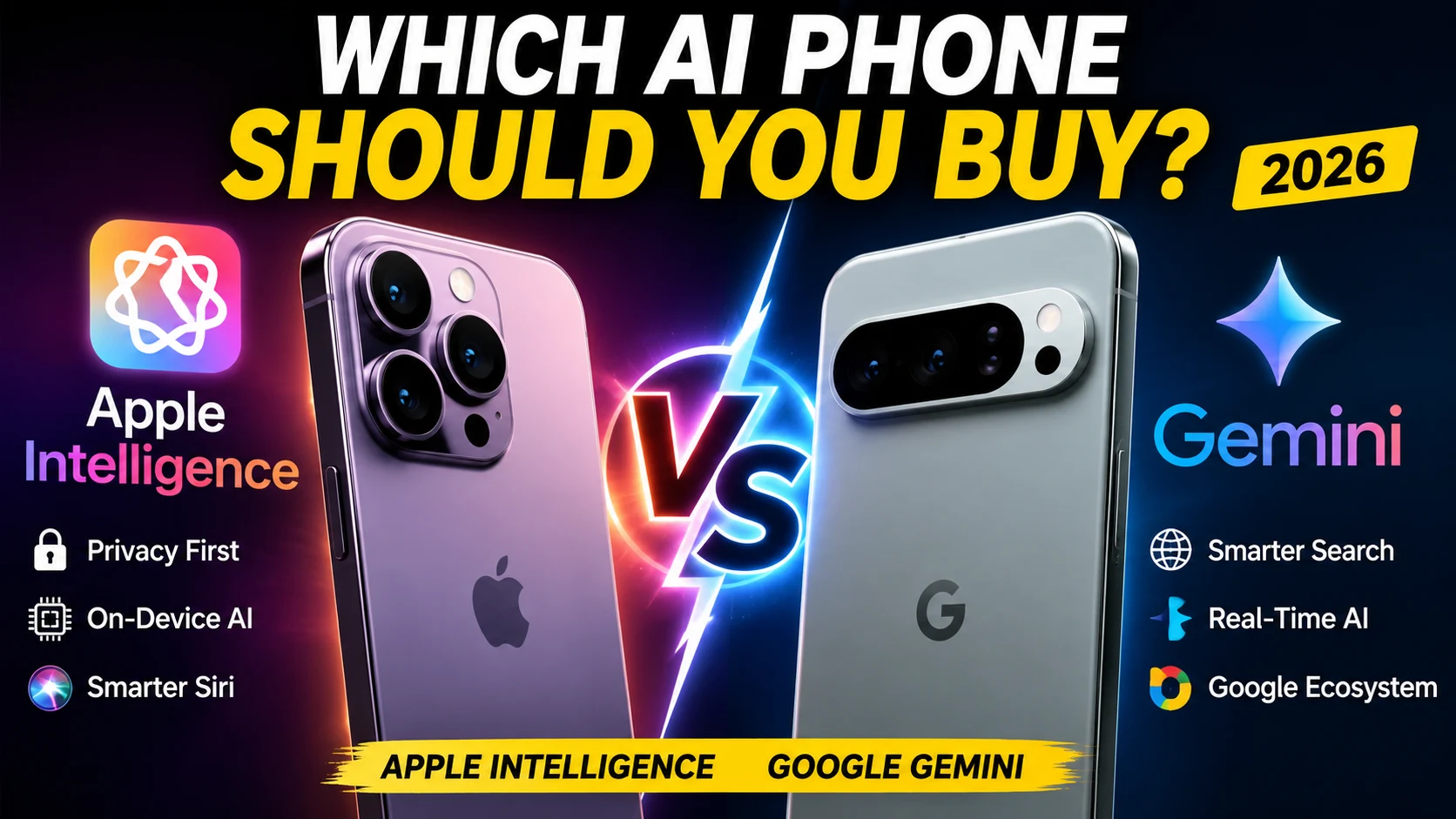
The smartphone war is no longer about megapixels, titanium frames, or screen refresh rates; it is about which AI assistant is quietly managing your digital life. As we navigate 2026, Apple Intelligence and Google Gemini have matured from hyped beta features into the very foundation of modern mobile operating systems. Whether you are eyeing the sleek iPhone 17 or the powerhouse Google Pixel 10, choosing your next device means picking the AI ecosystem that will dictate how you work, create, and communicate.

The Core Divide: Ecosystem Privacy vs. Agentic Flexibility

The fundamental difference between Apple and Google in 2026 comes down to their philosophical approach to artificial intelligence.

Apple has meticulously built its AI architecture around a strict “privacy-first” doctrine. A vast majority of Apple Intelligence runs purely on-device. When complex tasks require more processing power, the system relies on Private Cloud Compute—a heavily encrypted, third-party-auditable server infrastructure that ensures your personal data is never stored or monetized.

Google, on the other hand, embraces cloud-first “agentic flexibility.” Gemini on Android is not just a passive voice assistant; it is a proactive agent designed to connect the live web, your Google Workspace, and your phone’s hardware in real time. As noted in the IDC 2025-2026 MarketScape report, Google’s conversational AI platform leads the industry in pure capability and integration breadth, offering tools that adapt dynamically to the user’s needs.

Apple Intelligence in 2026: Seamless, Safe, and Refined

Since its initial rollout, Apple Intelligence has evolved into a system-wide ghost in the machine. With the latest updates on the iPhone 17 Pro, the newly turbocharged Siri AI finally understands personal context with human-like accuracy.

Key advantages of the Apple AI ecosystem include:

  • On-Screen Awareness: Apple Intelligence seamlessly reads what is on your display without needing explicit prompts. If you receive a text message containing a flight confirmation, Siri AI can instantly cross-reference it and add the itinerary to your Calendar and Mail.
  • Visual Intelligence: By integrating AI directly into the camera, you can point your iPhone at a local restaurant to instantly pull up menus, hours, and reservation options without opening a web browser. This feature even extends to the Apple Vision Pro, bridging the gap between mobile and spatial computing.
  • Refined Writing and Editing Tools: Apple’s generative tools are deliberately constrained to prioritize safety, accuracy, and copyright protection. While you will not find unrestricted AI image generation, practical features like the object-removal tool in Photos and system-wide proofreading are frictionless, highly polished, and incredibly reliable for everyday use.

Google Gemini: The Power User’s Playground

For tech enthusiasts and power users, Google’s Pixel 10 paired with Gemini Intelligence is the undisputed gold standard for mobile productivity. While Apple focuses on safety and ecosystem lock-in, Google leverages its decade of machine learning research to make Gemini aggressively capable.

Where Google’s AI currently dominates:

  • Gemini Live & Multimodal Input: You can share your camera in a live, free-flowing conversation with Gemini. Whether you are trying to identify a broken car part, translate a live conversation, or brainstorm a recipe from ingredients on your counter, Gemini Live troubleshoots with you in real time.
  • Magic Editor & Veo 3: Powered by the Imagen 3 and Veo video models, Google allows for drastic, professional-grade media manipulation. You can swap skies, generate background elements from scratch, and even create dynamic videos natively on the device using text prompts.
  • Proactive Anticipation: The new Magic Cue feature predicts what information you need before you even ask, leveraging your habits and Google ecosystem data to stay one step ahead of your daily schedule.

The 2026 Plot Twist: The “Frenemy” Alliance

Here is the reality check that tech purists rarely discuss: Apple and Google are quietly collaborating. In a landmark move, Apple recently confirmed that the next generation of its Apple Foundation Models utilizes Google’s Gemini infrastructure for specific complex cloud processing tasks.

As one tech analyst noted during the WWDC 2026 rollout, “Apple’s answer to Gemini Intelligence is, in part, to use Gemini—but entirely on their own terms.”

This multi-year arrangement creates a fascinating dynamic for consumers. If you switch to Android today, you get unrestricted, Gemini-native AI immediately. If you stay on the iPhone, you are paying a premium for hardware that runs a highly secure, heavily moderated version of similar AI capabilities—just wrapped in Apple’s pristine user interface.

The Verdict: Which AI Phone Should You Buy?

Your smartphone decision in 2026 boils down to a single question: What do you value more, digital safety or bleeding-edge capability?

  • Buy the iPhone (Apple Intelligence) if: You are heavily invested in the broader ecosystem (Mac, Apple Watch, iPad), you prioritize verifiable data privacy, and you want AI that feels like a natural, invisible extension of iOS rather than a separate app.
  • Buy the Pixel (Google Gemini) if: You are a power user who wants a proactive AI agent capable of manipulating photos, generating complex media, connecting live to the web, and seamlessly managing your digital workflow.

The Bottom Line: The AI smartphone era has officially arrived, and sitting on the sidelines is no longer an option. Assess your daily routine—do you need a hyper-secure digital assistant or a creative, limitless powerhouse?

What is your take on the AI smartphone wars? Are you choosing Apple’s privacy or Google’s power in 2026? Let us know your thoughts in the comments below, and subscribe to our newsletter for the latest tech reviews, AI breakthroughs, and industry insights.

Also Read Create an Entire Website in 5 Minutes Using Just One AI Prompt

Krati Gupta

Krati Gupta is a technology and AI writer at NovaBrief, covering artificial intelligence, apps, software, and emerging technology. She focuses on making complex tech topics simple, practical, and useful for readers.

Join WhatsApp

Join Now

Join Telegram

Join Now

Leave a Comment