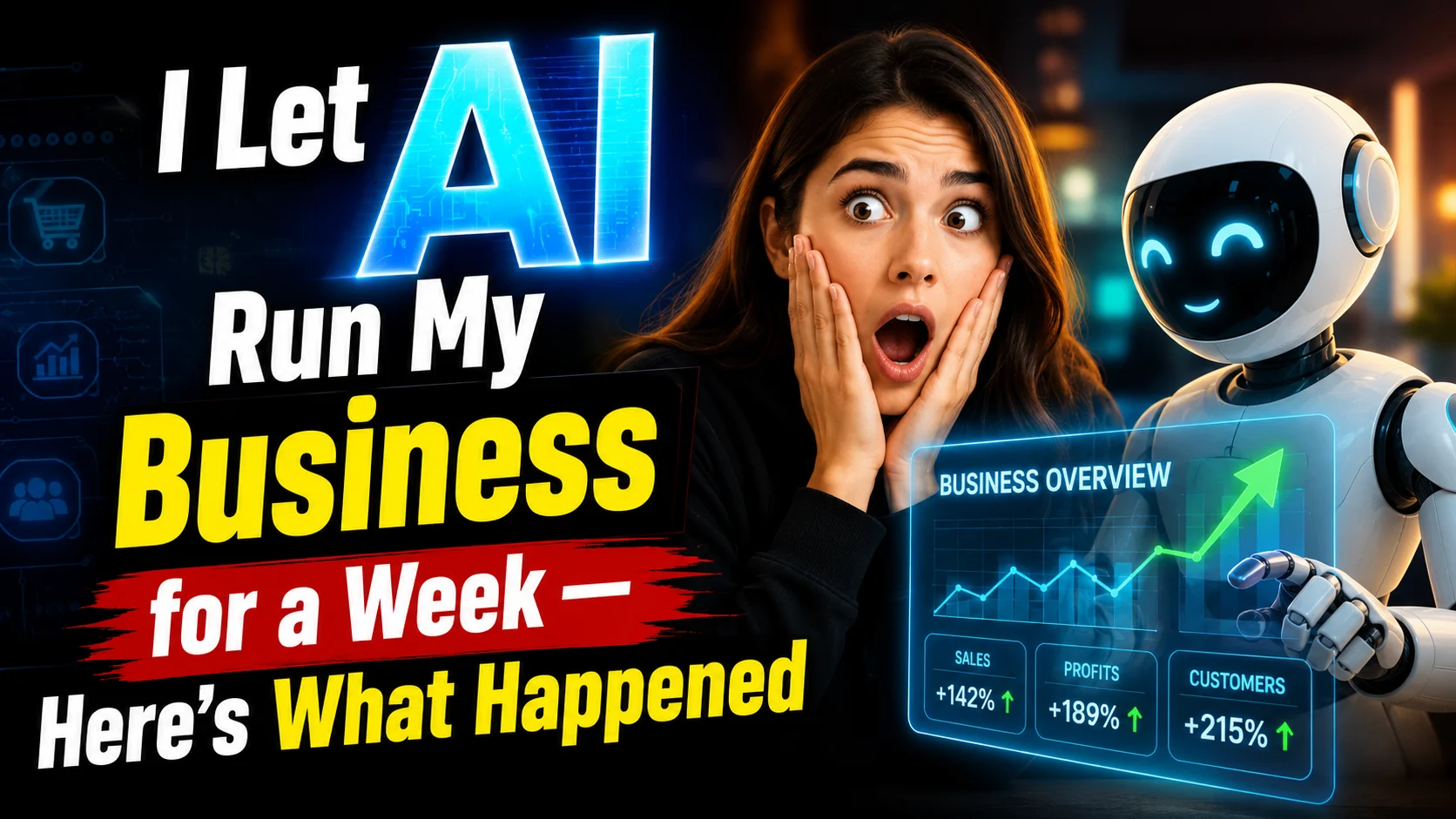
What if you fired yourself from your own company for seven days? Across the globe, a radical experiment is unfolding as founders hand over the daily reins of their operations to artificial intelligence. By analyzing real-world data and personal case studies of entrepreneurs who let bots take the wheel, a fascinating picture emerges about the future of automation—and it will fundamentally change how you view “working smart.”
The Great AI Handover
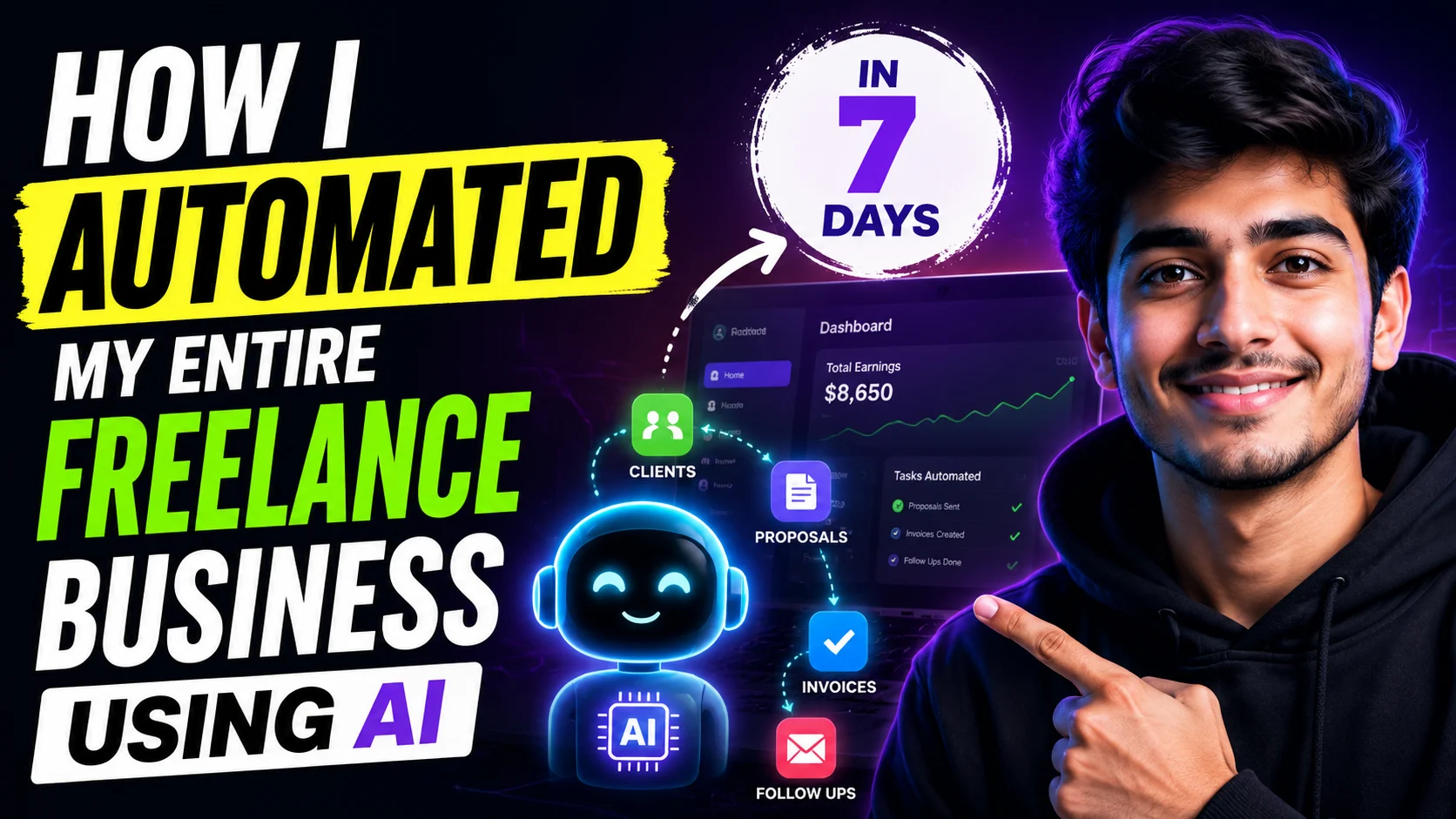
Setting up an AI team is surprisingly fast, provided you know which tools to string together. In one documented experiment, an entrepreneur mapped out a full “virtual team” using platforms like ChatGPT for content creation, Make.com and Zapier for workflow automation, and Tidio for customer support. The immediate impact of this digital delegation was staggering: a daily marketing and administrative workload that traditionally took six hours was slashed to just 45 minutes.
Similarly, another business owner utilizing no-code AI platforms discovered that response times to initial customer inquiries plummeted from hours to mere minutes. Their calendar essentially organized itself without human intervention, and by the third week of fully adopting automation, they only needed to check in on the system once a day.
Hard Numbers: Speed and Revenue
The broader business world is taking notice of these massive efficiency leaps. According to recent data, 58% of U.S. small businesses are now actively using generative AI—a massive jump from just 40% the previous year.
But does this technological shift actually translate to the bottom line? The data suggests a resounding yes. A staggering 91% of small and medium-sized businesses using AI report an increase in revenue. In one specific case study, fully delegating operational tasks to AI resulted in a 47% revenue increase within the first 90 days.
This financial growth occurred not because the AI was a brilliant salesperson, but because of a shift in human focus. The founder was finally free to dedicate their energy entirely to high-level business development and strategy, instead of getting bogged down in repetitive administrative friction.
Where the Algorithm Breaks Down
However, treating AI as a magical “set-and-forget” solution is a dangerous game. The experiments reveal clear boundaries where algorithms fail and human intuition remains non-negotiable.
- The Nuance Gap: AI still struggles with authentic emotional intelligence. Founders found that while AI could generate marketing copy at lightning speed, some social media captions lacked genuine emotion and responses felt robotic, requiring manual human tweaking to preserve the brand’s unique voice.
- High-Stakes Decisions: Routine email triage is easy for a bot, but complex, high-stakes client negotiations and overarching creative direction still strictly demand a human touch.
- The Complexity Trap: A fascinating study by UC Berkeley’s Haas School of Business monitored Kenyan entrepreneurs using an AI business mentor. High-performing business owners saw a 15% boost in revenue because they asked the AI for help on straightforward, executable tasks. Conversely, low-performing businesses actually saw an 8% drop in revenue. Why? They relied on the AI to solve deeply complex, systemic business problems—like severe market competition or drought—that no algorithm could realistically fix.
The Mindset Shift: Relief, Not Replacement
The prevailing global fear is that artificial intelligence will replace human teams. Yet, on the ground, the exact opposite seems to be happening.
When one founder deployed an AI agent to organize and highlight urgent customer support messages, the human team didn’t feel replaced; they felt relieved. By removing the soul-crushing administrative work, the team’s internal stress dropped, they had more time to brainstorm, and overall customer response times improved by 40%.
This anecdotal evidence aligns perfectly with broader macroeconomic trends. A recent EY survey of established entrepreneurs found that rather than planning mass layoffs, 88% actually expect their workforce to grow. The future of work is not about replacing your staff; it is about reshaping roles so that humans and technology collaborate, prioritizing human judgment and relationship-building over data entry.
The Verdict: Should You Automate Your Operations?
The consensus from those who have survived the “AI business handover” is a resounding yes—but with strict operational boundaries. Automation is not about doing less work; it is about freeing up your mental bandwidth to do better, more impactful work.
The Bottom Line: Stop viewing AI as a cheap human replacement, and start viewing it as a powerful extension of your operational process.
Your Next Step: Are you ready to fire yourself from the mundane tasks? Audit your daily workflow this week. Identify three repetitive, low-level tasks that drain your energy—whether it’s expense categorization, email triage, or basic scheduling. Challenge yourself to automate just one of them by next Monday. The future of business belongs to those who learn to work in sync with intelligent tools.
Also Read Is AI Making Us Dumber? Here’s What the Research Actually Says