Chatbots can write your emails, but they cannot send them, update your CRM, and schedule a follow-up meeting entirely on their own. Enter AI agents: autonomous systems designed not just to converse, but to physically execute workflows. As businesses race beyond basic generative AI, this critical shift from “talking” to “doing” is rewriting the rules of digital productivity in 2026.
For the last few years, the tech world was captivated by conversational bots. They drafted our reports, brainstormed marketing copy, and summarized endless meeting transcripts. But they had a hard ceiling: they required constant human supervision. Today, the conversation has dramatically shifted toward “agentic AI.”
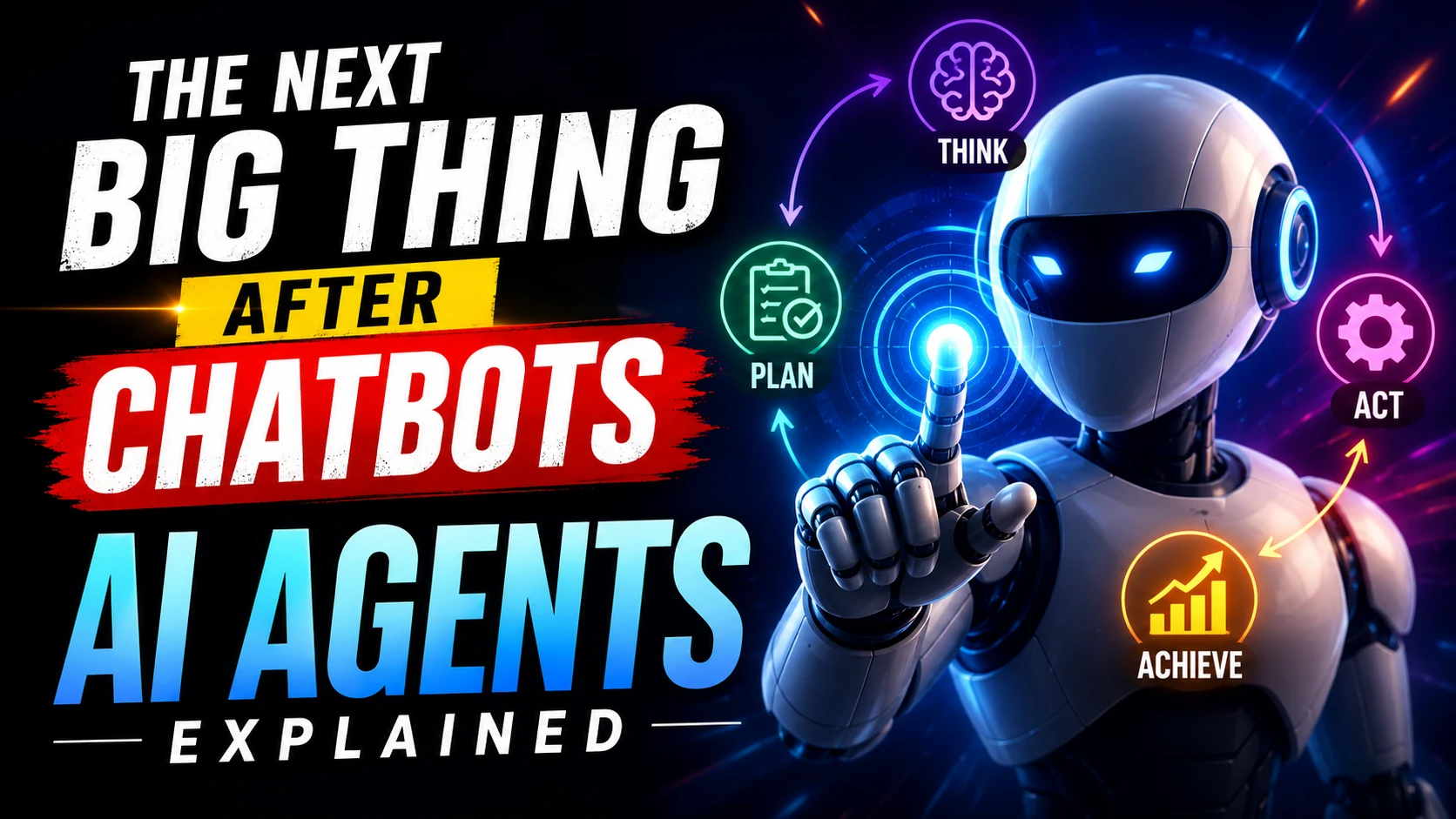
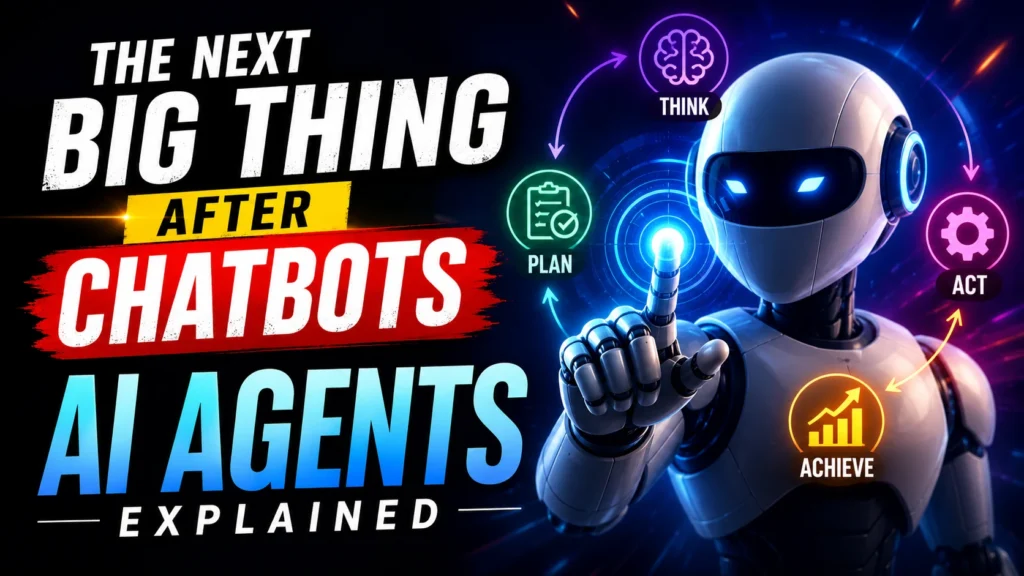
Unlike standard chatbots, AI agents can plan, use tools, call APIs, and make decisions to complete multi-step goals. They are moving artificial intelligence from a passive advisory role into an active driver’s seat, transforming how modern enterprises automate complex, tedious workloads.
The Multi-Billion Dollar Enterprise Boom
The business world is taking notice of this leap in capability. The global AI agents market is projected to reach $10.9 billion in 2026, with staggering long-term forecasts pushing past $182 billion by 2033.
The era of experimentation is officially over. According to a 2026 survey by CrewAI, 65% of large enterprises are already using AI agents in their daily operations. Even more telling, 100% of surveyed organizations plan to expand their agentic AI adoption this year.
This surge is fueled by tangible business results. Companies are shifting from merely deflecting support tickets to fully automating end-to-end workflows. A remarkable 75% of enterprise leaders report high time savings from AI agents, while 69% cite significant reductions in operational costs.
Real-World AI Agents in Action
How does this look in practice? The battleground for enterprise AI agents is already producing highly sophisticated, market-ready tools.
- Salesforce Agentforce: Moving far beyond digital assistance, Agentforce is built to act natively within a company’s customer relationship management (CRM) ecosystem. Powered by its Atlas Reasoning Engine, it can independently qualify leads, run customized outreach sequences, and update records without waiting for a human to hit “approve”.
- Microsoft Copilot Studio: Embedded deeply within Microsoft 365 and Azure, Copilot is streamlining enterprise collaboration at scale. It assists workers by automatically generating actionable insights from Teams meetings, seamlessly processing documents, and orchestrating internal IT operations for hundreds of thousands of employees.
- Open-Source Orchestrators: Frameworks like LangGraph and CrewAI are currently dominating the developer ecosystem. LangGraph, which recently surpassed CrewAI in developer popularity, allows businesses to build “multi-agent systems.” Here, specialized AI agents—such as a researcher agent and a coder agent—collaborate to solve complex backend problems through durable, fault-tolerant execution.
5 Reasons AI Agents Are the True Successors to Chatbots
Here is why agentic AI is capturing the attention of the world’s top CEOs and IT leaders:
- End-to-End Execution: Chatbots give you a recipe; agents bake the cake. They securely connect to external APIs and databases to physically complete workflows end-to-end.
- Autonomous Planning: Give an agent a high-level goal, and it will break it down into actionable steps, dynamically adjusting its strategy if it hits an error.
- Proactive Problem Solving: Instead of waiting for a human prompt, agents actively monitor environments—like supply chains or cybersecurity networks—and autonomously flag or fix anomalies.
- Multi-Agent Collaboration: The future isn’t a single monolithic AI. It relies on specialized agents communicating with each other. For example, an HR agent and an IT agent can coordinate to fully onboard a new employee in seconds.
- Durable Memory: Advanced agents retain context across long-running tasks, ensuring they don’t forget the original objective even if a process takes days to complete.
The Roadblocks: Data Trust and Governance
Despite the rapid adoption, handing operational keys over to a machine introduces massive risk. You wouldn’t let an intern execute million-dollar contracts without supervision, and enterprises apply the same logic to autonomous AI.
The biggest hurdles in 2026 aren’t about the AI’s core intelligence; they are about data readiness and security. Over a third (34%) of enterprise leaders cite security and governance as their top priority when evaluating agentic platforms, ranking it far above immediate ROI. Agents require pristine, well-structured data to function accurately. A hallucinating chatbot is embarrassing; a hallucinating agent deleting client records is a catastrophe. Consequently, businesses are investing heavily in “human-in-the-loop” safeguards, dynamic permission controls, and strict audit trails.
The Bottom Line
The chatbot hype cycle has matured into the agentic AI revolution. We are no longer just talking to machines; we are employing them. As AI agents become the new digital workforce, organizations that figure out how to deploy them securely will outpace their competitors by a landslide.
- The Takeaway: If your business is still relying purely on conversational chatbots, you are already falling behind the productivity curve.
- Call to Action: Start auditing your company’s data infrastructure today. Identify one repetitive, multi-step workflow in your department, and explore how an AI agent could automate it from start to finish. The future belongs to those who delegate to digital agents.
Also Read What Is Context Window and Why Does It Matter to You?