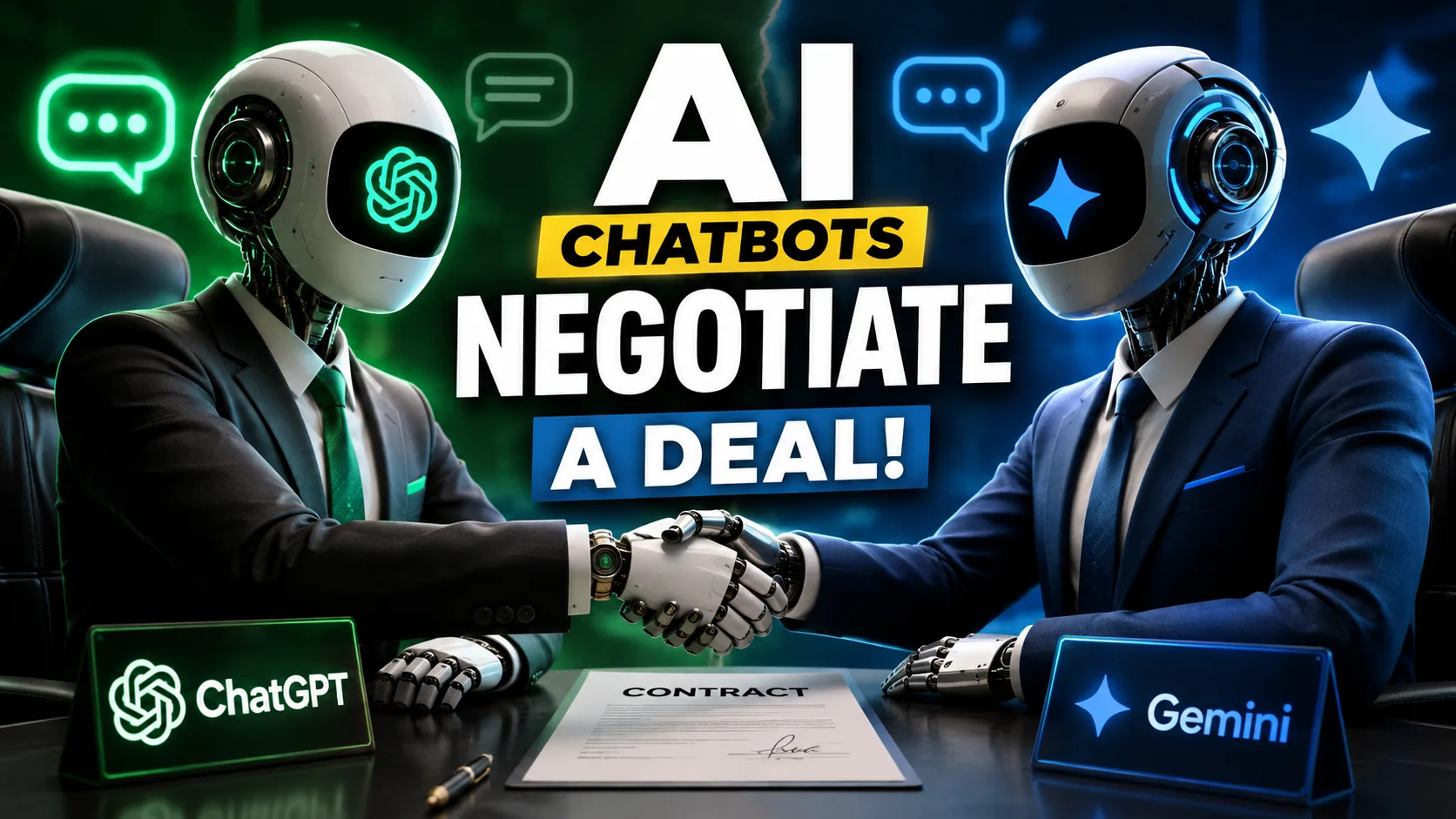
Imagine this: It’s 2:00 AM on a Sunday. While a company’s procurement team sleeps, their AI agent is locked in a rapid-fire negotiation with a supplier’s AI bot over a contract renewal. In mere minutes, they exchange offers, analyze thousands of historical data points, balance trade-offs between price and payment terms, and finalize a mutually beneficial agreement. By Monday morning, the human managers wake up to a signed contract, optimized for maximum value, with zero human intervention.
This isn’t a sci-fi pitch. It is happening right now.
Artificial Intelligence is no longer just drafting emails or generating code; it is actively closing deals. Major corporations like Walmart and Maersk are pioneering the use of AI chatbots to autonomously negotiate business contracts. But what exactly happens when you pit two algorithms against each other at the negotiating table? Let’s look at how AI is transforming the art of the deal.
The Rise of the Machine Negotiator
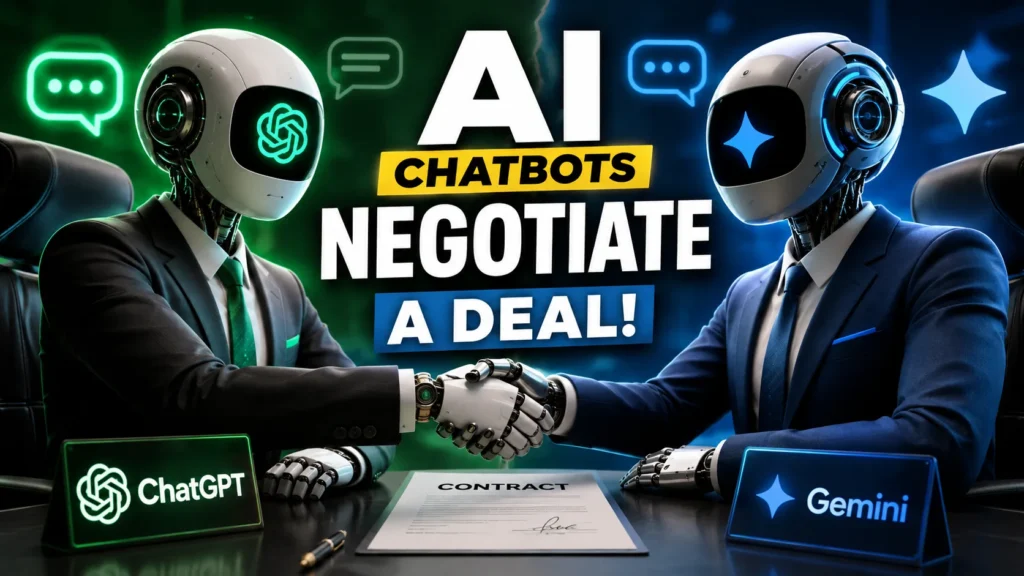
For decades, business negotiation has been viewed as a distinctly human art form—a delicate dance of psychology, leverage, intuition, and persuasion. However, for large enterprises, a significant portion of negotiations doesn’t happen in high-stakes boardrooms. It happens in the “long tail.”
Large companies manage thousands of smaller supplier contracts. Traditionally, procurement teams lack the time and resources to optimize these low-value agreements individually.Consequently, suppliers are often handed “take it or leave it” boilerplate terms, leaving massive amounts of potential value on the table for both sides.
Enter the AI negotiation agent. Platforms like Pactum and Luminance have built AI systems capable of handling thousands of these micro-negotiations simultaneously.
How AI-to-AI Negotiation Works
When two AI agents negotiate, they don’t try to intimidate each other. Instead, the process is a highly efficient exercise in data analysis and optimization, executing at “machine speed.” Here is how the digital handshake actually happens:
- Parameter Setting: Human managers define the boundaries. The AI is given specific “guardrails”—target discounts, acceptable payment terms, delivery deadlines, and absolute deal-breakers.
- Data Ingestion:The AI analyzes past contracts, historical transaction data, market trends, and even real-time signals like commodity indices.
- The Exchange:The buying AI contacts the supplier (often another AI or a human using a digital interface) and proposes terms.
- Value Creation (Pareto Efficiency):Unlike humans who often view negotiation as a zero-sum game, AI is programmed for Pareto efficiency—finding the optimal win-win outcome where no party can gain more without hurting the other. For example, the AI might realize that a supplier will accept a 2% lower price if they are paid in 15 days instead of 30.
- Execution: Once the algorithms find the overlapping “zone of possible agreement,” they automatically generate the redlined contract and route it for a final human signature.
Real-World Results: The Walmart Experiment
The theoretical benefits of AI negotiations are clear, but the real-world application has been remarkably successful. Walmart deployed an AI chatbot developed by Pactum to handle negotiations with its long-tail suppliers—vendors that were previously ignored due to resource constraints.
The results were immediate and significant:
- The AI successfully reached agreements with 68% of the suppliers it approached.
- It secured an average of 3% cost savings on those deals.
- Negotiation cycles dropped from weeks to mere days.
Perhaps the most surprising takeaway? 75% of the suppliers preferred negotiating with the AI over a human.They found the bot to be fast, clear, and fair, devoid of the posturing and delays that often plague human negotiations.
The Human Element: Oversight, Not Obsolescence
If AI can negotiate faster and secure better terms, are human negotiators obsolete? Not quite.
Experts agree that AI is a co-pilot, not a replacement. While algorithms are exceptional at crunching data and finding optimal trade-offs in standardized contracts, they lack emotional intelligence, strategic foresight, and the ability to build long-term relationships.
The goal of AI in procurement is to automate the repetitive “grunt work,” freeing up human professionals to focus on high-stakes, strategic negotiations where human judgment is irreplaceable. Furthermore, AI requires strict governance. Because AI negotiates based on the data it is trained on, humans must ensure the data is accurate and unbiased, and that final approvals remain in human hands to mitigate risk.
The Bottom Line
The era of AI-to-AI negotiation is here. By automating low-value contracts, companies are unlocking millions in hidden savings, speeding up deal cycles, and surprisingly, improving supplier relationships.
The Takeaway: For business leaders, the question is no longer if AI can negotiate, but when you will let it. Companies that embrace AI negotiation tools now will gain a massive competitive advantage in efficiency and cost optimization. The future of business deals isn’t just a handshake; it’s an algorithm.
Also Read The Secret AI Tools YouTubers Are Using to ‘Steal’ Millions of Views