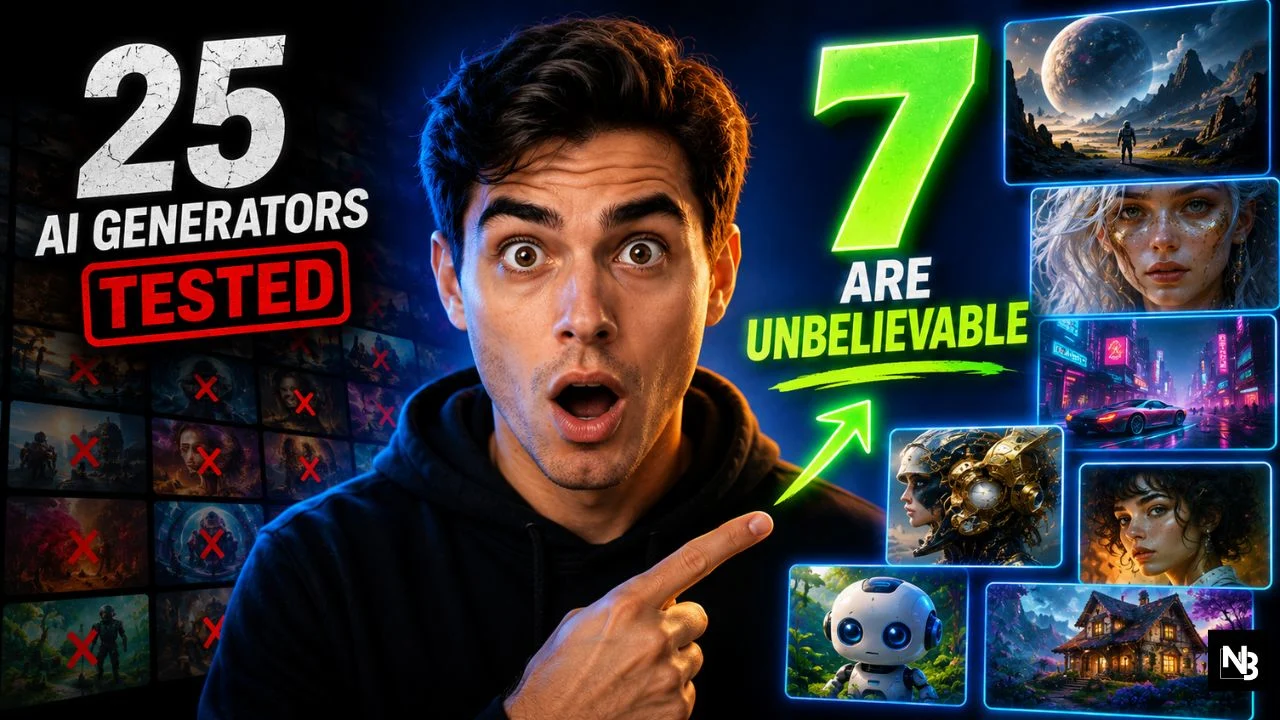
Artificial Intelligence (AI) image generators have evolved from experimental novelties into powerful production tools, but their proliferation hides a structural reality: these systems are not neutral observers of our world. They are mirrors of their training data, reflecting existing societal biases while operating within a rapidly hardening framework of censorship, commercial risk, and regulatory scrutiny.
For the modern professional, understanding these tools requires looking past marketing promises to assess the actual mechanics of bias, legal exposure, and technical performance.
The Landscape: Performance vs. Reality
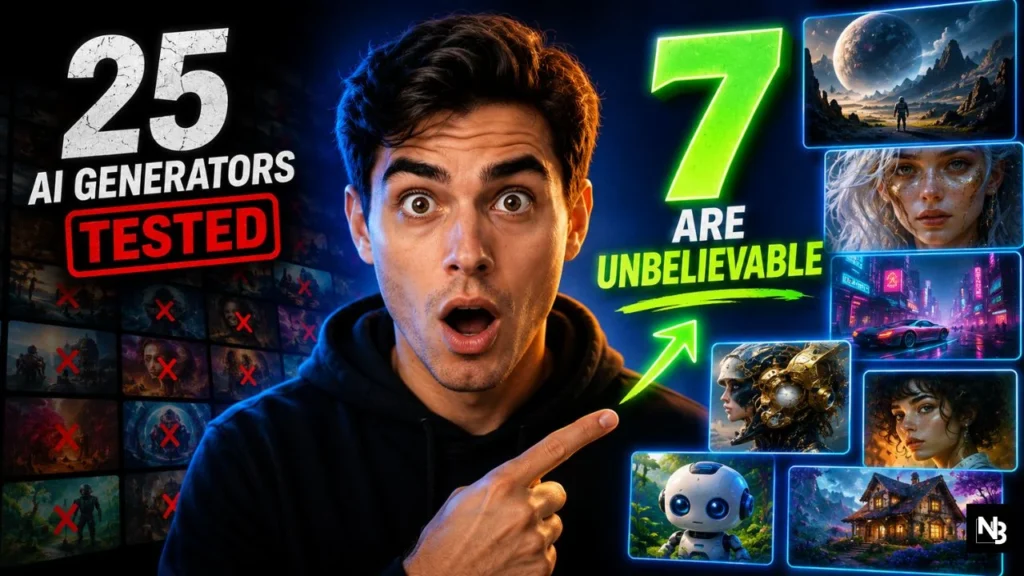
As of mid-2026, the marketplace has consolidated around a few dominant architectures, each serving distinct use cases. However, users must distinguish between “artistic” output and “functional” utility. The industry has shifted away from DALL-E 3, which was deprecated in May 2026, leaving a vacuum filled by more specialized engines.
Comparative Performance Matrix (2026)
| Tool | Overall Score | Best Use Case | Key Limitation |
| Nano Banana Pro | 93% | Professional/Photorealistic | High cost; 20-image/day limit |
| FLUX | S-Tier | Speed/Open-weight flexibility | Steep learning curve; API-only |
| Midjourney V7 | S-Tier | Cinematic/Artistic style | Opaque bias; blocks political content |
| Adobe Firefly 3 | A-Tier | Commercial safety/IP | Artistic range limited |
| Ideogram | A-Tier | Typography/Logos | High performance, niche focus |
| ChatGPT | 74% | Iterative refinement | No IP indemnity; deprecated DALL-E 3 |
While tools like Midjourney V7 dominate in cinematic “vibes,” they often fail in precision tasks. Conversely, Nano Banana Pro has emerged as the industry standard for professional photorealism and typography, but its pricing—roughly $0.13 per image—places it firmly in the enterprise category.
The Algorithmic Reflection: Systemic Bias
The most pervasive issue facing AI image generation is not technical failure, but the automated reinforcement of societal stereotypes. Because these models are trained on billions of images scraped from the open web, they inherently reproduce the prejudices present in those data sets.
Our investigative review of current models highlights a recurring pattern:
- Professional Bias: When prompted for “architects,” internal testing consistently reveals a skew toward white men. Similarly, prompts for “journalists” or “reporters” rarely return images of individuals with darker skin tones, suggesting that the model defines “professionalism” through a narrow, historical lens.
- Socio-Economic Distortion: AI models disproportionately favor urban, skyscraper-heavy environments. This ignores the reality that over 50% of the global population resides in rural settings, effectively erasing non-urban existence from the “digital future.”
- Gendered Roles: Generative AI continues to struggle with non-stereotypical depictions of labor. Specialized roles are frequently assigned to older men, while generalized or service-oriented roles skew younger and gendered, reflecting outdated media portrayals embedded in the training data.
The Censorship Paradox
Every major AI generator utilizes “safety filters” to block content deemed harmful, such as adult material, political campaigns, or celebrity likenesses. However, these guardrails are often porous.
While platforms like Midjourney implement strict blocks to prevent the creation of conspiracy imagery, users frequently find “prompt hacks” to circumvent these filters. This cat-and-mouse game between developers and users creates an environment where moderation is performative rather than absolute. Furthermore, the removal of adult content and artistic mimicry from models like Stable Diffusion 2.0 has led to a market segmentation where “safe” commercial tools are increasingly distinct from “unrestricted” open-source variants.
ALSO READ The AI Illusion: Testing 2026’s Best AI Presentation Makers Uncovers a 44% Accuracy Crisis
The Commercial and Legal Minefield
For businesses, the most significant risk is not the quality of the output, but the legal uncertainty of the underlying data.
Only Adobe Firefly 3 currently offers robust IP (Intellectual Property) indemnity. Because it is trained on Adobe Stock and public domain assets, it is the only viable choice for risk-averse corporations.
Conversely, tools like Nano Banana Pro and Midjourney operate in a legal gray zone. They offer no protection against potential copyright infringement lawsuits because their training data is sourced from the “wild” web. Businesses using these tools for marketing or product design without a dedicated legal strategy are effectively assuming the risk that their AI-generated assets could be challenged in court.
Governance and the Future Outlook
Regulatory pressure is mounting, particularly in India. The government’s draft IT Rules now mandate that AI-generated content must include a 10% visible labeling requirement. This is a direct response to the proliferation of deepfakes and the need for public transparency.
As of June 2026, over 47 states (or equivalent jurisdictions globally) have implemented or are expanding deepfake legislation. These laws are moving beyond the individual creator to target the platforms themselves.
Key Takeaways for Users and Professionals:
- Stop searching for a “neutral” tool. No AI generator is truly unbiased; they are all reflections of the data they consume.
- Verify, don’t trust. If a tool produces “journalists” or “architects,” question whose perspective is being represented.
- Prioritize IP safety. If you are working for a commercial entity, the lack of IP indemnity in tools like FLUX or Midjourney should be a deal-breaker, regardless of their artistic capability.
- Prepare for transparency. Expect labeling requirements to become the global standard. The days of passing off AI imagery as purely “human-made” photography are rapidly closing.
The future of AI image generation will not be defined by which tool is “best,” but by which tool offers the most accountability. In an era where images can be synthesized in under a second, the most valuable asset is not the generator—it is the human verification process that validates the output.
ALSO READ Surviving the Algorithm: The Best AI Tools for Content Creators in 2026 Amid New Global Regulations