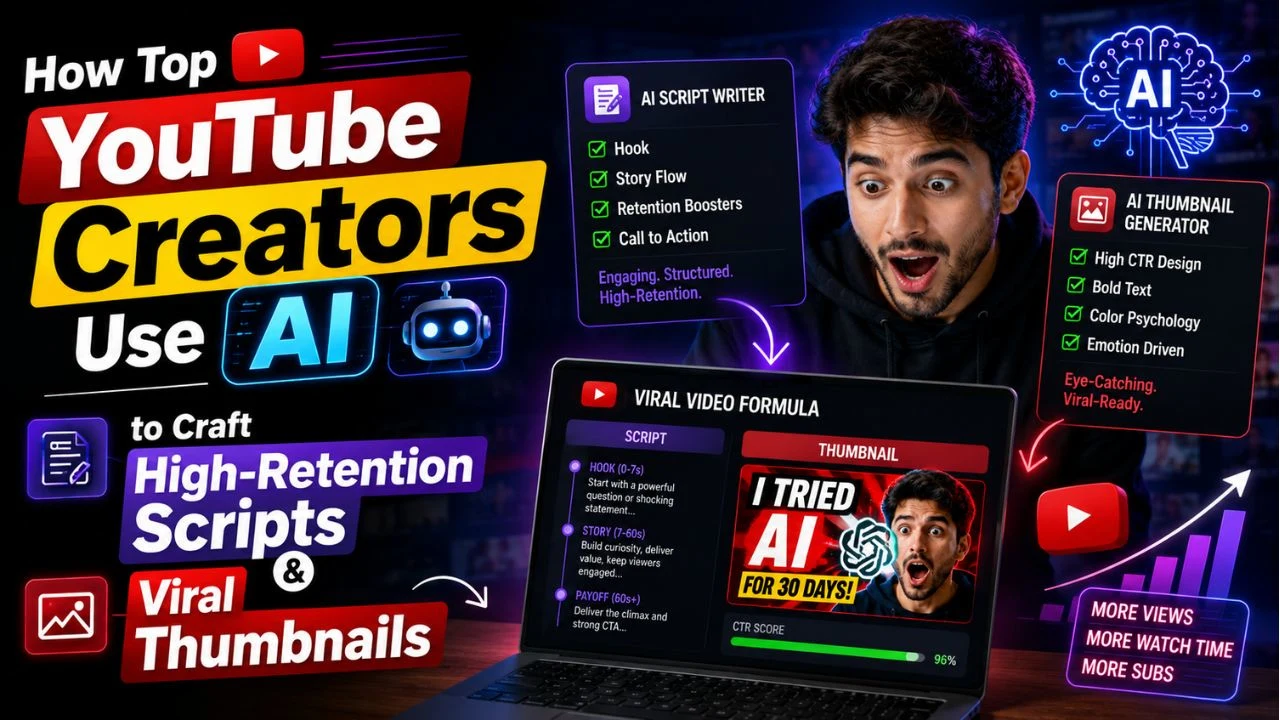
The global creator economy is no longer just a collection of casual vloggers filming from their bedrooms; it has matured into a sophisticated, multi-billion-dollar digital media sector. As the market size crosses the $200 billion threshold, the pressure on video producers to consistently perform against aggressive platform algorithms has reached an all-time high. Standing out requires more than just high-quality camera gear; it demands an absolute mastery of two digital metrics: Click-Through Rate (CTR) and Audience Retention.
To solve this production bottleneck, a massive structural shift is underway behind the scenes. According to recent data from Epidemic Sound, an astonishing 84% of content creators now leverage advanced generative AI tools within their weekly workflows. Instead of replacing the artist, these specialized engines are being deployed as tactical assistants to conquer the blank-page syndrome and predict viewer psychology before a single frame is ever shot.
Engineering High-Retention Scripts: The Anatomy of the First 30 Seconds
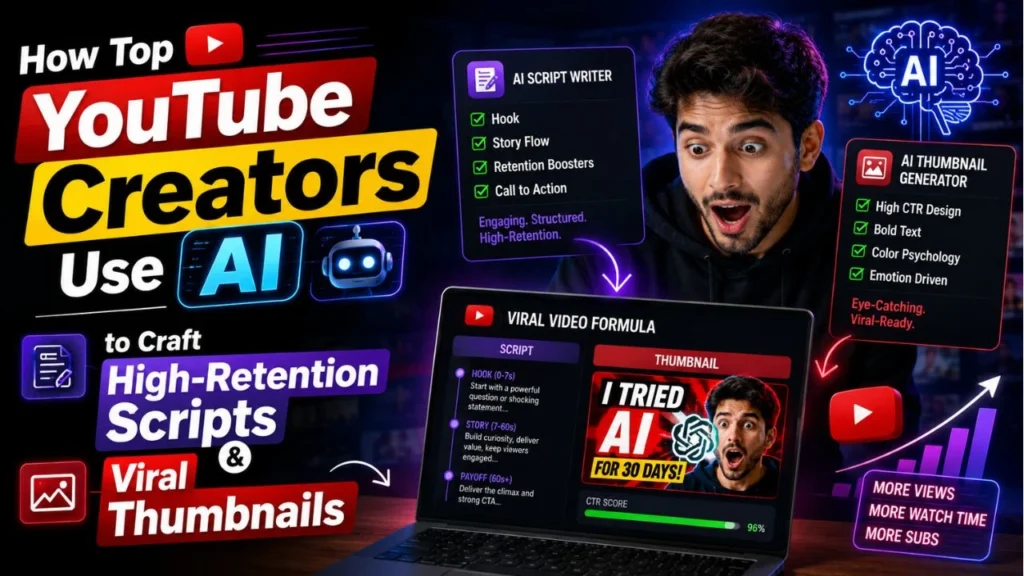
A common pitfall for aspiring video producers is relying on simple, single-sentence instructions when using large language models. Entering a basic command like “Write a script about space travel” yields what data analysts call a “zero-shot prompt”—resulting in predictable, generic, and ultimately low-retention narratives. Modern AI for YouTube creators relies on multi-step structural blueprints designed to map closely to human behavior.
High-retention video structures require three non-negotiable script components that AI can systematically generate and optimize:
- The Psychological Hook: The first 15 to 30 seconds of video text must establish an “open loop”. This is a narrative device that sparks intense viewer curiosity, promising a payoff that is only resolved at the climax of the video.
- Pacing and Pattern Interrupts: The human attention span drops rapidly every few seconds. Scripting models are trained to insert structured structural shifts—such as sudden shifts in tone, specific visual cues, or pacing adjustments—to effectively “reset” the viewer’s focus before they drop off the analytics chart.
- Dynamic Mid-Video CTAs: Rather than pushing the Call to Action (CTA) exclusively to the very end of the runtime where viewership naturally bottoms out, intelligence models pinpoint high-engagement windows earlier in the script to weave in smooth channel subscriptions or sponsor mentions.
Furthermore, platforms like Subscribr act as outlier tools, actively scanning thousands of channels to find breakthrough videos that pull two to ten times more traffic than a channel’s standard baseline. The AI deconstructs the underlying framework of those viral scripts, allowing creators to legally remix successful formats within their own unique niche.
Visual Packaging: Maximizing Click-Through Rates via Predictive Design
A creator can spend 40 hours scriptwriting, filming, and executing complex video edits, but if the packaging fails to entice viewers, the total watch time stays at zero. An effective digital storefront relies heavily on CTR-optimized thumbnails. Experienced data analysts argue that a thumbnail solves a mathematical traffic problem, not an artistic design problem; its fundamental priority is to command focus on a cluttered mobile layout where over 70 percent of YouTube consumption happens.
Rather than guessing which layout might perform best, production teams utilize specialized platforms such as 1of10 AI, Thumbmagic, and Pikzels. These applications analyze massive datasets of high-performing images to extract geometric patterns, contrast values, and color hierarchies that drive maximum clicks.
When configuring an AI design pipeline, creators adhere to rigorous visual guidelines:
- The Rule of Thirds: The system ensures the core human subject or visual focal point sits cleanly off-center, leaving plenty of high-contrast negative space for readable text.
- Complementary Contrasts: The software automatically maps opposing color palettes (such as pairing a cold blue background with a vibrant orange element) to guarantee the mobile asset stands out against dark or light app layouts.
- Predictive Heatmapping: Advanced engines simulate human eye-tracking, generating attention maps to flag exactly where a user will look first, allowing creators to clear away visual clutter before uploading.
Once these assets are ready, creators feed the variations into YouTube’s native Test and Compare system. The engine rolls out different thumbnails to independent test groups, automatically locking in the highest performer based on real-time data rather than aesthetic bias.
The Strategic Balance: Preserving Authenticity
While machine learning tools offer undeniable speed and competitive analytical benefits, over-reliance poses a major risk to a creator’s brand identity. Automated systems excel at identifying performance patterns, but they lack human experience, authentic emotional vulnerability, and genuine editorial judgment.
The industry consensus among top-tier digital strategy firms is clear: use algorithmic workflows to manage the heavy lifting of research, layout testing, and initial script structural frameworks, but always run the final output through a strict human filter. Personal anecdotes, distinct voice patterns, and human quality control remain the true pillars of long-term subscriber loyalty.
Your Next Step
If you are looking to scale your digital content business, avoid trying to automate your entire channel production overnight. Start by integrating an AI model to evaluate your next five video ideas, or run a thumbnail variation through a predictive engine to see how it affects your current baseline metrics. By treating technology as a data-driven assistant rather than an independent pilot, you can spend less time fighting backend operational bottlenecks and more time building authentic connections with your audience.
ALSO READ How to Safely Automate Your WordPress Blog with Agentic AI Workflows